



Ebola disease in DRC: find out how we're responding
Learn more
8009 Results
 
msf-placeholder
Brazil

Establishing long-term mental health care in flood-affected areas in Brazil

MSF teams were shocked by the extent of the disaster. Mental health care was virtually non-existent and became the area of focus. Voices from the Field - 4 Feb 2011
 
msf-placeholder
Niger

Niger between two seasons of hunger

Despite the large-scale response to the nutritional crisis from Médecins Sans Frontières (MSF) and many other organisations, tens of thousands of children suffered from malnutrition in Niger in 2010. In spite of better harvests, 2011 also looks set to be a critical year. I travelled to the Zinder region, in the east of the country. Voices from the Field - 4 Feb 2011
 
msf-placeholder
Refugees, IDPs and people on the move

Survival migrants try to improve their living conditions

MSF works in the inner-city slums of Johannesburg, the destination point for many survival migrants seeking opportunity, transit, or simply to hide among Joburg’s millions of inhabitants. But finding safe shelter here is extremely challenging. Project Update - 3 Feb 2011
 
msf-placeholder
Haiti

One year after the Haiti earthquake

Frontline: One year after the Haiti earthquake Project Update - 2 Feb 2011
 
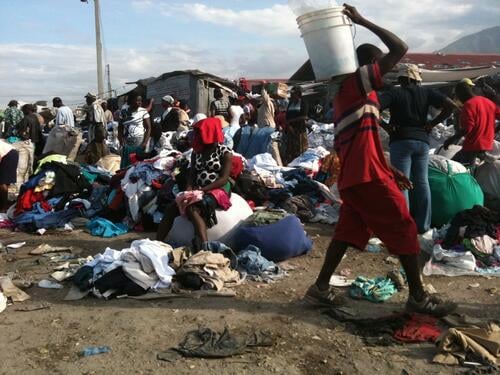
Scene de rue a Martissant
Haiti

On Aid and Reconstruction

One year after the earthquake in Port-au-Prince, a number of observers and actors are questioning the international aid: reconstruction is at a standstill, homeless people are still facing the same situation and the deadly cholera epidemic reminds us that international aid has not helped to improve the very poor sanitation system. Project Update - 28 Jan 2011
 
msf-placeholder
Democratic Republic of Congo

Civilians bearing brunt of increased violence and insecurity in eastern Democratic Republic of Congo says MSF

For years civilians in eastern DRC have suffered sexual violence related to the conflict. But MSF has not provided medical treatment for rape on this scale in South Kivu since 2004. In an already volatile context, MSF is confronted with what appears to be a further deterioration in the situation which directly impacts on the civilian population. Project Update - 28 Jan 2011
 
msf-placeholder
HIV/AIDS

Johnson & Johnson / Tibotec AIDS drug licenses leave out too many patients

Licenses just agreed between three generic manufacturers and pharmaceutical company Tibotec, owned by Johnson & Johnson, will keep a promising new AIDS medicine out of the hands of many patients across the developing world, Project Update - 28 Jan 2011
 
msf-placeholder
Greece

Immediate action needed to improve unbearable living conditions in detention facilities in Evros, Greece

There are so many people detained that they don’t have the space to even lie down in the cells, while the heating often does not work, leaving migrants freezing in sub-zero temperatures. In one of the detention centres, the toilet often does not work and excrements flood sections of the cell where migrants live and sleep. Press Release - 26 Jan 2011
 
msf-placeholder
Democratic Republic of Congo

Nomadic herders forced to flee in northern DRC

“They said that the women, children and elderly had come to Niangara to avoid being raped or kidnapped in the bush,” said Azaad Alocco, MSF project coordinator..“Even for nomads used to a hard life, the conditions in their makeshift camp were bad, with no water, no hygiene facilities and even the few bits of plastic sheeting they had for making shelters were stolen.” Project Update - 24 Jan 2011
 
msf-placeholder
Kenya

The Ifo II refugee camp, Kenya, lies empty while tens of thousands of Somali refugees live in unacceptable conditions less than 10 kilometers away

“The minimum international humanitarian standards are not being met,” said MSF Humanitarian Affairs Officer, Elena Estrada. “The refugees have scarce access to water, food, non-food items and shelter. There are no latrines, making open defecation the only option, and thus increasing the risk of the spread of disease, particularly in this vulnerable population group that is already fleeing years of war.” Press Release - 20 Jan 2011
Four mothers posing in a corridor of the Hospital in Bili. All four of them are staying in the hospital with their child, that's suffering from a severe case of malaria. Since the beginning of the project in 2016, the pediatric ward already treated more than 4.000 cases of complicated/severe form of malaria.
Médecins Sans Frontières (MSF)

Independent medical humanitarian assistance

We provide medical assistance to people affected by conflict, epidemics, disasters, or exclusion from healthcare. Our teams are made up of tens of thousands of health professionals, logistic and administrative staff - most of them hired locally. Our actions are guided by medical ethics and the principles of independence and impartiality. We are a non-profit, self-governed, member-based organisation.

Learn more