



Ebola disease in DRC: find out how we're responding
Learn more
8009 Results
 
msf-placeholder
Sudan

MSF has not been expelled from Darfur

Emergency medical organization Médecins Sans Frontières (MSF), wishes to correct an article published on some websites on 15 February 2011 which stated that MSF was expelled from Darfur. This is not correct. In fact it was a different medical aid organization working in Darfur, called Médecins Du Monde, that was expelled from the region.
MSF continues to provide independent medical and humanitarian assistance in both North and South Darfur.
Statement - 16 Feb 2011
 
msf-placeholder
South Sudan

MSF provides urgent assistance in response to clashes in southern Sudan

“MSF is extremely concerned for the wounded people who may not have received assistance,” said Tim Baerwaldt, MSF Head of Mission in southern Sudan.. “It is imperative that immediate access to urgent life-saving medical care is granted by the relevant authorities to both civilians and all parties to the conflict.”
Unhindered access to all in need is required immediately.
Project Update - 11 Feb 2011
 
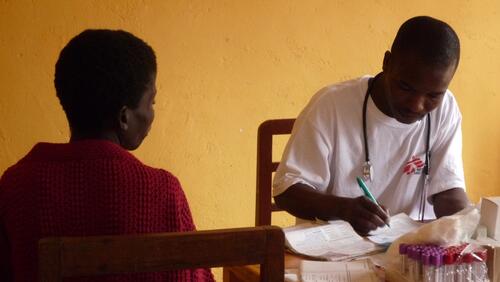
Consultation medicale au centre de sante de Namitembo. *** Local Caption *** La section française travaille dans le district de Chiradzulu, au sud du pays, où près d'une personne sur sept est infectée par le virus du VIH/sida. L'ampleur des besoins, l¿augmentation continue du nombre de patients et la pénurie de personnel de santé, à Chiradzulu comme dans l'ensemble du pays, nous ont poussés à mettre en place de nouvelles approches thérapeutiques. Nous avons simplifié les protocoles de soins et délégué la prise en charge des patients à tous les centres de santé de la zone. De plus, l¿ensemble du personnel du ministère de la Santé a été formé à l'initiation aux ARV et au suivi des patients stables. En 2008, plus de 4 377 patients du district de Chiradzulu ont pu bénéficier d¿un traitement ARV. Au total, depuis le lancement du projet en 2001, ce sont plus de 12 016 patients qui sont suivis par MSF et bénéficient d¿un traitement.
Malawi

Ten years ago, MSF launched ARV treatment for its HIV/AIDS patients

Since the 1990s, the HIV/AIDS pandemic has been a serious public health issue in southern Africa, in general, and in Malawi, in particular. In 1995, MSF launched an HIV/AIDS treatment program. In 2001, the first patients were placed on antiretroviral treatment. As of early 2011, 18,000 patients are now taking these drugs. Project Update - 11 Feb 2011
 
msf-placeholder
Malawi

10 years: New challenges ahead

Currently, patients who start on antiretroviral drugs (ARVs) are often at an advanced stage of the disease and putting them on treatment is a delicate process. According to the new WHO directives, patients would start taking these drugs at an early stage, which would reduce the mortality rate significantly. Voices from the Field - 11 Feb 2011
 
msf-placeholder
Malawi

'If I am here to talk to you today, that's because I am receiving treatment'

"Hello. My name is Fred Minandi. I am 42 years old and I am a farmer from Malawi. I am lucky to be one of MSF's patients benefiting from ARVs." Project Update - 11 Feb 2011
 
msf-placeholder
Kala azar

Fighting kala azar in southern Sudan

Kala azar—or visceral leishmaniasis—is a treatable but largely neglected disease. Southern Sudan is currently facing a massive kala azar epidemic. This is a region where three-quarters of the population has no access to basic medical care, and the health system is unable to deal with an emergency on this scale. Project Update - 10 Feb 2011
 
msf-placeholder
Sudan

Clashes displace thousands of people in Darfur

"People fled suddenly and arrived with nothing but their clothes. Initially they set up makeshift shelters made out of their clothes and grass, to help protect them from the cold nights," explained Cristina Falconi, MSF head of mission in Sudan. “MSF is providing plastic sheeting, blankets, mats, soap and jerry cans that will help people cope with their most basic need. Now that all the attention is focused on southern Sudan’s referendum, we shouldn't forget that there are pressing medical needs in Darfur." Press Release - 7 Feb 2011
 
msf-placeholder
Niger

Letter from the field: Satisfactions and sadness in Niger's intensive care malnutrition centres

Dr. Awras Majeed is a medical doctor from Wellington, New Zealand. For the past seven months, she has been working in Zinder, Niger, providing medical care to severely malnourished children. This is her first field placement with MSF and here, she gives a glimpse into what it is like to work in Niger during the ‘hunger season’. Voices from the Field - 4 Feb 2011
 
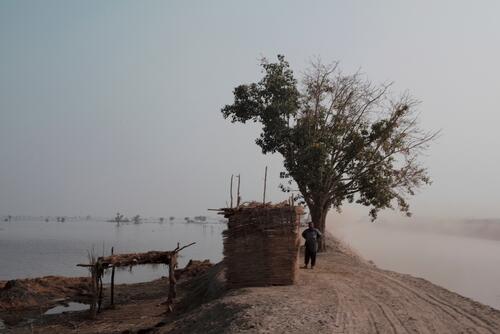
A hut on an embankment alongside flooded fields at Kheer Thar Canal, Union Council Nawra, District Jacobabad, Sindh Province, Pakistan on November 14, 2012.
Pakistan

Pakistan: Six months after the floods

It has been six months since devastating floods swept through Pakistan in late July 2010, inundating large swathes of the country and causing destruction on a massive scale. MSF was the first international emergency organisation to respond to the disaster in many flood-hit areas. Along with local organisations, it was able to react immediately to meet the needs of people affected by the floods. Report - 4 Feb 2011
 
msf-placeholder
Greece

I live in hell and all I see is nightmares

Testimony of a migrant detained in a border police station in Evros, Greece. Voices from the Field - 4 Feb 2011
Four mothers posing in a corridor of the Hospital in Bili. All four of them are staying in the hospital with their child, that's suffering from a severe case of malaria. Since the beginning of the project in 2016, the pediatric ward already treated more than 4.000 cases of complicated/severe form of malaria.
Médecins Sans Frontières (MSF)

Independent medical humanitarian assistance

We provide medical assistance to people affected by conflict, epidemics, disasters, or exclusion from healthcare. Our teams are made up of tens of thousands of health professionals, logistic and administrative staff - most of them hired locally. Our actions are guided by medical ethics and the principles of independence and impartiality. We are a non-profit, self-governed, member-based organisation.

Learn more