


Ebola disease in DRC: find out how we're responding
Learn more
8009 Results
 
msf-placeholder
Lebanon

Precarious living conditions make daily life a struggle

The Burj el-Barajneh camp, set up by the League of Red Cross Societies, took in refugees mainly from Galilee. Since then, the camp’s population has expanded year on year, with the arrival of migrants from elsewhere in Lebanon, as well as refugees from Syria, Egypt and Iraq. Project Update - 24 Feb 2011
 
msf-placeholder
Lebanon

Ahmed, 72, Palestinian refugee, 'I am a guest here'

'We have electricity for only a few hours a day, we have constant power cuts and the water is salty, but it’s all that we’ve got.' Voices from the Field - 24 Feb 2011
 
msf-placeholder
Lebanon

Hakim, 'Living conditions are very difficult; I don't think there's anyone who finds them tolerable'

Houses are overcrowded and built close together; zinc roofs cause temperatures to rise in the summer and drop sharply in the winter; the infrastructure is nearly non-existent; and there is very little privacy in people’s personal lives. Voices from the Field - 24 Feb 2011
 
msf-placeholder
Lebanon

Yassin, 67, 'Life... which life do you mean?'

I can’t help remembering the mutilated bodies of my friends, the blood, the smell – it’s still all there, in my head. I got pieces of shrapnel in my knee, my ankle, my hip. Today I don’t work; I survive thanks to support because I am disabled. Voices from the Field - 24 Feb 2011
 
msf-placeholder
Côte d'Ivoire

Mobile medical response for tens of thousands of Ivory Coast refugees near the border in Liberia

Since early December, 2010, following the post election violence and tension in Ivory Coast, tens of thousands of Ivorian fleeing their country have sought refuge on the Liberian border. Project Update - 24 Feb 2011
 
msf-placeholder
Cholera

Cholera cases declining in Haiti but vigilance continues

MSF is preparing to reposition its response to the cholera epidemic in Haiti. In the coming weeks, the international medical aid organization will hand over responsibility for treating cholera patients to other national and international actors capable of assuming that task. Project Update - 24 Feb 2011
 
msf-placeholder
Pneumonia

Pneumoccal vaccine is launched in Africa

“It’s great news that children in developing countries will finally be protected against pneumococcal diseases by getting this new vaccine,” said Dr. Tido von Schoen-Angerer, Executive Director of MSF’s Campaign for Access to Essential Medicines. “But it’s very disappointing that the prices agreed with two big pharma companies will be too high for countries to afford when donor support is not or no longer available. Prices need to come down so that as many children as possible can benefit from this vaccine.” Project Update - 23 Feb 2011
 
msf-placeholder
War and conflict

MSF response to civil unrest in Arab countries

As civil unrest leads to violent clashes in a number of countries in the Middle Eastern and Mediterranean region, emergency staff from MSF provide support to fill gaps in the medical services for people injured in the protests. Project Update - 22 Feb 2011
 
msf-placeholder
Access to Healthcare

How MSF decides to open a new project

MSF is always evaluating its projects and looking at other areas where our assistance may be needed. This is done through exploratory missions — or explos. Project Update - 17 Feb 2011
 
msf-placeholder
Democratic Republic of Congo

Reaching out to populations trapped by conflict in Congo

Slideshow available - In North Kivu, in the east of the Democratic Republic of Congo, violent conflict persists between government forces and an array of military groups. The frontlines between different armed actors constantly shift, and local people are trapped in the middle – often cut off from medical care. In and around Pinga, an MSF team has been reaching out to populations trapped by the conflict by running mobile clinics via motorbike and providing medical services to people who have no other hope of getting medical care. Voices from the Field - 16 Feb 2011
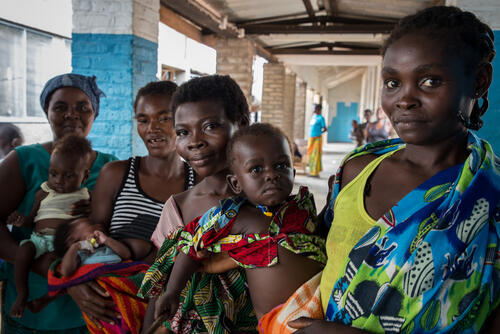
Four mothers posing in a corridor of the Hospital in Bili. All four of them are staying in the hospital with their child, that's suffering from a severe case of malaria. Since the beginning of the project in 2016, the pediatric ward already treated more than 4.000 cases of complicated/severe form of malaria.
Médecins Sans Frontières (MSF)

Independent medical humanitarian assistance

We provide medical assistance to people affected by conflict, epidemics, disasters, or exclusion from healthcare. Our teams are made up of tens of thousands of health professionals, logistic and administrative staff - most of them hired locally. Our actions are guided by medical ethics and the principles of independence and impartiality. We are a non-profit, self-governed, member-based organisation.

Learn more