



Ebola disease in DRC: find out how we're responding
Learn more
8009 Results
 
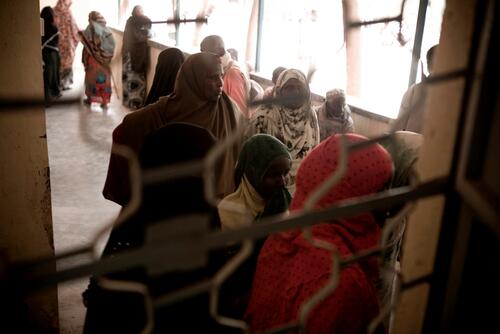
Women wait in line to have their eyes checked at the MSF Hospital in Galcayo South, Somalia on March 20, 2011. Eye problems such as the common cataract (clouding in the lens of the eye), can all too often lead to blindness if left untreated. The impact on lives is devastating, especially in a country where many people face a daily struggle to survive.
Somalia

MSF suspends operations in Medina area, Mogadishu, following direct attacks on its compound

“Following these incidents, we need to re-engage with local authorities and communities to re-evaluate if acceptable security conditions can still be guaranteed,” added Delville. “MSF calls upon all parties in Somalia to respect the lives of the civilian population and to ensure that humanitarian workers can safely access people in need”. Project Update - 30 Mar 2011
 
msf-placeholder
Democratic Republic of Congo

'Measles epidemic spiralling out of control' according to MSF

Over the past six months a measles epidemic has been sweeping through the Democratic Republic of Congo. MSF is raising the alarm and calling for concerted action to halt the spread of the disease. Project Update - 28 Mar 2011
 
msf-placeholder
Libya

MSF returns to Benghazi

“Since we first entered on February 24, our aim has been to reach areas where the ongoing fighting has left the most needs,” explained Simon Burroughs, MSF Emergency Coordinator in Libya. MSF is also trying to enter Libya from Tunisia. But, in spite of continuous efforts since February 23, the teams have still not received authorization to cross the border. Project Update - 26 Mar 2011
 
msf-placeholder
India

Mumbai slum fire victims lost everything they owned

“Our concern is that people here have many immediate needs that are not fulfilled,” said Thierry Mavungu Manwa, who is coordinating MSF's intervention. “The people here are hungry, they have lost everything they own and are sleeping under plastic canvases without any protection. The 1500 families all have to share the two latrines that are here. There is a serious lack of access to adequate water and sanitation.” Project Update - 25 Mar 2011
 
msf-placeholder
Japan

MSF works with psychologists in aftermath of Japanese quake

“Many people now are in a phase of acute stress disorder, which is a totally natural response to this level of trauma,” said Ritsuko Nishimae, a clinical psychologist working with the MSF team in Minami Sanriku. Project Update - 25 Mar 2011
 
msf-placeholder
Cambodia

Improving TB care in Cambodia

Cambodia has one of the highest tuberculosis burdens in the world. Project Update - 24 Mar 2011
 
msf-placeholder
Tuberculosis

New TB test to detect more people who need DR-TB treatment

WORLD TB DAY Press Release: A promising new diagnostic test will finally help detect more people with drug-resistant tuberculosis (DR-TB), increasing the urgency to solve major problems around the pricing and supply of DR-TB medicines, according to a new report by MSF. Press Release - 24 Mar 2011
 
msf-placeholder
War and conflict

Support to health facilities in the Middle East and North Africa

Ever since civil unrest and violence erupted in countries across North Africa and the Middle East, teams from Medecins Sans Frontieres (MSF) have been supplying and assisting hospitals and health structures where medical staff are facing increased numbers of injured people. Teams are also assisting people who are fleeing to neighbouring countries. Project Update - 23 Mar 2011
 
msf-placeholder
Libya

Normal health needs clearly go on despite the war in Libya

"In the few weeks that we spent in Benghazi, we managed to provide more than 30 tons of medical supplies to different hospitals including surgical kits and external fixators that are desperately needed for people with gunshot wounds." - Simon Burroughs: MSF emergency coordinator for Libya Voices from the Field - 23 Mar 2011
 
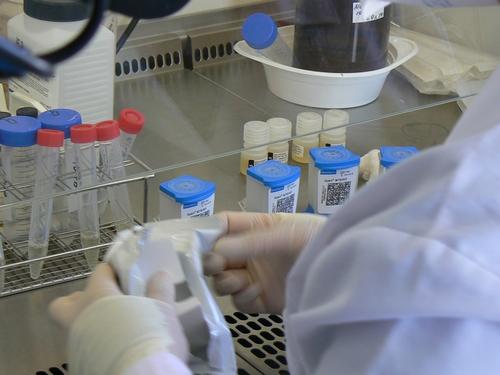
National Reference Laboratory, Abovyan. Sputum culture is currently used to detect TB, together with chest X-rays, sputum smear microscopy and Mantoux test. However, the growth of TB bacteria in culture is the only method allowing determining complete drug-susceptibility.<br> *** Local Caption *** Treatment options for patients with drug-resistant TB remain far short of what is needed. Treatments are long (up to 2 years), toxic (serious side-effects) and expensive. Furthermore, the cure rate is only 50%.
Bedaquiline, one of two new TB drugs to be developed in 50 years, is as yet only available for compassionate use, i.e., patients for whom most antibiotics are not effective. MSF has been administering a new treatment including bedaquiline to around thirty patients in Armenia since April 2013. Although we can not draw any definitive conclusions (at this point), several patients have shown significant signs of improvement and we have not observed any side effects associated with bedaquiline until now.
But, while compassionate use of this new drug gives cause for optimism to patients who have lost hope, it is not the solution for treating the hundreds of thousands of patients worldwide suffering from DR-TB. New, shorter, less toxic and cheaper treatments including bedaquiline and delamanid, the other new TB drug, need to be developed.
Tuberculosis

DR-TB drugs under the microscope

Treating DR-TB is complicated from a programmatic perspective: treatment is individualised, tailored according to which drugs a patient is resistant to. It is long and taxing, requiring people to take a course of antibiotics for up to two years and endure often intolerable side effects. Report - 23 Mar 2011
Four mothers posing in a corridor of the Hospital in Bili. All four of them are staying in the hospital with their child, that's suffering from a severe case of malaria. Since the beginning of the project in 2016, the pediatric ward already treated more than 4.000 cases of complicated/severe form of malaria.
Médecins Sans Frontières (MSF)

Independent medical humanitarian assistance

We provide medical assistance to people affected by conflict, epidemics, disasters, or exclusion from healthcare. Our teams are made up of tens of thousands of health professionals, logistic and administrative staff - most of them hired locally. Our actions are guided by medical ethics and the principles of independence and impartiality. We are a non-profit, self-governed, member-based organisation.

Learn more