


Ebola disease in DRC: find out how we're responding
Learn more
8003 Results
 
msf-placeholder
Bahrain

From hospital to prison - medical aid in Bahrain

On the continuing and unacceptable assault on the provision of impartial medical aid in Bahrain, where wounded patients remain too terrified to seek healthcare, and raids on health facilities plus arrests of medical staff continue. Project Update - 13 May 2011
 
msf-placeholder
Yemen

MSF ambulance hit by stray bullet

“The bullet entered through the back window,” said Dr. Vipul Chowdhary, MSF’s representative in Yemen. “Luckily, no patients were inside the vehicle at the time and the driver and nurse who were inside were not harmed. MSF reminds all parties of the absolute need to respect humanitarian medical work and staff in Sana’a and the rest of the country.” Project Update - 12 May 2011
 
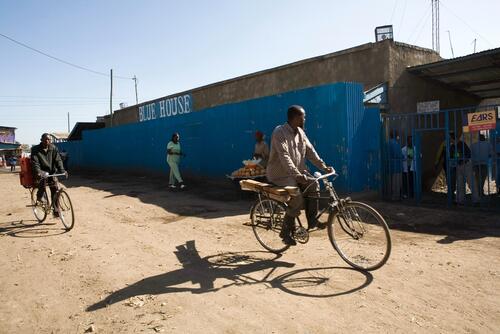
Blue House clinic in Mathare, one of the Kenyan capital Nairobi’s more violent slums, where MSF treats people with TB and HIV.
Diagnosing TB is extremely difficult and requires patients to produce sputum samples from within their lungs.  To be sure it is a case of MDR-TB, samples must be sent away to labs where the bacilli are grown for up to two months.  The wait to be sure about whether a person is infected with ‘regular’ or with MDR-TB can be too long for some, especially those who also have HIV.  For children, producing a sputum sample is even more difficult, and requires the expertise of specialists. MSF began treating MDR-TB in Kenya in May of 2006 and remains the only provider of MDR treatment in the country today.
HIV/AIDS

Getting Ahead of the Wave: Lessons for the Next Decade of the AIDS Response

A report released today by the international medical humanitarian organisation Médecins Sans Frontières (MSF) revealed that several countries hardest hit by the AIDS epidemic are improving HIV treatment to reduce deaths and illness – but a lack of support from donors prevents many from making vital changes. Report - 11 May 2011
 
msf-placeholder
Natural hazards

MSF continues psychological care for earthquake and tsunami survivors

“Most people lost everything in the disaster, including family, colleagues and friends, and the future is difficult to imagine,” said Ha Young Lee – a Korean psychologist that has worked with MSF in the aftermath of the Asian tsunami in Banda Aceh in 2005, as well as with North Korean refugees in Seoul. Project Update - 11 May 2011
 
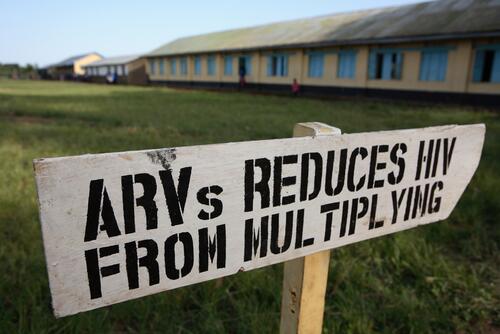
PATONGO, PADER DISTRICT, UGANDA, JUNE 22, 2006 :  Jane Adong is one of the rare ARV recipient in Patongo  and she shows the drug regimen she must take every day in Patongo IDPs camp in Pader District , Uganda on June 22, 2006. She works as a teacher and loves to give music lessons to the school choir. ARV drugs are not yet available in the area because of the ongoing civil war waged by the LRA (Lord's Resistance Army) in Northern Uganda. There are aproximatly 30 to 35,000 internally displaced people living in Patongo IDP camp and  over a million living in different camps because of the civil war waged by the LRA in Northern Uganda.   
After nearly two decades of conflict between the government and the Lord's Resistance Army (LRA), an estimated 90-95% of the population in northern Uganda now lives in overcrowded camps for displaced people, some within a kilometer of their homes. Many in the three most affected districts of Kitgum, Gulu, and Pader are almost entirely dependent on outside assistance for health care, water and sanitation services, and food. Starting in October 2004, in Kitgum district, MSF opened clinics in Orom, Agoro, Lokung, Mucwini, and most recently Potika, to help those most vulnerable to malaria: children under five and pregnant women. In Patongo, where the overcrowded camp houses 35-40,000 displaced people, MSF provides essential medical care and has drilled 10 wells with pumps that provide up to 600,000 liters of water each day.
HIV/AIDS

Fragile progress as several countries upgrade to better AIDS treatment

A report released today by the international medical humanitarian organisation Médecins Sans Frontières (MSF) revealed that several countries hardest hit by the AIDS epidemic are improving HIV treatment to reduce deaths and illness – but a lack of support from donors prevents many from making vital changes. Press Release - 11 May 2011
 
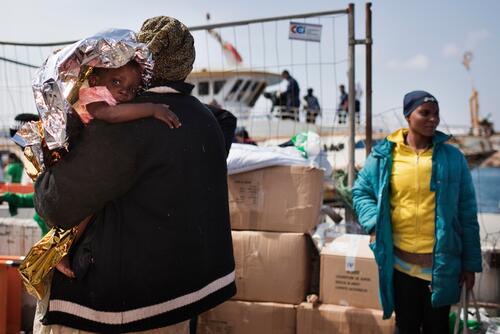
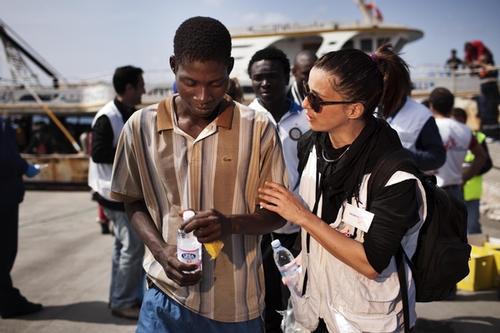
On April 19th 2011, 760 migrants have arrived from Libya after travelling for three days on an old fishing boat. Among the passengers, MSF counted seven children, 63 women; one of them pregnant. The majority of the migrants are originally from sub-Saharan Africa. This is the biggest boat landing ever occuring in Lampedusa. An MSF team consisting of a medical doctor, a nurse, two cultural mediators, a logistician and a field coordinator performs medical triage in the harbour and distributes non food items and water to the newly arrived migrants.
Italy

Seeking Refuge, Finding Suffering

The MSF briefing paper ”Seeking Refuge, Finding Suffering” documents the unacceptable conditions that are currently facing migrants, asylum-seekers and refugees in Italy. Report - 3 May 2011
 
On April 19th 2011, 760 migrants have arrived from Libya after travelling for three days on an old fishing boat. Among the passengers, MSF counted seven children, 63 women; one of them pregnant. The majority of the migrants are originally from sub-Saharan Africa. This is the biggest boat landing ever occuring in Lampedusa. An MSF team consisting of a medical doctor, a nurse, two cultural mediators, a logistician and a field coordinator performs medical triage in the harbour and distributes non food items and water to the newly arrived migrants.
Italy

Italy must drastically improve conditions facing refugees, asylum seekers and migrants fleeing North Africa, including Libya

When 12 boats carrying 2,665 refugees, asylum seekers and migrants landed on Italian shores, a further 715 people were rescued from another off-shore boat. Once again, MSF calls on Italian authorities to drastically improve reception conditions for new arrivals, particularly for the most vulnerable - women, children, unaccompanied minors and victims of violence. Press Release - 3 May 2011
 
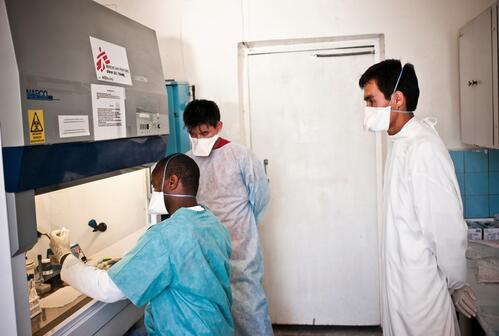
View into a TB laboratory in Nukus.
Uzbekistan

Comprehensive TB care for all: The Karakalpakstan Experience

The epidemiological data on Uzbekistan shows that TB is an alarming problem in the country and justifies the increasing priority being attached to control efforts within the country. Estimates of the disease prevalence in the country put the
total number of people with tuberculosis at 63,000 people, equivalent to a rate of 227 per 100,000 population. Within the
World Health Organization’s (WHO) European region, only three countries (Tajikistan, Kyrgystan and Moldova) have a higher
prevalence.
Report - 2 May 2011
 
msf-placeholder
Meningitis

Meningitis vaccine for 607,000 people in rural Chad

Thanks to the vaccine, the people of Laokassi, Moundou, Melfi, Kelo, Benoye and Kroumla should be protected against the disease for the next three years. Nonetheless, for the inhabitants of a country where meningitis is endemic, such as Chad, the new vaccine, which offers five years’ protection, cannot come soon enough. Project Update - 22 Apr 2011
 
msf-placeholder
Côte d'Ivoire

Medical and humanitarian emergency continues as violence persists in Ivory Coast

“We don’t know how many people are still hiding in fear in the Ivorian bush, or what levels of violence they may be currently exposed to, but the horrific stories we have heard from people are cause for alarm,” said Xavier Simon, MSF Head of Mission in Ivory Coast. Photo Story - 22 Apr 2011
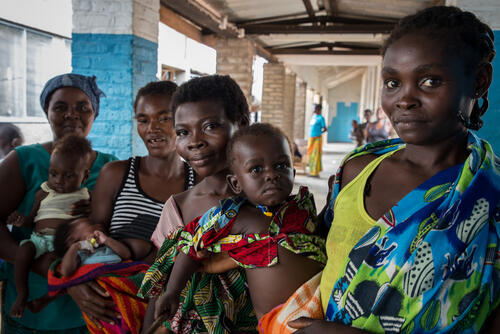
Four mothers posing in a corridor of the Hospital in Bili. All four of them are staying in the hospital with their child, that's suffering from a severe case of malaria. Since the beginning of the project in 2016, the pediatric ward already treated more than 4.000 cases of complicated/severe form of malaria.
Médecins Sans Frontières (MSF)

Independent medical humanitarian assistance

We provide medical assistance to people affected by conflict, epidemics, disasters, or exclusion from healthcare. Our teams are made up of tens of thousands of health professionals, logistic and administrative staff - most of them hired locally. Our actions are guided by medical ethics and the principles of independence and impartiality. We are a non-profit, self-governed, member-based organisation.

Learn more