



Ebola disease in DRC: find out how we're responding
Learn more
8015 Results
 
msf-placeholder
Greece

Two accounts from detained migrants

Two migrants share their stories of loss as they escape to Evros, Greece Project Update - 16 Jun 2011
 
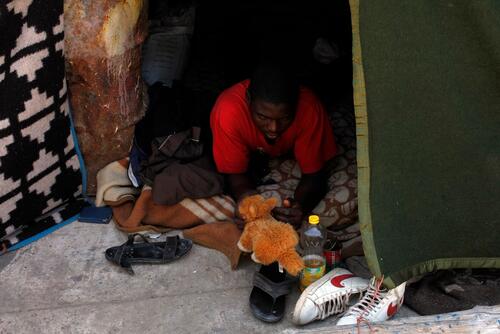
Between 800-1000 African migrants and refugees take refuge at a port on the outskirts of Tripoli. MSF has opened a mobile clinic at the location.
Many have been there since the begining of the conflict, living in fear of violence against people with black skin. Some have been robbed of money and all identity papers.
Libya

From a rock to a hard place: The neglected victims of the conflict in Libya

Almost 600,000 of the one million civilians who have fled the conflict in Libya are migrants. On crossing the border from Libya, these migrants are classed as ’third-country nationals’. This briefing paper documents the impact of their situation on their health and their lives, and points to the urgent and immediate need for more effective protection and a stronger humanitarian response. Report - 15 Jun 2011
 
msf-placeholder
Central African Republic

Outside humanitarian spotlight, Central African Republic is dogged by conflict

In Central African Republic, one million people are estimated to be affected by the ongoing violence. Particularly since 2008, families have been repeatedly displaced from their villages, forced to flee into the bush, where they remain trapped and unable to return to their homes, with little access any medical care. Project Update - 15 Jun 2011
 
msf-placeholder
Greece

More than 60 percent of the medical problems faced by detained migrants in Evros, Greece, caused by inhumane living and hygiene conditions

MSF urges Greek authorities to ensure dignified living conditions in detention facilities, including appropriate accommodation, sufficient distribution of food, clothing and personal hygiene items, and adequate periods of time outdoors. Press Release - 15 Jun 2011
 
msf-placeholder
Access to medicines

GAVI money welcome but could it be more wisely spent?

MSF well knows the importance of immunisation, and its teams of doctors and nurses vaccinate around 10 million children in the developing world each year. But cash donated by governments means cash donated by taxpayers, and therefore it is right to ask unpleasant questions. Project Update - 14 Jun 2011
 
msf-placeholder
Kenya

Dadaab: No Way In - Dr Gedi Mohamed

Dr Gedi Mohamed is director of the busy general hospital in Dagahaley refugee camp, near Dadaab. He is the first Kenyan Somali doctor to work in the camp since MSF took over healthcare there. Dr Gedi describes what brought him to Dadaab, and how MSF is coping with the current crisis. Voices from the Field - 10 Jun 2011
 
msf-placeholder
Kenya

The biggest refugee camp in the world is full

As more and more people crowd the camps and the surrounding desert, the availability of essential services – such as water, sanitation and education – is shrinking, and living conditions are getting rapidly worse. Project Update - 10 Jun 2011
 
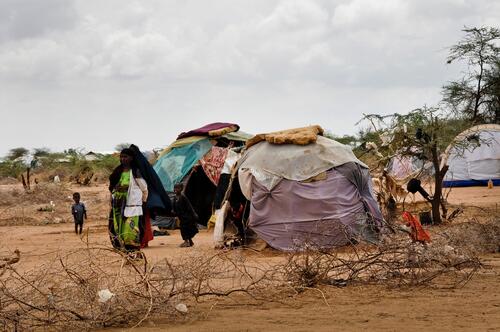
Newly arrived refugees stand outside their makeshift shelters, near Dagahaley refugee camp, Dadaab, Kenya.
Kenya

No Way In: The biggest refugee camp in the world is full

The three camps – Dagahaley, Hagadera and Ifo – known collectively as the ‘largest refugee camp in the world’ – were established 20 years ago to house up to 90,000 people escaping violence and civil war in Somalia. With no end to the conflict in sight, there are now more than 350,000 people crowded into the camps’ perimeters, while the number of new arrivals is surging. Report - 10 Jun 2011
 
msf-placeholder
Côte d'Ivoire

Fear persists even after violence subsides in Ivory Coast

“In Ivory Coast, terrified people in the bush must make the cruel choice to travel to villages where they don’t feel safe, in search of food or medicine. It’s crucial that emergency aid comes closer to where people have chosen to seek safety." - said Xavier Simon, MSF Country Representative in Ivory Coast. Project Update - 9 Jun 2011
 
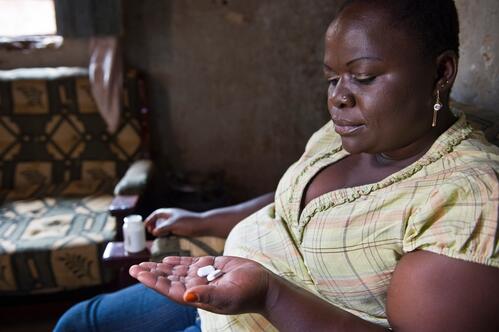
Siama Musine lives and works in Kibera, a deprived area of the Kenyan capital, Nairobi. Siama is HIV positive and is being treated at an MSF clinic in Kibera. Six years ago, after she had started antiretroviral treatment, Siama documented her life in pictures in a project called ‘My Life with HIV’. Now, in 2011, Siama is a healthy and active individual, working as a health promotion assistant in a health centre and supporting her son through his education. She also plans to move out of Nairobi soon to a place she has bought outside the capital and to keep goats there.
HIV/AIDS

Frontline: HIV treatment is also HIV prevention

New research has proved conclusively that treatment of HIV can reduce the transmission of the disease from one person to another by 96 percent. In other words, HIV treatment is also HIV prevention. The UN Summit on HIV/AIDS starts on June 8 and officials will decide on a blueprint for the next decade of the global response to the epidemic. Will global leaders act now to save millions of lives and prevent millions of new infections? Project Update - 8 Jun 2011
Four mothers posing in a corridor of the Hospital in Bili. All four of them are staying in the hospital with their child, that's suffering from a severe case of malaria. Since the beginning of the project in 2016, the pediatric ward already treated more than 4.000 cases of complicated/severe form of malaria.
Médecins Sans Frontières (MSF)

Independent medical humanitarian assistance

We provide medical assistance to people affected by conflict, epidemics, disasters, or exclusion from healthcare. Our teams are made up of tens of thousands of health professionals, logistic and administrative staff - most of them hired locally. Our actions are guided by medical ethics and the principles of independence and impartiality. We are a non-profit, self-governed, member-based organisation.

Learn more