



Ebola disease in DRC: find out how we're responding
Learn more
8004 Results
 
msf-placeholder
Papua New Guinea

Returning to Bougainville's neglected south after a decade-long absence

MSF is currently the only international NGO based permanently in this remote southern region of Bougainville. The state of care for pregnant women will be one of the biggest priorities for MSF in Buin. In May, for example, approximately one in four pregnant women was classified as an emergency case. Project Update - 14 Jul 2011
 
msf-placeholder
South Sudan

As South Sudan enters independence, the long-standing humanitarian emergency continues

The heightened hostility between both sides and violent attacks by the North in contested border areas [Abyei, South Kordofan, and similar patterns of violence on the border between South Darfur and Western Bahr El Ghazal] is making media headlines In the lead-up to the South’s independence from the North. However, other violence has also claimed lives and displaced people this year, but has rarely made it into the news. Voices from the Field - 12 Jul 2011
 
msf-placeholder
HIV/AIDS

Gilead licence expands access, but several countries left out

Excluded countries should be ready to issue compulsory licences to access needed drugs Press Release - 12 Jul 2011
 
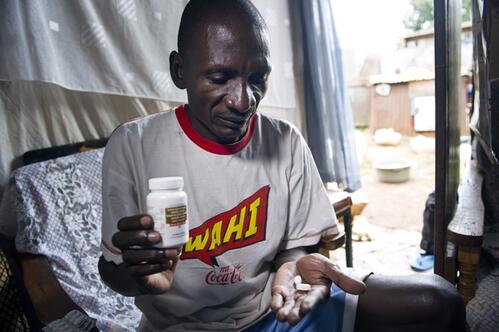
Charles Sako is 41 and lives with his partner and three-year old daughter in Kibera, a deprived area of the Kenyan capital, Nairobi. Charles is HIV positive and is being treated at an MSF clinic in Kibera. Six years ago, after he had started antiretroviral treatment, Charles documented his life in pictures in a project called ‘My Life with HIV’. Now, in 2011, Charles is a healthy and active individual, working as a receptionist in a health centre to support his family. His child, Gift Sandra, is HIV negative and Charles has plans to become a truck driver to further his dreams and ensure financial security for his family.
HIV/AIDS

Untangling the Web of Antiretroviral Price Reductions, 14th Edition

This report includes information on the evolution in price for each ARV over time, charting the difference between the original prices and the lowest prices available from generic producers for developing countries. Report - 11 Jul 2011
 
msf-placeholder
Tuberculosis

In former Soviet Bloc prisons, controlling TB proves challenging

In the former Soviet bloc country of Kyrgyzstan, MSF has been supporting TB care for prisoners since 2005. The aim is to reduce transmission of TB and treat those who have it. But working within the penitentiary system, which has proven to be a fertile breeding ground for the disease, presents some major challenges. Project Update - 11 Jul 2011
 
msf-placeholder
Somalia

MSF stepping up malnutrition interventions in Horn of Africa

The announcement by one of the main armed factions in Somalia, Al Shabaab, that foreign relief organizations would be welcomed into territories under their control has raised hopes for a desperately needed scale-up of assistance inside the country. Project Update - 8 Jul 2011
 
msf-placeholder
Pakistan

Despite increased support, limited access prevents the scope of MSF intervention in Kurram Agency, Pakistan

For several years now, the limitation of access to Kurram for our international staff, including medical specialists, is limiting our intervention. The support provided by MSF in Kurram could be extended, replicated to other hospitals and to other FATA agencies, if access restrictions to these areas were lessened. Project Update - 8 Jul 2011
 
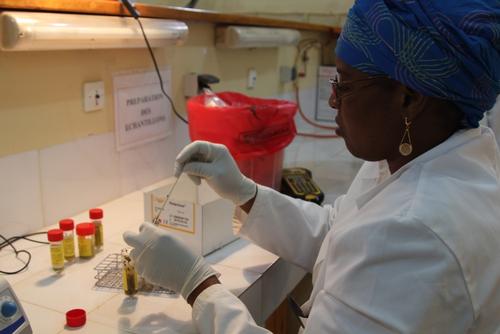
In the laboratory of Maradi, a team of a dozen people receive about 1,200 specimens (blood, urine/stool, mothers' breast milk...) every week, to be analyzed for the trial. The specimens taken in the morning, whether by the medical teams at the five health centres involved in the study or by the field workers or assistant nurses at the patients' homes, arrive at the laboratory in Maradi in the early afternoon.
Four samples are necessary to meet the requirements of the protocol. One of them is for the rotavirus test, another is for the laboratory in Cincinnati, USA (only if the test is positive for rotavirus) and the two other samples are kept in freezers (at between -85°C and -72°C) for the archives, in case they are needed later.
Website

MSF Field Research

Find important research based on our field experience on our dedicated Field Research website. fieldresearch.msf.org
 
msf-placeholder
Libya

'As war goes on, people's needs are growing'

“All kinds of people who have never worked in a hospital before are working in medical facilities and caring for others: trying to re-open medical structures or to help with nursing care. A dentist has been working in an emergency department, while an accountant has been sweeping floors. But how long can they hold on? They are constantly working, and they sometimes fall asleep the moment there are no emergency cases.” Voices from the Field - 5 Jul 2011
 
msf-placeholder
Democratic Republic of Congo

As cholera epidemic spreads in DRC, MSF opens emergency treatment centres along Congo river

The three major factors that promote the spread of cholera are all currently present in DRC: dense urban population; a lack of hygiene and little access to clean water; and the confirmed presence of the disease in several locations. In a country where the health system is faltering, this outbreak comes at a time when several other medical emergencies are already causing havoc, in particular a measles epidemic that is raging in several provinces. Project Update - 4 Jul 2011
Four mothers posing in a corridor of the Hospital in Bili. All four of them are staying in the hospital with their child, that's suffering from a severe case of malaria. Since the beginning of the project in 2016, the pediatric ward already treated more than 4.000 cases of complicated/severe form of malaria.
Médecins Sans Frontières (MSF)

Independent medical humanitarian assistance

We provide medical assistance to people affected by conflict, epidemics, disasters, or exclusion from healthcare. Our teams are made up of tens of thousands of health professionals, logistic and administrative staff - most of them hired locally. Our actions are guided by medical ethics and the principles of independence and impartiality. We are a non-profit, self-governed, member-based organisation.

Learn more