



Ebola disease in DRC: find out how we're responding
Learn more
8009 Results
 
msf-placeholder
Somalia

MSF hospital caught in centre of fighting in Mogadishu

MSF condemns the shelling of Daynile Hospital in Mogadishu. The fighting began in the morning in this neighbourhood of Daynile, located in an outlying area of the city. The shelling struck the hospital’s emergency room and a portion of its surgical ward, causing significant damage. MSF has worked in the hospital since 2006. Press Release - 30 Mar 2012
 
msf-placeholder
Malnutrition

MSF's dual response to an expected nutritional crisis

The annual "hunger season" seems likely to be particularly serious in the Sahel this year, and a few regions may face acute nutritional crises in the coming months. MSF is expanding its nutritional activities to address the seasonal “peak” in malnutrition rates, while also developing longer-term approaches to be integrated into regular programs. Project Update - 30 Mar 2012
 
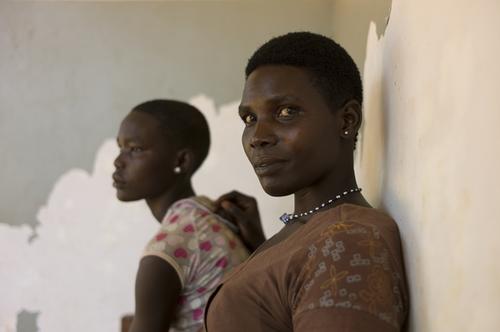
Village Health Team member Atto Betty (R) and her MDRTB patient Oyella Mercy. Part of MSF's TB programme in Kitgum northern Uganda. Oyella Mercy, 15, is being supported through her treatment for
multidrug-resistant TB by village health team member Atto Betty, 32, who
visits her twice a day at her home in Kitgum, northern Uganda, to check on
her condition, make sure that she has washed and eaten, and to administer
her drugs. “Sometimes she does not want to take the drugs, so I deal with
her like a baby, and then she accept what I am telling her: I say now we
are going to take drugs, don’t fear anything, we are going to get cured.”
Tuberculosis

From the Ground Up: Building a Drug-Resistant TB programme in Uganda

Uganda is one of the world's 22 high burden countries for tuberculosis (TB). In this report, MSF calls on all key stakeholders to assure quality rapid TB diagnosis, treatment and care, and argues that a scale-up of the decentralized and community-based approach, including access to second-line TB drugs at district level, is the most feasible method of averting the country's impending health crisis. Report - 29 Mar 2012
 
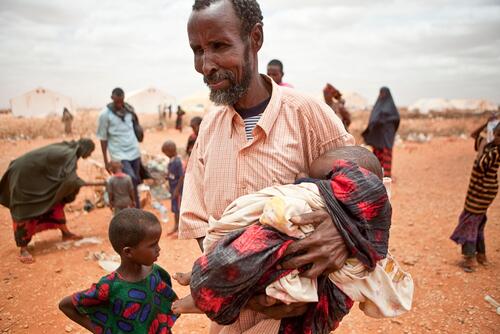
All new arrivals are screened for diseases and malnutrition crossing the border into Ethiopia.
Refugees, IDPs and people on the move

Assisting the Somali population affected by the humanitarian crisis of 2011

This report provides an overview of MSF activities in Somalia and neighbouring Kenya and Ethiopia, both of which received large numbers of Somali refugees in 2011. The data presented, though provisional, account for MSF’s medical activities, financial income and expenditures. The narrative sketches how MSF as a medical aid organisation responded to this evolving crisis. Report - 29 Mar 2012
 
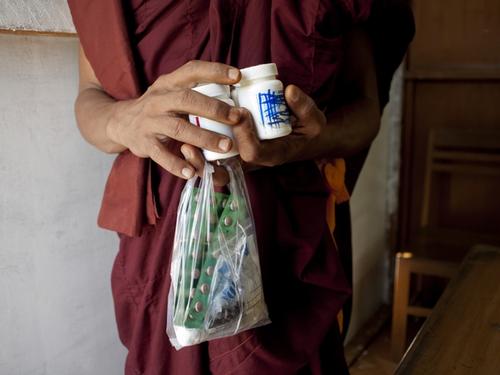
A monk holds his ART medication at the MSF Tharketa clinic.
Access to medicines

Losing ground: How Global Fund shortages and PEPFAR cuts are jeopardising the fight against HIV and TB

MSF issue brief on how Global Fund shortages and PEPFAR cuts are jeopardizing the fight against HIV and TB. Report - 26 Mar 2012
 
msf-placeholder
Tuberculosis

Alarming scale of multidrug-resistant tuberculosis requires rapid response to avert emerging global crisis

Alarming new data suggest that the global scope of multidrug-resistant tuberculosis (MDR-TB) is much more vast than previously estimated, requiring a concerted international effort to combat. "We need new drugs, new research, new programmes, and a new commitment from international donors and governments to tackle this deadly disease," said Dr. Karunakara. "The world can no longer sit back and ignore the threat of MDR-TB." Press Release - 20 Mar 2012
 
msf-placeholder
Cambodia

Improving TB detection and treatment in prisons

MSF is expanding medical activities in three prisons in Phnom Penh, Cambodia to include basic primary health care in addition to providing ongoing TB/HIV screening and treatment support Project Update - 20 Mar 2012
 
msf-placeholder
South Sudan

Window of opportunity closing fast to provide assistance to 80,000 Sudanese refugees from Blue Nile state

Tens of thousands of Sudanese refugees in South Sudan urgently need humanitarian aid to be scaled up in a short window of opportunity that is rapidly closing before the rainy season starts. In the camps at Doro and Jamam, only an emergency approach to provide urgently needed aid can still ensure the health and dignity of refugees seeking shelter from violence. Press Release - 14 Mar 2012
 
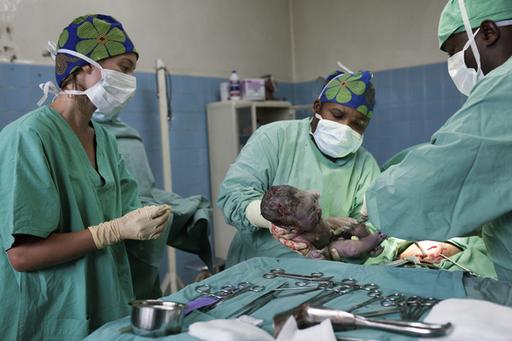
MSF midwife Sam Perkins prepares to take care of a baby, born by Caesarian section, in Masisi hospital.

This photo was taken as part of the www.msfdelivers.org fundraising campaign.
Women's health

Maternal death: The avoidable crisis

MSF’s briefing paper, “Maternal Death: The Avoidable Crisis” details how the provision of emergency obstetric care to pregnant women in acute and chronic humanitarian crises can have a direct impact and save women’s lives. Report - 8 Mar 2012
 
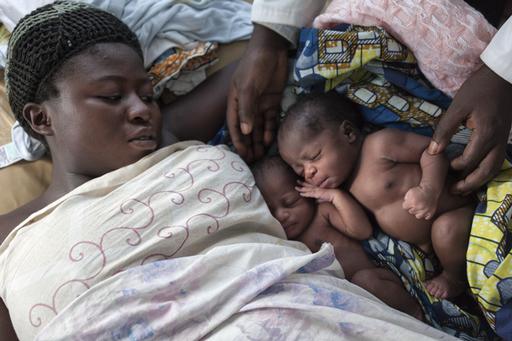
A mother lies with her newborn twins in the maternity department of Masisi hospital.

This photo was taken as part of the www.msfdelivers.org fundraising campaign.
Women's health

Médecins Sans Frontières highlights medical approaches to avert maternal deaths during humanitarian crises

On International Women’s Day, MSF is underlining the fact that far too many women continue to die avoidable deaths during childbirth. MSF’s briefing paper, “Maternal Death: The Avoidable Crisis” details how the provision of emergency obstetric care to pregnant women in acute and chronic humanitarian crises can have a direct impact and save women’s lives. Press Release - 8 Mar 2012
Four mothers posing in a corridor of the Hospital in Bili. All four of them are staying in the hospital with their child, that's suffering from a severe case of malaria. Since the beginning of the project in 2016, the pediatric ward already treated more than 4.000 cases of complicated/severe form of malaria.
Médecins Sans Frontières (MSF)

Independent medical humanitarian assistance

We provide medical assistance to people affected by conflict, epidemics, disasters, or exclusion from healthcare. Our teams are made up of tens of thousands of health professionals, logistic and administrative staff - most of them hired locally. Our actions are guided by medical ethics and the principles of independence and impartiality. We are a non-profit, self-governed, member-based organisation.

Learn more