



Ebola disease in DRC: find out how we're responding
Learn more
8009 Results
 
msf-placeholder
Syria

Treating the wounded, a forgotten priority

MSF calls for the Syrian government and the international community to make treating the wounded a priority. Press Release - 12 Jun 2012
 
msf-placeholder
Myanmar

MSF statement on the situation in Rakhine state

Following escalating violence in Rakhine state, Myanmar, Médecins Sans Frontières (MSF) has temporarily suspended activities and reduced staff. This means the disruption of lifesaving basic healthcare, including the provision of urgent antiretroviral (ARV) treatment to HIV-positive patients. MSF is concerned about the safety of all its patients and staff, and hopes to resume medical activities as soon as possible in order to avoid lives being lost. Statement - 12 Jun 2012
 
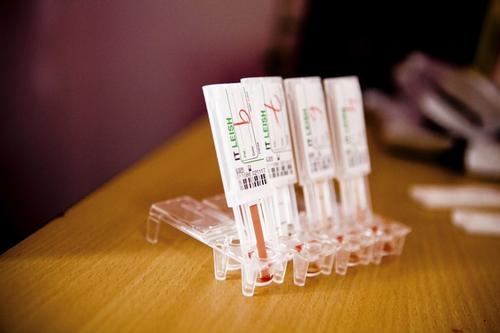
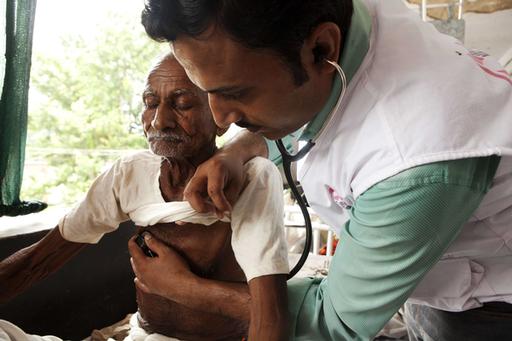
Since July 2007, MSF has been running a kala azar diagnostic and treatment project in Vaishali district, in the centre of the Indian state of Bihar. In the four years, about 8,000 patients have been treated at the Sadar Hospital, and in five MSF-supported health centres. The initial cure rate of kala azar cases is at 98 per cent. Kala azar is a disease endemic to Bihar. Transmitted by the sand fly, the disease mainly affects the spleen and, if left untreated, is fatal for virtually all patients.
Neglected diseases

Fighting Neglect: Finding ways to manage and control visceral leishmaniasis, human African trypanosomiasis and Chagas disease

In order to break the vicious cycle that leaves tropical diseases neglected, existing programmes that diagnose and treat patients need to be expanded and medical research to develop simpler, more effective tools needs to be supported, according to a new report, Fighting Neglect, released today by Médecins Sans Frontières (MSF). Report - 11 Jun 2012
 
Since July 2007, MSF has been running a kala azar diagnostic and treatment project in Vaishali district, in the centre of the Indian state of Bihar. In the four years, about 8,000 patients have been treated at the Sadar Hospital, and in five MSF-supported health centres. The initial cure rate of kala azar cases is at 98 per cent. Kala azar is a disease endemic to Bihar. Transmitted by the sand fly, the disease mainly affects the spleen and, if left untreated, is fatal for virtually all patients.
Neglected diseases

New MSF report highlights how to break cycle of neglect

To break the vicious cycle that leaves tropical diseases neglected, existing programmes that diagnose and treat patients need to be expanded and medical research to develop simpler, more effective tools needs to be supported, according to a new report 'Fighting Neglect' released by MSF. Press Release - 11 Jun 2012
 
Jasiira MSF OPD, unknown fever *** Local Caption *** Since July 2011, nearly 200,000 newly displaced people have arrived in Mogadishu from drought-affected central regions of Somalia. MSF has opened 4 ITFCs in the capital city to treat malnourished children and distribute ready-to-use therapeutic food to the IDPs. Measles vaccination is also undertaken to respond current epidemic outbreak.
Somalia

Steep increase in measles cases

Measles is a major killer in Somalia and it’s easily preventable. Vaccination - with high coverage and proper vaccine management - is critical to saving lives in Somalia. MSF asks all authorities to support emergency vaccination programmes throughout Somalia. Project Update - 8 Jun 2012
 
msf-placeholder
Democratic Republic of Congo

Repercussions of the conflict in Kivu

The population of the Kivu provinces in the east of the Democratic Republic of Congo is fighting an incessant war of survival, not only against the bullets flying in the latest peak of this long-running conflict but also against the vacuum of infrastructure and health resources. Since April 2012, MSF has treated over 200 people wounded due to clashes between armed groups. Project Update - 6 Jun 2012
 
msf-placeholder
Zimbabwe

HIV patients should not bear financial burden of donor retreat

In Zimbabwe, there are at least 66,000 people living with HIV who face the prospect of losing their current access to lifesaving antiretroviral (ARV) treatment because of a dangerous shortfall of international funding for local treatment programmes. MSF urges donors to make sufficient funding available for free and effective HIV treatment to all who need it. Project Update - 6 Jun 2012
 
msf-placeholder
Somalia

The risks of childbirth

MSF expanded its medical services in Galkayo North in December 2011 by adding maternity and obstetric care. The number of deliveries has since boomed to about 200 per month, many coming from increasingly far away. Project Update - 6 Jun 2012
 
msf-placeholder
South Sudan

Nowhere to settle for 30,000 new refugees

MSF calls on the United Nations refugee agency (UNHCR) to identify a suitable place of refuge immediately for the 30,000 new refugees who have crossed the border from Sudan’s Blue Nile State into South Sudan’s Upper Nile State over the past two weeks. Around 2,000 people are crossing the border daily, in desperate need of humanitarian aid. Press Release - 4 Jun 2012
 
msf-placeholder
Guinea

MSF vaccinates 117,000 people against cholera

MSF has vaccinated 117,000 people against cholera in the region of Boffa, 150 km north of Conakry, the Guinean capital. This is the first time that people in Africa have been protected during a cholera outbreak by a two-dose oral vaccine. Press Release - 1 Jun 2012
Four mothers posing in a corridor of the Hospital in Bili. All four of them are staying in the hospital with their child, that's suffering from a severe case of malaria. Since the beginning of the project in 2016, the pediatric ward already treated more than 4.000 cases of complicated/severe form of malaria.
Médecins Sans Frontières (MSF)

Independent medical humanitarian assistance

We provide medical assistance to people affected by conflict, epidemics, disasters, or exclusion from healthcare. Our teams are made up of tens of thousands of health professionals, logistic and administrative staff - most of them hired locally. Our actions are guided by medical ethics and the principles of independence and impartiality. We are a non-profit, self-governed, member-based organisation.

Learn more