



Ebola disease in DRC: find out how we're responding
Learn more
8009 Results
 
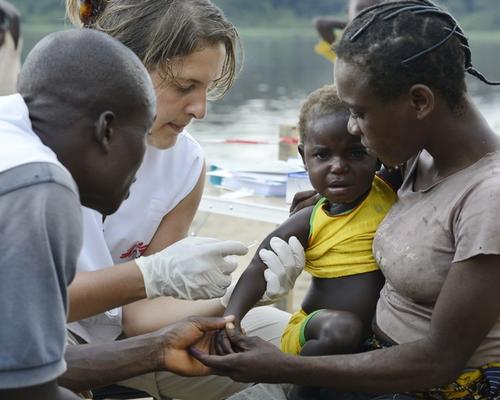
In Congo's rainforest, MSF cured 15.000 pygmies affected by Yaws, a neglected disease, in 3 months (Sept - Oct 2012) using a new therapeutic regime (single dose oral antibiotic)
Yaws is a neglected tropical disease caused by a bacterium that affects the skin, bone and cartilage. Lack of resources, it has never been completely eradicated. Humans are the only reservoir of this bacterial infection. A recent discovery that a single-dose of azithromycin (given orally) can cure the disease has raised the prospects of eradicating yaws altogether. 
It affects many isolated communities whose populations Congo Pigmy North, away from the health care system. 

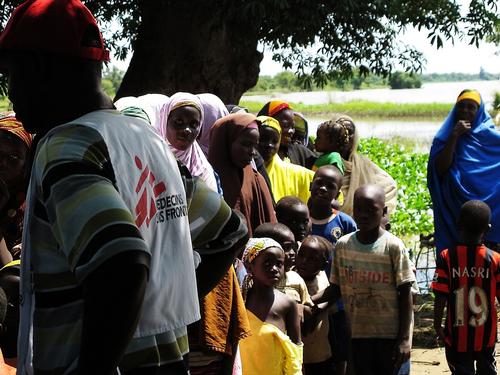
MSF-Epicentre with OCP decided to launch a universal treatment with azithromycin that can eradicate this illness among Aboriginal people (Pygmies) in the Bétou and Enyellé districts. During two months (in september and october 2012), three MSF teams have traveled on the Ubangi River, which separates the two Congos and trails through the rainforest. 
A real human and logistical challenge to achieve these Pygmy communities in their villages in the rainy season because it is the only time during which they are sedentary.
Democratic Republic of Congo

Treating yaws in the Aka Pygmy population

The Aka Pygmy communities living in northern Congo have been ostracised in their home country for many years. They have almost no access to healthcare and, as a result, are still affected by the neglected disease known as yaws. MSF recently carried out a campaign for treating this disease, which turned out to be both a logistical feat and a world first in medical terms. Project Update - 13 Nov 2012
 
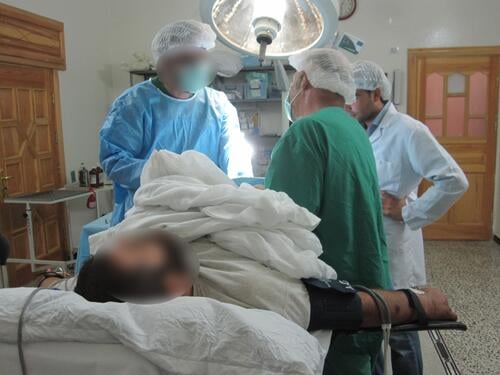
 *** Local Caption *** MSF has been providing surgical care to victims of violence, in a hospital set up in the north of Syria, since June 2012.
Syria

MSF increases medical activities

MSF is increasing its medical activities to help victims of the conflict in Syria. MSF is providing emergency and surgical treatment for the wounded, as well as medical care for people displaced from their homes within Syria and for refugees who have escaped to neighbouring countries. Project Update - 6 Nov 2012
 
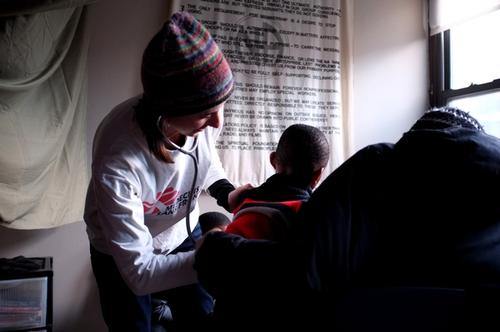
Dr. Lucy Doyle, a physician with Doctors Without Borders, examines a patient in a makeshift medical clinic in a building at the Ocean Village housing complex in Rockaway, Queens, November 5, 2012.  Electrical power, heat and plumbing were cut in the entire five-building complex following Superstorm Sandy.  The organization established the clinic in a room normally used for Narcotics Anonymous meetings.
United States of America

MSF filling gaps in medical aid for people affected by Hurricane Sandy

MSF teams, working alongside local community groups, are providing medical and mental health care to Hurricane Sandy-affected communities in the New York City boroughs of Brooklyn, Queens, and Staten Island, as well as Hoboken, New Jersey. The vast majority of the patients treated by MSF in the shelters and underserved communities have been elderly, homeless, or physically or mentally impaired. Project Update - 5 Nov 2012
 
msf-placeholder
Myanmar

MSF prevented from reaching most communities affected by violence in Rakhine State

As MSF medical teams work to reach communities affected by the violence in Rakhine State they face ongoing antagonism generated by deep ethnic divisions. Press Release - 5 Nov 2012
 
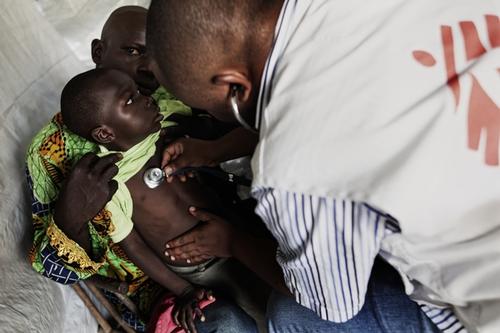
A young patient is seen by an MSF staff during a mobile clinic. DR Congo, Haut Uele, Dungu area/Nadogolo.
Democratic Republic of Congo

Congolese aid workers return to Pinga

All of the Congolese personnel employed by Médecins Sans Frontières (MSF) in its Pinga project in the North Kivu province of the Democratic Republic of the Congo have now returned to their positions, a month after active fighting between armed groups forced many to flee the area in search of safety. Project Update - 5 Nov 2012
 
After severe floods hit eastern Nigeria in september 2012, Doctors Without Borders/Médecins Sans Frontières (MSF) provided medical assistance and distributed aid kits to populations in need.
Hundreds of villages were destroyed and thousands of people were affected by the floods, which occurred after heavy rainfall caused the Benue River to rise above its banks. The situation was worsened because additional water was released from a dam in neighbouring Cameroon. In some places, houses were totally submerged, their residents forced to flee.
MSF’s intervention began early September 2012, when medical and logistics teams were deployed in Adamawa and Taraba states. MSF used motorboats to reach isolated and displaced populations in remote flooded areas that were left without access to medical attention.
MSF teams exercised vector control, carried out mobile clinics, provided primary and emergency health care and distributed NFI kits and mosquito nets. In Taraba state, MSF mobile clinics carried out 1,430 consultations in Mayorenewo and 10 nearby villages. In Adamawa state, MSF mobile clinics treated 5,500 patients in 33 flooded villages and two internally displaced people’s camps in Numan and Borong. Soaps and mosquito nets were also distributed to 2,200 beneficiaries.
Nigeria

MSF provides medical assistance in flood-affected areas

After severe floods hit eastern Nigeria in September, MSF provided medical assistance and distributed aid kits to populations in need. Hundreds of villages were destroyed and thousands of people were affected by the floods. MSF staff also found high rates of malaria, particularly in the Mayorenewo area, where more than 80 per cent of the patients tested positive. Project Update - 2 Nov 2012
 
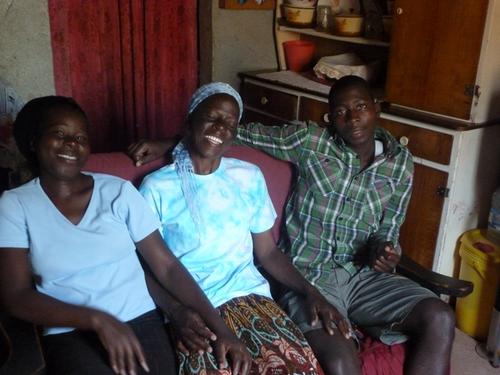
48-year old Mary Marizani is the first patient MSF has treated and cured for multi-drug resistant tuberculosis  in Zimbabwe. Mary began treatment in December 2010 at the Epworth Polyclinic,  and was declared cured after 21 months of treatment. She is now leading an active life and
serves  as an inspiration and role model for other patients who are receiving treatment for the life-threatening disease.
Zimbabwe

First patient cured of multidrug-resistant tuberculosis

After two gruelling years of treatment, Mary Marizani is MSF’s first patient in Zimbabwe to beat multidrug-resistant tuberculosis (MDR-TB). While this is great news, there is still an urgent need for better treatment that cures people in less time and with fewer side effects. Project Update - 31 Oct 2012
 
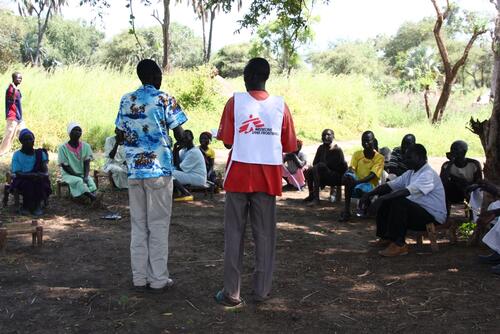
A group session to encourage people to express themselves. The mental stress of being a refugee can disable a person, making an already difficult situation even harder to cope with. Depression, anxiety and fear are common symptoms, as are unexplained physical complaints. In Doro camp, set up for refugees who crossed from Sudan’s Blue Nile State into South Sudan’s Maban County, MSF is supporting its medical activities with psychosocial work.
South Sudan

Story of a mental health patient

Athena Viscusi has recently returned from South Sudan, where she was working as MSF’s mental health officer in Jamam refugee camp in Maban county. Here, Athena tells the story of one particular patient who left an indelible mark on the team. Voices from the Field - 31 Oct 2012
 
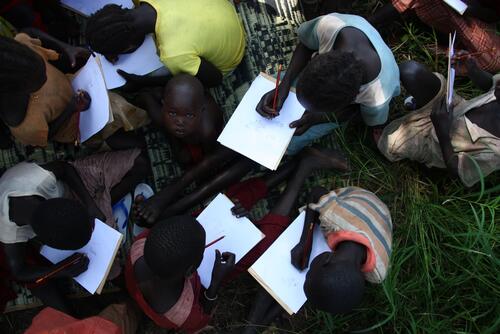
Children drawing as part of MSF's mental health activities. The mental stress of being a refugee can disable a person, making an already difficult situation even harder to cope with. Depression, anxiety and fear are common symptoms, as are unexplained physical complaints. In Doro camp, set up for refugees who crossed from Sudan’s Blue Nile State into South Sudan’s Maban County, MSF is supporting its medical activities with psychosocial work.
South Sudan

Mental healthcare for refugees

The mental stress of being a refugee can disable a person – even the whole family – making an already difficult situation even harder to cope with. Depression, anxiety and fear are common symptoms, as are unexplained physical complaints. In the camps for refugees who have crossed from Sudan’s Blue Nile State into South Sudan’s Maban County, Médecins Sans Frontières (MSF) is supporting its medical activities with psychosocial work. Project Update - 30 Oct 2012
 
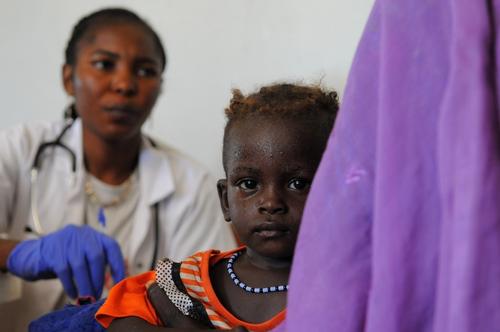
Biltine 11 Sept. 2012: A girl looks into the camera while nurse Aim?e Abne (background) talks to her mother at MSF's Ambulant Therapeutic Feeding Center (ATFC) in Angara. Since April MSF runs a feeding programme in 11 health centers in Biltine district. In the beginning of September, around 900 children were receiving weekly rations of Ready to Use Therapeutic Food, with approximately 100 new admissions per week. In Biltine in Eastern Chad a MSF survey identified a high rate of malnutrition, prompting the organization to start a feeding programme for children under five years.
Chad

Hunger season ends but malnutrition remains

The harvest is almost in, but MSF continues to admit new patients to its emergency feeding programme in eastern Chad. More than 1,000 children are currently being treated in an MSF feeding centre in Biltine district. The hunger season may be over, but causes underlying the nutrition crisis persist and need to be addressed. Project Update - 25 Oct 2012
Four mothers posing in a corridor of the Hospital in Bili. All four of them are staying in the hospital with their child, that's suffering from a severe case of malaria. Since the beginning of the project in 2016, the pediatric ward already treated more than 4.000 cases of complicated/severe form of malaria.
Médecins Sans Frontières (MSF)

Independent medical humanitarian assistance

We provide medical assistance to people affected by conflict, epidemics, disasters, or exclusion from healthcare. Our teams are made up of tens of thousands of health professionals, logistic and administrative staff - most of them hired locally. Our actions are guided by medical ethics and the principles of independence and impartiality. We are a non-profit, self-governed, member-based organisation.

Learn more