




Ebola disease in DRC: find out how we're responding
Learn more
8003 Results
 
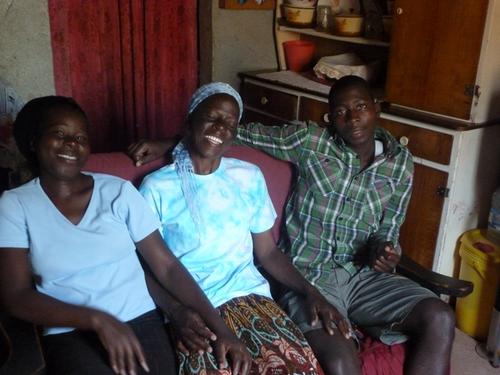
48-year old Mary Marizani is the first patient MSF has treated and cured for multi-drug resistant tuberculosis  in Zimbabwe. Mary began treatment in December 2010 at the Epworth Polyclinic,  and was declared cured after 21 months of treatment. She is now leading an active life and
serves  as an inspiration and role model for other patients who are receiving treatment for the life-threatening disease.
Zimbabwe

First patient cured of multidrug-resistant tuberculosis

After two gruelling years of treatment, Mary Marizani is MSF’s first patient in Zimbabwe to beat multidrug-resistant tuberculosis (MDR-TB). While this is great news, there is still an urgent need for better treatment that cures people in less time and with fewer side effects. Project Update - 31 Oct 2012
 
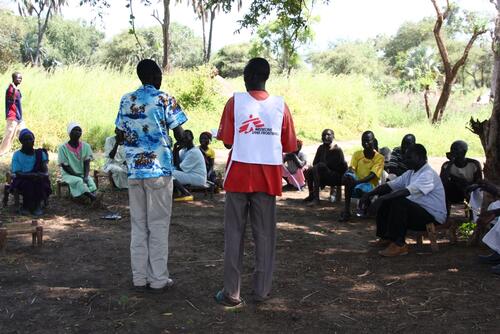
A group session to encourage people to express themselves. The mental stress of being a refugee can disable a person, making an already difficult situation even harder to cope with. Depression, anxiety and fear are common symptoms, as are unexplained physical complaints. In Doro camp, set up for refugees who crossed from Sudan’s Blue Nile State into South Sudan’s Maban County, MSF is supporting its medical activities with psychosocial work.
South Sudan

Story of a mental health patient

Athena Viscusi has recently returned from South Sudan, where she was working as MSF’s mental health officer in Jamam refugee camp in Maban county. Here, Athena tells the story of one particular patient who left an indelible mark on the team. Voices from the Field - 31 Oct 2012
 
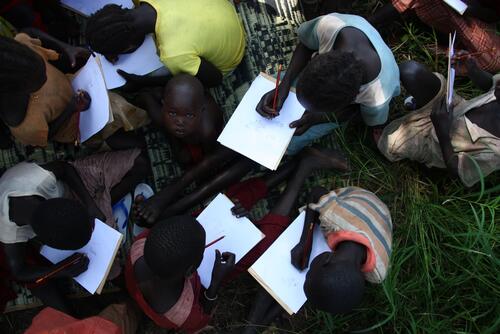
Children drawing as part of MSF's mental health activities. The mental stress of being a refugee can disable a person, making an already difficult situation even harder to cope with. Depression, anxiety and fear are common symptoms, as are unexplained physical complaints. In Doro camp, set up for refugees who crossed from Sudan’s Blue Nile State into South Sudan’s Maban County, MSF is supporting its medical activities with psychosocial work.
South Sudan

Mental healthcare for refugees

The mental stress of being a refugee can disable a person – even the whole family – making an already difficult situation even harder to cope with. Depression, anxiety and fear are common symptoms, as are unexplained physical complaints. In the camps for refugees who have crossed from Sudan’s Blue Nile State into South Sudan’s Maban County, Médecins Sans Frontières (MSF) is supporting its medical activities with psychosocial work. Project Update - 30 Oct 2012
 
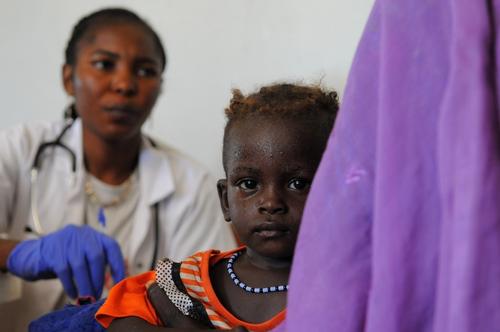
Biltine 11 Sept. 2012: A girl looks into the camera while nurse Aim?e Abne (background) talks to her mother at MSF's Ambulant Therapeutic Feeding Center (ATFC) in Angara. Since April MSF runs a feeding programme in 11 health centers in Biltine district. In the beginning of September, around 900 children were receiving weekly rations of Ready to Use Therapeutic Food, with approximately 100 new admissions per week. In Biltine in Eastern Chad a MSF survey identified a high rate of malnutrition, prompting the organization to start a feeding programme for children under five years.
Chad

Hunger season ends but malnutrition remains

The harvest is almost in, but MSF continues to admit new patients to its emergency feeding programme in eastern Chad. More than 1,000 children are currently being treated in an MSF feeding centre in Biltine district. The hunger season may be over, but causes underlying the nutrition crisis persist and need to be addressed. Project Update - 25 Oct 2012
 
msf-placeholder
Honduras

Facing an epidemic of urban violence

In Tegucigalpa, the capital of Honduras, MSF is providing assistance to vulnerable populations who face extreme levels of violence and lack access to healthcare. An MSF mobile team has been visiting the most violent neighbourhoods every day, providing medical care to people living on the streets. Project Update - 25 Oct 2012
 
msf-placeholder
Pakistan

MSF treats patients with acute watery diarrhoea

During the monsoon season, Khyber Pakhtunkhwa saw an increase in the number of people diagnosed with acute watery diarrhoea, a condition caused by dirty drinking water, poor sanitation, and poor hygiene conditions. In response to the growing number of cases, the teams from MSF and the Ministry of Health set up temporary treatment centres in Timergara, Hangu and Sadda. Project Update - 23 Oct 2012
 
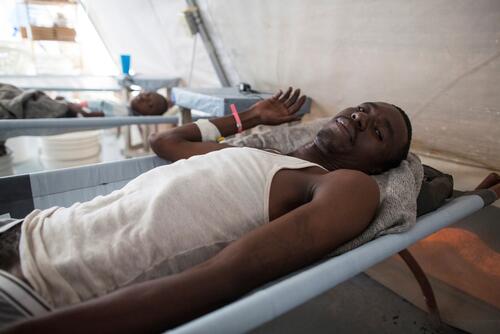
Port-au-Prince, Haiti - A man who is recovering from a severe case of cholera at the Doctors Without Borders clinic.
Haiti

Cholera remains major public health problem

Hundreds of thousands of people are still at risk from cholera two years after the epidemic began in the aftermath of the earthquake which devastated the country. In Port-au-Prince, more than 350,000 survivors of the earthquake are still in camps, and many thousands are living in shantytowns, where sanitary conditions are deplorable. Project Update - 19 Oct 2012
 
In March 2012, MSF opened a 56 bed maternity hospital in eastern Khost province. This hospital will provide pregnant women in the region with much needed access to quality maternal healthcare, in one of the most volatile provinces in Afghanistan.
Afghanistan

MSF to resume medical activities in Khost

MSF will resume medical activities in its maternity hospital in Khost Province, Afghanistan. MSF suspended its activities following an explosion in the hospital in April, 2012. Press Release - 17 Oct 2012
 
msf-placeholder
Kenya

MSF reiterates its anger and shock one year after the abduction of aid workers from Dadaab

MSF continues to support the families of Blanca Thiebaut and Montserrat Serra, who were abducted while helping Somali refugees in Dadaab, Kenya. MSF reiterates its anger over this act of violence and demands their immediate release. Statement - 11 Oct 2012
 
msf-placeholder
Tajikistan

MSF is first to treat children with MDR-TB

For the first time, children in Tajikistan with multidrug-resistant tuberculosis (MDR-TB) are receiving treatment for the life-threatening disease. MSF has opened a new ward in Machiton hospital, near the capital Dushanbe, where it plans to treat 60 to 100 children with TB, and their family members, over the next three months. Project Update - 10 Oct 2012
Four mothers posing in a corridor of the Hospital in Bili. All four of them are staying in the hospital with their child, that's suffering from a severe case of malaria. Since the beginning of the project in 2016, the pediatric ward already treated more than 4.000 cases of complicated/severe form of malaria.
Médecins Sans Frontières (MSF)

Independent medical humanitarian assistance

We provide medical assistance to people affected by conflict, epidemics, disasters, or exclusion from healthcare. Our teams are made up of tens of thousands of health professionals, logistic and administrative staff - most of them hired locally. Our actions are guided by medical ethics and the principles of independence and impartiality. We are a non-profit, self-governed, member-based organisation.

Learn more