



Ebola disease in DRC: find out how we're responding
Learn more
8009 Results
 
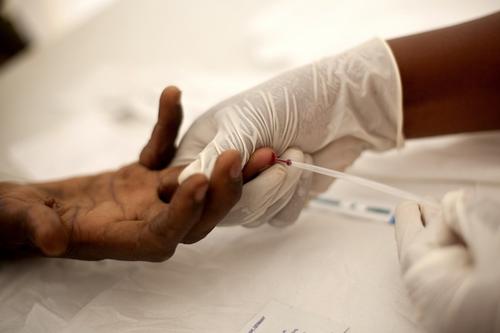
MSF Expert Client performing a HIV test at the MSF Dipping Tank community testing campaign at Nhletsheni, in Shiselweleni region, south of Swaziland.
Eswatini

Trying out new approaches to treat HIV

Thirty years into the HIV/AIDS epidemic, and more than a decade into antiretroviral (ARV) treatment being introduced in developing countries, the latest scientific evidence shows that treatment both keeps people healthy, and prevents the virus from spreading to others. Micaela Serafini,MSF medical referent, speaks about MSF’s work in Swaziland. Voices from the Field - 28 Nov 2012
 
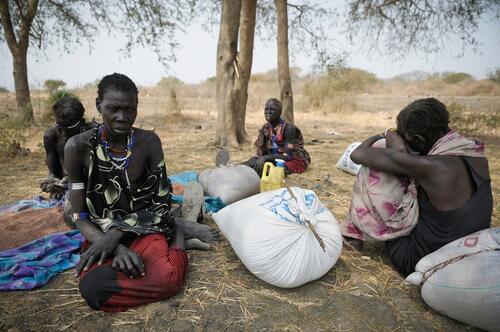
Karajoi Maze (in red skirt) on the outskirts of Lekwongole village. Lekwongole was the scene of the abduction of her daughter and she feels uncomfortable being bak in the village. "My house was burned, totally. And my daughter was taken by the attackers. And our family was scattered, some of them taken away too…

We are not staying at night in the village. We are sleeping in the bush because we are afraid. When you come to the village, you hear people saying they have heard that the attackers are coming again from this direction or that direction, and you run away again. That is why we are not coming back to town, but are just staying away. Since the attack, we are living in fear." Full testimony available from OCB Cell 3 comms advisor.

Jonglei State in South Sudan is in the grip of a cycle of extremely violent inter-communal fighting. Since 2008 MSF has witnessed in increase in intensity of the generations-old cattle-rustling between communities of different ethnicity. Over Christmas and New Year of 2011 a particularly violent attack in the area around Pibor and the outreach location of Lekwongole village displaced tens of thousands and left Lekwongole and some surrounding villages razed to the ground. MSF's hospital in Pibor was looted and the clinic in Lekwongole was largely destroyed. MSF treated 108 trauma victims in the following weeks, many women and children with gunshot wounds. But the consequences of fear and displacement in the bush continued long after, with malaria and malnutrition at very high levels in MSF's hospital.
South Sudan

South Sudan’s hidden crisis: how violence against civilians is devastating communities and preventing access to life saving healthcare in Jonglei

MSF report reveals medical consequences of violence and the impact on healthcare. Report - 27 Nov 2012
 
MSF hospital in Lankien South Sudan. Patients come and go from the main entrance of the hospital.
South Sudan

Violence a 'hidden crisis' in Jonglei

A report released today by MSF highlights the devastating impact of violence on the lives and health of civilians in South Sudan’s Jonglei state. Women and children as young as four months old are among the victims. Healthcare is threatened as medical facilities are targeted and destroyed. Press Release - 27 Nov 2012
 
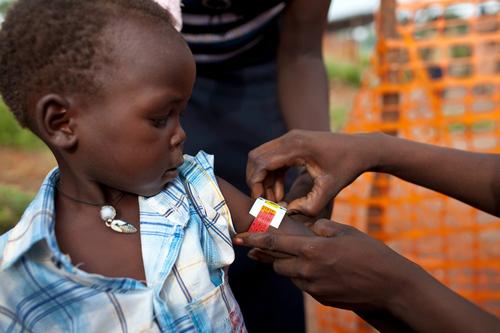
An MSF staff member takes a young boy's Mid-Upper Arm Circumference (MUAC) outside an MSF Outreach Therapeutic Program, Yida, South Sudan, Friday, Sept. 14, 2012. In order to prevent overcrowding at its main hospital, MSF launched three OTPs for routine nutritional screenings throughout the camp. *** Local Caption *** Yida refugee camp, September 2012. Between the beginning of March and mid-July 2012, the population of the Yida camp swelled massively with the arrival of 40,000 additional refugees in increasingly precarious health conditions from South Kordofan?s Nuba Mountains. As the size of the camp increases, the services initially sized for a population of around 15,000 people still require further expansion and continuation of current efforts underway. The camp continues to expand with influx of new refugees, however, the overall numbers of new arrivals are much less in recent months than in the months of Apil and May. People fleeing conflict and food insecurity in Sudan are continuing to arrive daily. Up to 1,000 more people are moving into the camp each week. In the absence of accurate data, the population of Yida can be estimated between 50,000 and 65,000.
South Sudan

Treating child malnutrition in Yida camp

In Yida refugee camp, South Sudan, teams from Médecins Sans Frontières (MSF) have set up outpatient treatment sites for children suffering from malnutrition. Project Update - 26 Nov 2012
 
In the consultation room of MSF mental health counselors in the hospital of Malgobek, Ingushetia.
Russia

MSF closes mental health programme in Ingushetia

MSF has closed its mental health programme in Ingushetia where it has provided psychosocial counselling and assistance to survivors of violent trauma for 12 years. Project Update - 23 Nov 2012
 
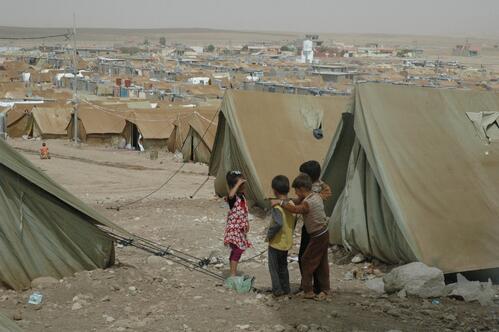
MSF opened in May 2012 a primary health care centre (PHCC) in the Domeez Syrian refugee camp. MSF is the main health actor in the camp and provides medical consultations, mental health care and training for the health staff in the camp.
Iraq

Providing healthcare to Syrian refugees in Domeez camp

As the crisis in Syria intensifies, people continue to flee to neighbouring countries. More then 50,000 Syrians have sought refuge in Iraq, including 42,000 in the Kurdistan region where many live in overcrowded camps. Project Update - 21 Nov 2012
 
msf-placeholder
Palestine

In Gaza, 'the wounded are stuck at home'

Virigine Mathieu, MSF head of mission, talks to Libération about the situation for people in Gaza since the launch of Operation 'Pillar of Defence'.

In the Media - 21 Nov 2012
 
 *** Local Caption *** Depuis Juillet, près de 60 000 personnes ont fui les affrontements entre le groupe du M23 (mouvement du 23 mars), formé d'ex-combattant de la milice CNDP et les FARDC sur le territoire de Rutshuru, pour trouver refuge dans le camp de déplacés de Kanyaruchinya, à une quinzaine de kilomètres au nord de Goma. 
MSF supporte le personnel du centre de santé de Kanyaruchinya pour la prise en charge des soins de santé primaire et a établi un centre de traitement du choléra. <br/>

Since July, nearly 60,000 people have fled fighting between the M23 group (Movement of March 23), formed by ex-combatant of the CNDP militi and the FARDC in the territory of Rutshuru, to find refuge in the IDPs camp of Kanyaruchinya, about fifteen kilometers north of Goma.
MSF supports the health center of Kanyaruchinya for primary health care and established a cholera treatment center.
Democratic Republic of Congo

Thousands flee as rebels advance on Goma

As a rebel advance reaches the outskirts of Goma, the provincial capital of North Kivu province in the Democratic Republic of Congo, tens of thousands of people have fled, leaving villages and displaced persons camps empty. Around 60,000 people – many of whom had previously been displaced – fled Kanyaruchinya camp, where MSF is working, in panic. Statement - 20 Nov 2012
 
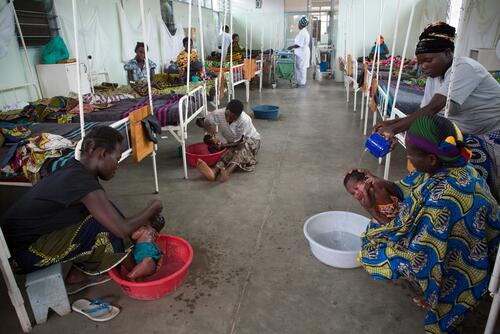
Mothers wash their new born babies in one of the three post-natal wards. MSF has worked in Burundi since 1992. In the town of Kabezi, Bujumbura rural province, MSF has been managing an emergency center for gynecological and obstetric care since 2006. The center offers neonatal services as well as an ambulance service transport system for women who are in need of emergency care. By introducing emergency obstetric care and a referral system, MSF has drastically reduced the level of maternal mortality in Burundi.
Women's health

Safe Delivery: Reducing maternal mortality in Sierra Leone and Burundi

New research from Médecins Sans Frontières (MSF) projects in Kabezi, Burundi, and Bo, Sierra Leone, indicates that it is possible to achieve a rapid and substantial decrease in maternal deaths of up to 74 per cent by providing access to emergency obstetric care. Report - 19 Nov 2012
 
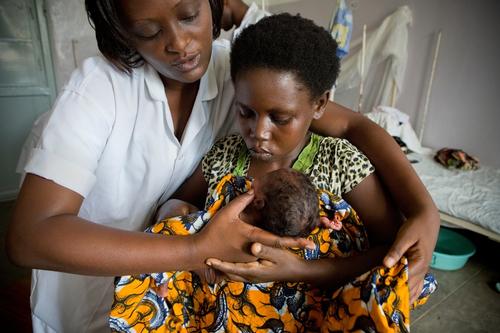
Jeannine Ntunzwenimana, 20, was seven months pregnant when her water broke. "This is my second child, my first is 3 years and 6 months old. My first pregnancy was by c-section at the MSF hospital. My water broke early, I was very affraid because it was too soon. I went to the nearest health center at Gitaza. It was one and a half hour walk away. An ambulance from MSF came to pick me up. The health center called them because they said they weren't able to help the baby. If MSF was not here, I could of died and my baby too. The way they welcome us is very different to other places." Jeannine named her daughter Fridatienne Itangakubuntu who weighed 1.3 kilos when she was born two weeks ago. MSF has worked in Burundi since 1992. In the town of Kabezi, Bujumbura rural province, MSF has been managing an emergency center for gynecological and obstetric care since 2006. The center offers neonatal services as well as an ambulance service transport system for women who are in need of emergency care. By introducing emergency obstetric care and a referral system, MSF has drastically reduced the level of maternal mortality in Burundi.
Women's health

Burundi and Sierra Leone: Access to emergency care significantly reduces maternal mortality

New research from MSF projects in Kabezi, Burundi, and Bo, Sierra Leone, indicates that up to 74 per cent of maternal deaths could be avoided by providing access to emergency obstetric care. MSF data for 2011 indicate that the introduction of an ambulance referral system together with the provision of emergency obstetric services can significantly reduce maternal mortality. Press Release - 19 Nov 2012
Four mothers posing in a corridor of the Hospital in Bili. All four of them are staying in the hospital with their child, that's suffering from a severe case of malaria. Since the beginning of the project in 2016, the pediatric ward already treated more than 4.000 cases of complicated/severe form of malaria.
Médecins Sans Frontières (MSF)

Independent medical humanitarian assistance

We provide medical assistance to people affected by conflict, epidemics, disasters, or exclusion from healthcare. Our teams are made up of tens of thousands of health professionals, logistic and administrative staff - most of them hired locally. Our actions are guided by medical ethics and the principles of independence and impartiality. We are a non-profit, self-governed, member-based organisation.

Learn more