



Ebola disease in DRC: find out how we're responding
Learn more
2094 Results
 
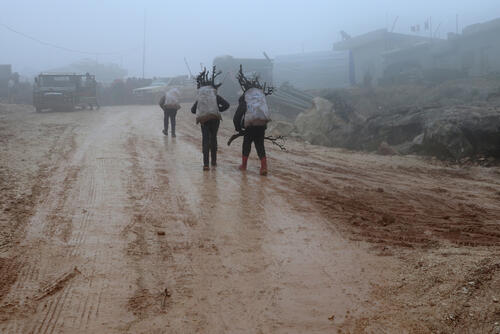
Yemen, Hodeidah, 1 May 2019 - on the road to Sanaa.
Yemen

A population on the frontline, indiscriminate attacks on civilians, and still no sign of change

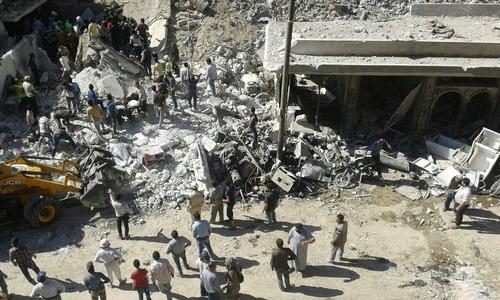
Three years after Abs hospital bombing, MSF’s head of mission in Sana’a calls on combatants to finally respect international humanitarian law and protect civilians. Voices from the Field - 27 Aug 2019
 
In the West Bank, MSF provides psychotherapy in Nablus and Qalqiliya. While three of our psychologists in the project are local Palestinians, two are foreigners who do not speak Arabic. This means our interpreters play a vital role in our work there.
Palestine

Mental healthcare in translation

MSF is providing psychotherapy services in Nablus and Qalqiliya. While three of our psychologists in the project are local Palestinians, two are foreigners who do not speak Arabic. This means interpreters play a vital role in our work there. Project Update - 25 Aug 2019
 
Over a week since Ocean Viking's first rescue, there are 356 people on board. MSF are still expecting to be assigned a place of safety for the disembarkation.
Mediterranean migration

“He just kept running, despite the wound and the bleeding”

MSF doctor tells the story of a 20-year-old Libyan man who had shrapnel removed from his torso on the search and rescue ship Ocean Viking in the Mediterranean Voices from the Field - 22 Aug 2019
 
In Fori, in the south of the state capital Maiduguri, MSF runs an inpatient therapeutic feeding centre (ITFC) with more than 70 beds. The centre opened in January 2017 and treats severely malnourished children with medical complications such as tuberculosis, cerebral malaria, acute watery diarrhoea and respiratory tract infections. Severely malnourished children without medical complication and children with moderate acute malnutrition are enrolled in MSF’s outpatient feeding programme, which admits 130-300 children each month. From January to June 2019, MSF provided inpatient nutritional treatment for 1,161 children, ambulatory nutritional treatment for 1,216 children, and treated 1,436 patients with malaria and 555 with measles.
Nigeria

Children in displacement camps need immediate protection

Severine Courtiol Eguiluz, MSF advocacy manager in Nigeria, talks about the urgent needs of displaced people, especially children who have lived most of their lives in the protracted conflict that broke out in northeast Nigeria a decade ago. Voices from the Field - 13 Aug 2019
 
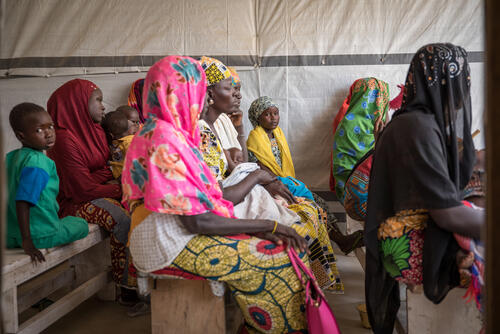
Maiduguri, the capital city of Borno state, hosts around one million displaced people from across the region. Many of them live in the camps informally set up where basic needs such as shelter, food, hygiene facilities and healthcare are insufficient and people are living in dire conditions.
Nigeria

Crisis Info: Borno and Yobe states, August 2019

Read the latest update on the crisis unfolding in northeast Nigeria after a decade of conflict and MSF’s response. Crisis Update - 13 Aug 2019
 
Maiduguri, the capital city of Borno state, hosts around one million displaced people from across the region. Many of them live in the camps informally set up where basic needs such as shelter, food, hygiene facilities and healthcare are insufficient and people are living in dire conditions.
Nigeria

Ten years and counting: Needs in northeast Nigeria remain dire after a decade of conflict

The decade-long conflict in northeast Nigeria is far from over and hundreds of thousands of people remain entirely dependent on humanitarian aid for survival. Project Update - 12 Aug 2019
 
A doctor tends to a patient in Aden, Yemen, 1 August 2019.
Yemen

Hospital in Aden overwhelmed by wounded in intense fighting

In less than 24 hours, Médecins Sans Frontières has treated 119 people in its hospital in Aden, Yemen, and the wounded continue to pour in. Press Release - 10 Aug 2019
 
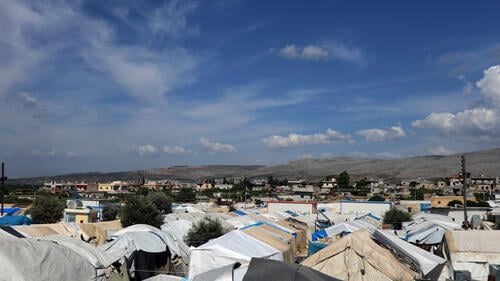
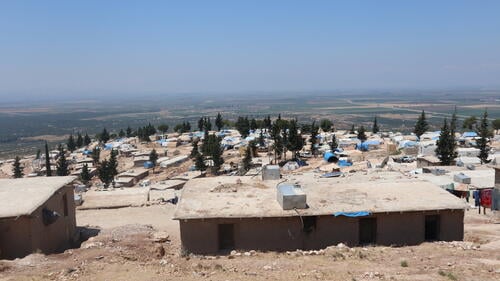
In northern rural Idlib, MSF is running a mobile clinic in a camp in Deir Hassan where the number of IDPs has increased by 10 500 people in two months, following the bombing and shelling on the southern Idlib and northern Hama countryside.
Syria

Escalating conflict in Idlib leaves increasing numbers dead, wounded or displaced

The level of conflict in Idlib and Hama governorates has increased exponentially over the last three months, resulting in hundreds of deaths, thousands of people injured, and forced nearly half a million from their homes and into camps in appalling conditions. Project Update - 31 Jul 2019
 
Mohammad Naeem, 35, is with his two year-old son, Yousuf, who has fever and is suffering from tongue rashes. He brought his child to the MSF clinic in Kahdistan camp. He left Shakh, a remote village in Qaisar district of Faryab, a year ago and is now living in a tent in the camp.

“I came to this clinic twice. My child received a good treatment here, and we are very happy with this clinic,” he says.
Afghanistan

Living conditions deteriorate for displaced people in Herat

With humanitarian assistance being reduced and water supplies running out, conditions are becoming increasingly difficult for some 100,000 displaced Afghans in Herat. Project Update - 24 Jul 2019
 
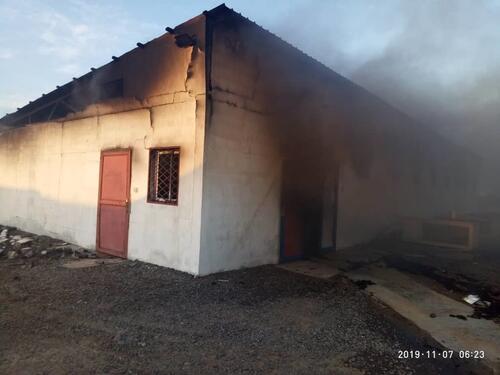
Debris covers the ground after an airstrike at a detention center in Tajoura, east of Tripoli in Libya, Wednesday, July 3, 2019. An airstrike hit the detention center for migrants early Wednesday, killing several.   (AP Photo/Hazem Ahmed)
Libya

“A night in which our worst fears would come to pass”

Sam Turner, MSF Head of Mission in Libya, recounts a night in which our worst fears would come to pass. The forced return of people fleeing Libya must stop. Voices from the Field - 23 Jul 2019
Four mothers posing in a corridor of the Hospital in Bili. All four of them are staying in the hospital with their child, that's suffering from a severe case of malaria. Since the beginning of the project in 2016, the pediatric ward already treated more than 4.000 cases of complicated/severe form of malaria.
Médecins Sans Frontières (MSF)

Independent medical humanitarian assistance

We provide medical assistance to people affected by conflict, epidemics, disasters, or exclusion from healthcare. Our teams are made up of tens of thousands of health professionals, logistic and administrative staff - most of them hired locally. Our actions are guided by medical ethics and the principles of independence and impartiality. We are a non-profit, self-governed, member-based organisation.

Learn more