


Ebola disease in DRC: find out how we're responding
Learn more
8009 Results
 
Assessment of the municipal health unit in Baganga, Davao Oriental. MSF is currently running four mobile clinics in eight districts in Cateel and Baganaga municipalities on the island of Mindanao in the Philippines following the destructive Typhoon Bopha earlier in December.
Philippines

MSF team runs mobile clinics following typhoon

After Typhoon Bopha devastated coastal parts of Mindanao island in the Philippines earlier this month, MSF has dispatched two teams to run mobile clinics to provide basic healthcare, monitor for outbreaks of disease and support recovery efforts. Project Update - 31 Dec 2012
 
MDR-TB section in Blue House Clinic, Mathare, Nairobi.<br/>
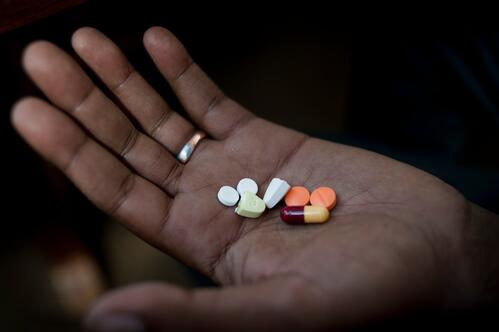
Patients receiving treatment in Blue House, a clinic on the edge of Mathare, one of the Kenyan capital Nairobi's more violent slums, where MSF treats people with TB and HIV. Drugs used to treat TB are from the 1950s and a course of treatment for uncomplicated TB takes six months. Poor treatment management and adherence has led to new strains of bacilli that are resistant to one or more anti-TB drug. Multi-drug-resistant TB (MDR-TB) is a serious form of this, identified when patients are resistant to the two most powerful first-line antibiotics.<br/>
Treating DR-TB is complicated from a programmatic perspective: treatment is individualised, tailored according to which drugs a patient is resistant to. It is long and taxing, requiring people to take a course of antibiotics for up to two years and endure often intolerable side effects.
Tuberculosis

Bedaquiline: First new tuberculosis drug in 50 years

MSF welcomed the approval by the US Food and Drug Administration of bedaquiline, the first new drug active against tuberculosis (TB) to be registered since 1963. The drug is active against drug-resistant forms of the disease, making it a potential game-changer for TB treatment. Press Release - 31 Dec 2012
 
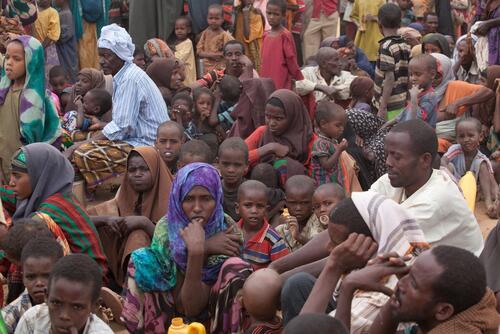
Recently arrived Somali refugees wait at the official reception center in Dadaab refugee camp in northern Kenya.
Kenya

Dadaab: A new influx of refugees will worsen already dire situation

MSF is deeply concerned about the medical consequences following recent public statements from Kenyan authorities exhorting thousands of Somali refugees in Kenya to leave urban areas and go to remote and already saturated camps. Any potential influx of new arrivals will put further pressure on the existing precarious situation. Statement - 28 Dec 2012
 
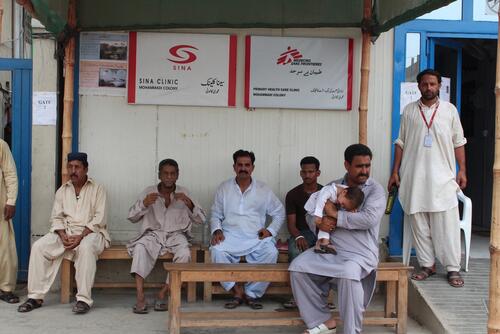
The male attendants’ waiting area in Machar Colony clinic, Karachi
Pakistan

MSF opens new clinic in Karachi

A new clinic providing essential basic medical care as well as emergency and obstetric services has been opened in Machar Colony by MSF together with Sina Health, Education and Welfare Trust (SINA). The clinic first opened its doors in mid-October 2012, and in its first month more than 100 consultations took place daily. Press Release - 27 Dec 2012
 
MSF organizes mobile clinic for the displaced populations in the town of Ndélé, following the attack of the towns on December the 10th. As of today 4 of these mobile clinics were organized, and MSF received more than 300 patients in consultation.
Central African Republic

MSF extends medical activities amid increasing violence

Fighting and violence continued over the past week in several areas in the north and centre of Central African Republic (CAR). Increased military movements and hostilities between rebels and the army have forced civilian population to leave their homes, preventing them from accessing the basic services they need, in particular medical aid. Project Update - 24 Dec 2012
 
MSF opened in May 2012 a primary health care centre (PHCC) in the Domeez Syrian refugee camp. MSF is the main health actor in the camp and provides medical consultations, mental health care and training for the health staff in the camp.
Syria

Response to increasing suffering inadequate

The humanitarian situation in Syria continues to worsen as the war escalates and attacks against health facilities continue. Project Update - 21 Dec 2012
 
Vimbai Chitani (15) is a patient enrolled in the MSF HIV/AIDS project in Epworth, an urban settlement adjacent to the capital Harare of Zimbabwe. 
"In 2007 I was very ill. I had rashes all over my body and my whole body ached. A week after I started medication I was already feeling much better. Now, I am anxious that my mother may send me to my grandmother in the  countryside as we cannot afford my
school anymore." 
With 14.3 per cent prevalence rate (UNAIDS 2009), Zimbabwe is one of the countries worst affected by the
worldwide HIV/AIDS epidemic. Since 2006, MSF has been running an HIV/AIDS project in Epworth. In August 2011, MSF had 12,864 patients under care in both of its clinics there.
Zimbabwe

"We cannot normalise a situation that is not normal"

Mari Carmen Viñoles and Jean François Saint-Sauveur landed in Harare, the capital of Zimbabwe in April 2009, after several previous assignments with MSF. Mari Carmen arrived to start work as general coordinator of MSF programmes, while Jean François took on the role of medical coordinator. They talk about their experiences working in a country that is being badly hit by the HIV pandemic. Voices from the Field - 21 Dec 2012
 
Young mothers and their new born at the Maternity service of the hospital of Batangafo, supported by MSF. Consultations at the hospital of Batangafo have dropped from 193 to 38 in 24hours after the announcement of a movement of armed troops towards the town on the 19th of December. Part of the population, who has been enduring chronic armed violence for the last ten years, has fled town rapidly.
Central African Republic

People flee into the bush in fear of attack

Violence has swept through Central African Republic (CAR) the last few days as rebel coalition Seleka has entered and taken over several towns. MSF is continuing its work in the towns of Ndélé, Kabo and Batangafo, and are currently setting up supplementary activities in areas that are likely to be worst affected. Project Update - 21 Dec 2012
 
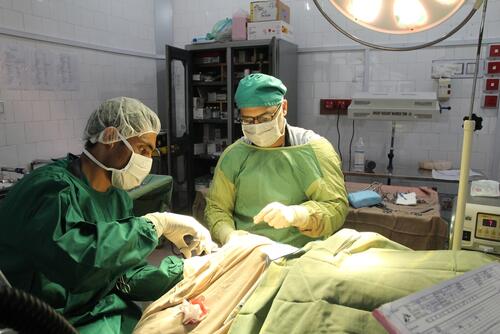
MSF national surgeon Dr Amir (left) is operating on a female patient who has several deep cut wounds on neck and head as she was attaked.
MSF has been working the DHQ Hospital in Timergara, Lower Dir district of Khyber Pakhtunkhwa (KPK) province, in northwestern part of Pakistan since 2009. MSF provides emergency care, emergency surgeries, post-operative care, as well as mother-and-child health care in the hospital.
Pakistan

MSF condemns targeting of health workers

Regardless of who is responsible for the recent escalation of attacks against health workers in Pakistan, the targeting of medical personnel has created a situation in which both patients and medical workers are at risk of losing their lives while seeking or providing healthcare, MSF said today. Statement - 20 Dec 2012
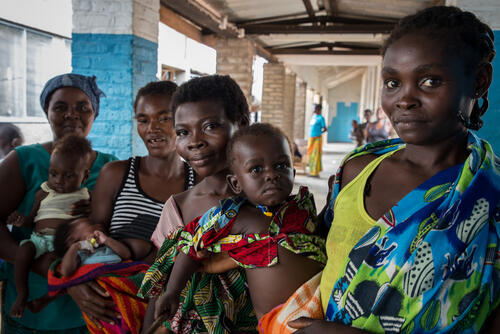
Four mothers posing in a corridor of the Hospital in Bili. All four of them are staying in the hospital with their child, that's suffering from a severe case of malaria. Since the beginning of the project in 2016, the pediatric ward already treated more than 4.000 cases of complicated/severe form of malaria.
Médecins Sans Frontières (MSF)

Independent medical humanitarian assistance

We provide medical assistance to people affected by conflict, epidemics, disasters, or exclusion from healthcare. Our teams are made up of tens of thousands of health professionals, logistic and administrative staff - most of them hired locally. Our actions are guided by medical ethics and the principles of independence and impartiality. We are a non-profit, self-governed, member-based organisation.

Learn more