




Ebola disease in DRC: find out how we're responding
Learn more
8009 Results
 
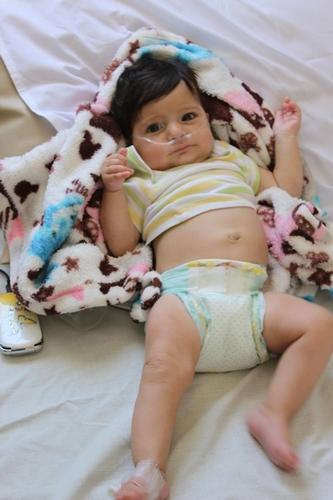
Mostafa is a seven month-old baby from El-Sheikh Miskeen, a small village near Dara’a. He arrived at Zaatari camp a month ago with his father, mother and other five siblings. Mostafa's mother was very concerened about her baby, she said:  “Ever since our arrival at Zaatari camp, my children have been constantly sick for different reasons. We brought Mostafa came to the MSF hospital because of a high fever. The doctors are still checking him up to see why he is so ill. Mostafa also suffers from asthma and has difficulties breathing because of the dust in the camp."
Syria

Syrian refugee narratives: "We had been trying to avoid leaving our country but eventually we had no other choice"

Mostafa is a seven month-old baby from El-Sheikh Miskeen, a small village near Dara’a. He arrived at Zaatari camp a month ago with his father, mother and other five siblings. Mustafa’s mother, Om Mostafa, shared their story with us. Voices from the Field - 30 May 2013
 
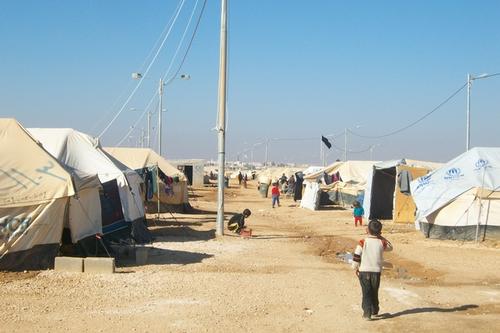
Zaatari Camp, close to the Syrian border, where over 100,000 Syria refugees reside.
Syria

Syrian refugees in Jordan: The limits of assistance

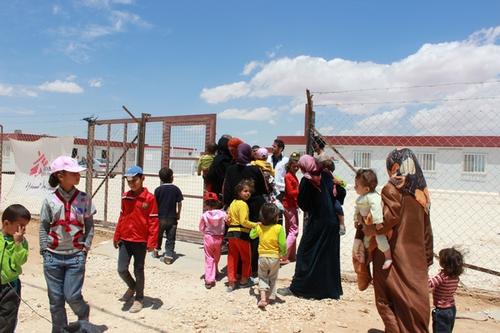
Nearly half a million Syrians are now refugees in Jordan, making up a third of the 1.5 million people who have fled the conflict in Syria to neighboring countries. More than 100,000 of them live in Zaatari camp, situated in the North of the country, less than 20 km from the Syrian border. Press Release - 30 May 2013
 
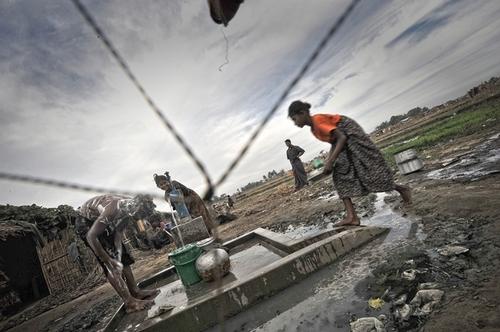
People take bath at the water pump in a refugee camp on the outskirts of Sittwe, February 2, 2013. photo by Kaung Htet

Government restrictions severely impact access to healthcare in Rakhine state

Nearly a year since deadly inter-ethnic clashes in Rakhine state first broke out, conditions in the displaced persons camps, combined with movement restrictions and ongoing segregation of Rakhine and Muslim communities, are severely impacting on healthcare. Press Release - 28 May 2013
 
msf-placeholder
Project Update

HPN: Have we lost the ability to respond to refugee crises? The Maban response

This article assesses the humanitarian response to the refugee emergency in Maban. It is based on a review done by MSF, including key informant interviews with 14 organisations. In the Media - 24 May 2013
 
Niger: Zermou; centre de traitement du cholera.
  *** Local Caption ***   MSF et l ONG médicale nigérienne Forsani y gèrent une unité d hospitalisation et soutiennent trois centres de santé du ministère de la Santé nigérien.
Niger

MSF treats cholera patients

Cholera has broken out in northern Niger in an area which is hosting large number of Malian refugees and which was hit by a cholera epidemic last year. Project Update - 23 May 2013
 
Obstetric fistulas are one of the most serious consequences of obstructed labor; it occurs when the soft tissue in the pelvis is compressed by the baby’s head. The lack of blood flow causes the tissue to die, creating a hole between the vagina and bladder, the vagina and rectum, or both. The result is urinary and/or fecal incontinence. Women with fistulas live in shame and are often rejected by their own families and communities.

Since  July 2010, MSF is treating fistulas in the Urumuri center, in Gitega, in the heart of Burundi  and became the first and only center in Burundi to specialize in treating fistulas. Since the opening of the project more than 1000 fistulas surgeries have been performed enabling women to return to normal life and emerge from exclusion. 

Women can receive treatment seven days a week, and MSF has built four houses to accommodate patients before surgery and afterwards, during rehabilitation. At MSF's permanent treatment centers, women receive six months of outpatient follow-up care to ensure the fistula has healed and that continence is maintained.
Project Update

Treating fistula: Prevention or cure?

MSF surgeon Dr Geert Morren talks about the physical and social distress that fistulas can cause, and why the issue needs attention. Project Update - 23 May 2013
 
*** Local Caption *** Yida.<br/>
Dans l?Etat d?Unity, au nord du Soudan du Sud, MSF fournit depuis octobre 2011 des soins de santé dans le camp de réfugiés de Yida, où sont installés ceux qui fuient les combats entre les forces armées soudanaises (SAF) et le Mouvement pour la libération du peuple soudanais (SPLM-Nord) dans la province du Kordofan du Sud. A partir d?avril 2012, la population du camp a connu une forte augmentation suite à l?arrivée de nombreux nouveaux réfugiés. En mai 2013, 75,000 personnes vivaient à Yida. La saison des pluies débute et MSF se prépare à une augmentation des maladies infectieuses au cours des prochains six mois. <br/>
Entre mai 2012 et mars 2013, 2,784 enfants sévèrement malnutris ont été soignés dans le programme nutritionnel thérapeutique. Pendant cette même période, les équipes MSF ont également effectué près de 90,000 consultations de santé primaire tandis que l?hôpital MSF installé dans le camp a admis près de 3,000 patients, dont les deux-tiers avaient moins de 5 ans. Les pathologies les plus diagnostiquées sont les infections respiratoires, les diarrhées et le paludisme.
South Sudan

Humanitarian deadlock in Yida

Sudanese refugees are stranded at the centre of complex political agendas that threaten to worsen their dire situation. Project Update - 23 May 2013
 
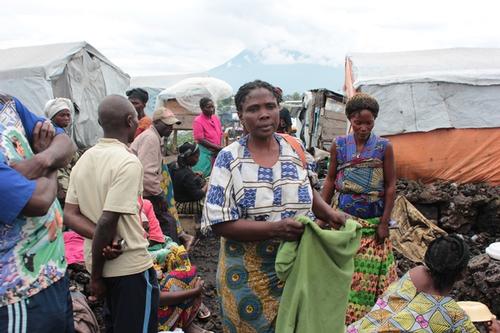
daily life in Mugunga III: Charline Amunazo is the president of the camp. *** Local Caption *** La situation humanitaire déjà précaire dans l'est de la République démocratique du Congo s'est encore détériorée en novembre 2012 après que la ville frontalière de Goma soit tombée aux mains des rebelles du M23 la semaine dernière, faisant des centaines de blessés et des milliers de personnes déplacées. Les équipes de Médecins Sans Frontières (MSF) ont rapidement mis en place des activités d'urgence pour intervenir auprès des victimes de la violence et des personnes nouvellement déplacées dans et autour de Goma.<br/>

An already fragile humanitarian situation in eastern Democratic Republic of Congo has deteriorated further in november 2012 after the border city of Goma fell to M23 rebels last week with hundreds of people injured and thousands displaced from their homes. Teams from Médecins Sans Frontières/Doctors Without Borders (MSF) have rapidly set up additional emergency response activities, treating victims of violence and providing assistance to newly displaced people in and around Goma.
Democratic Republic of Congo

Displaced people caught up in fighting west of Goma

Fighting with heavy weapons between the Congolese army (FARDC) and the rebel group M23 to the west of the provincial capital Goma resumed yesterday. Many people who were already displaced from their homes after earlier waves of violence are now caught between the shelling and gunfire. Press Release - 22 May 2013
Four mothers posing in a corridor of the Hospital in Bili. All four of them are staying in the hospital with their child, that's suffering from a severe case of malaria. Since the beginning of the project in 2016, the pediatric ward already treated more than 4.000 cases of complicated/severe form of malaria.
Médecins Sans Frontières (MSF)

Independent medical humanitarian assistance

We provide medical assistance to people affected by conflict, epidemics, disasters, or exclusion from healthcare. Our teams are made up of tens of thousands of health professionals, logistic and administrative staff - most of them hired locally. Our actions are guided by medical ethics and the principles of independence and impartiality. We are a non-profit, self-governed, member-based organisation.

Learn more