



Ebola disease in DRC: find out how we're responding
Learn more
8003 Results
 
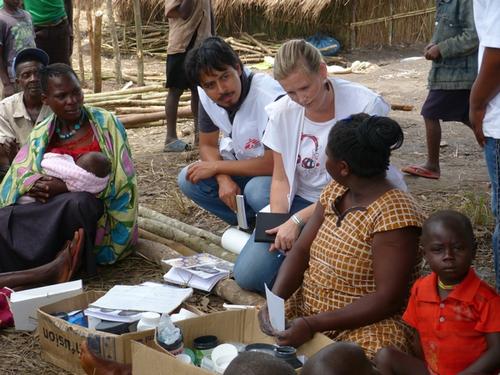
MSF expatriates Caroline Voûte and Frankin Frias Diaz visit an improvised health post managed by IDPs nurses supported by Medair.
Democratic Republic of Congo

“People have simply been abandoned" in South Irumu

Violent clashes in South Irumu, in eastern Democratic Republic of Congo, have forced more than 100,000 people to flee their homes. MSF calls on all parties to the conflict to respect civilians and healthcare facilities. Press Release - 24 Oct 2013
 
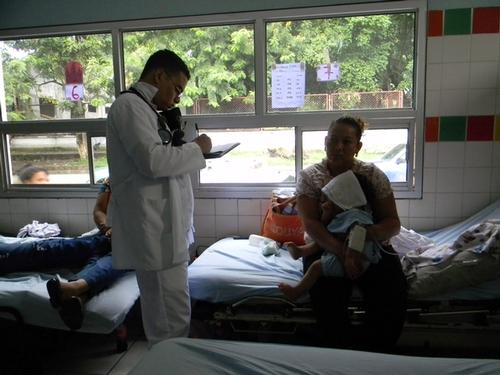
In Honduras, there are four different types of dengue, the population are in high risks of infection particularly during the rainy season, from May to November, when the mosquito responsible for spreading the disease proliferates.
Honduras

MSF fights deadly outbreak of dengue fever

MSF teams are responding to an epidemic of haemorrhagic dengue fever that is spreading through San Pedro Sula, Honduras’ second city. Project Update - 23 Oct 2013
 
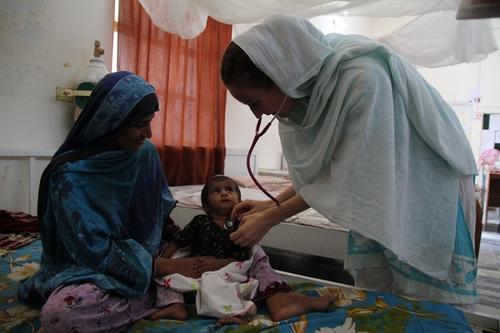
Dr Franziska Goettle (right) examines a malnourished child in the inpatient therapeutic feeding centre in the Dera Murad Jamali District Headquarter Hospital in eastern Balochistan, Pakistan.

MSF supports the Dera Murad Jamali District Headquarter Hospital by providing emergency obstetric care, neonatal and paediatric inpatient care, as well as therapeutic feeding programme, to local and displaced population.
Pakistan

Access Denied

We remain committed to providing impartial medical humanitarian assistance elsewhere in Balochistan and in other parts of Pakistan. Op-Ed - 21 Oct 2013
 
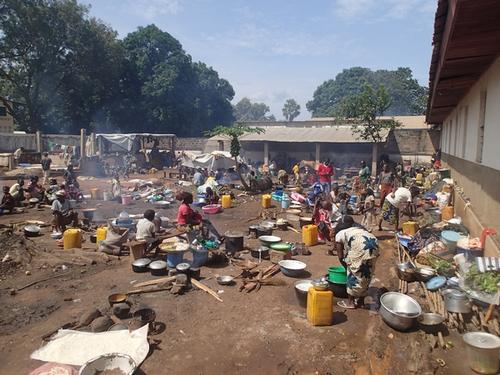
Makeshift IDP camp in Bossangoa.
Central African Republic

Fighting reaches unprecedented levels of violence

Press Release - 16 Oct 2013
 
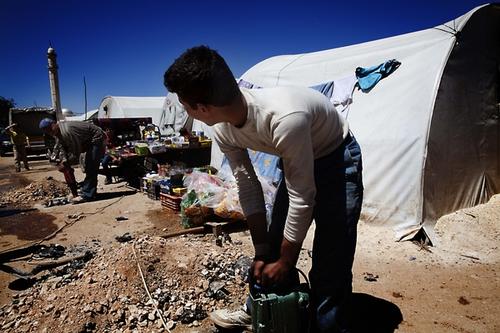
A transit camp in Aleppo province, next to the Turkish border. Around November 2012, 4,000 displaced people were staying in this temporary settlement – in April 2013, there were around 10,000.
Syria

Political will shown to work for chemical weapons access in Syria – same now needed urgently for humanitarian aid

The political will shown for chemical weapons work in Syria must be applied to humanitarian access. Press Release - 15 Oct 2013
 
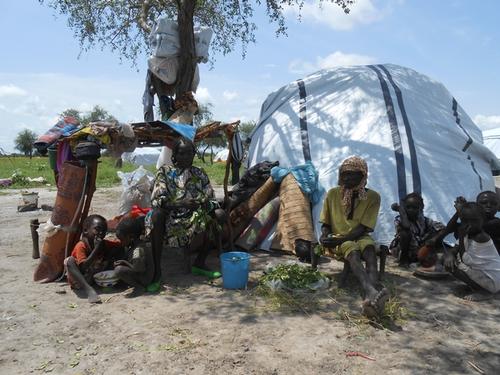
Some 2,500 Sudanese from the troubled South Kordofan State continue to arrive to Kodok and Lelo towns, in Fashoda and Malakal counties  in South Sudan’s Upper Nile State in dire need of humanitarian assistance The biggest concern is nutrition, children are very weak when they arrive and their condition can worsen even further if they don´t get proper care. In Kodok, more than 200 children under five are now receiving treatment in the ambulatory therapeutic feeding program. MSF medical teams are running a nutrition program through mobile clinics within the communities focusing on children under five years and women.
South Sudan

New refugees from Sudan in need of assistance

Some 2,500 Sudanese from the troubled South Kordofan State have arrived South Sudan’s Upper Nile state, in need of humanitarian assistance. Project Update - 11 Oct 2013
 
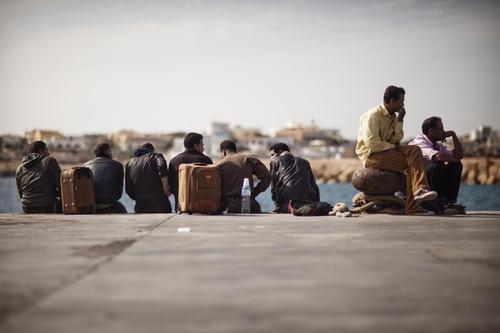
On April 19th 2011, 760 migrants have arrived from Libya after travelling for three days on an old fishing boat. Among the passengers, MSF counted seven children, 63 women; one of them pregnant. The majority of the migrants are originally from sub-Saharan Africa. This is the biggest boat landing ever occuring in Lampedusa. An MSF team consisting of a medical doctor, a nurse, two cultural mediators, a logistician and a field coordinator performs medical triage in the harbour and distributes non food items and water to the newly arrived migrants.
Project Update

EU member states must recognise human cost of repressive migration policies

As a delegation of European and Italian leaders visits the Sicilian island of Lampedusa to honour all those who tragically lost their lives trying to reach the European coast, the international medical organisation Médecins Sans Frontières (MSF) calls on members of the European Union to recognise the human cost of their repressive migration policies. Press Release - 9 Oct 2013
 
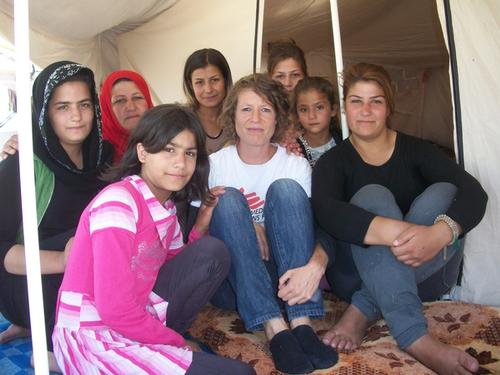
Dr Henrike Zellmann is the supervising psychologist for MSF in Domeez refugee camp in northern Iraq. She is pictured here with some of the Syrian refugees who MSF has been assisting.
Iraq

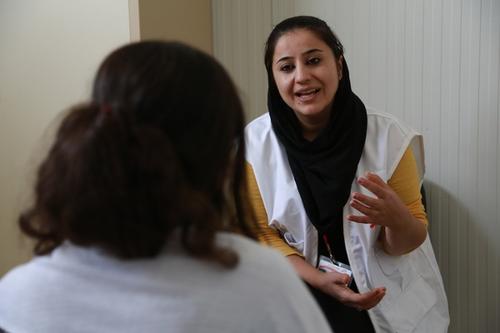
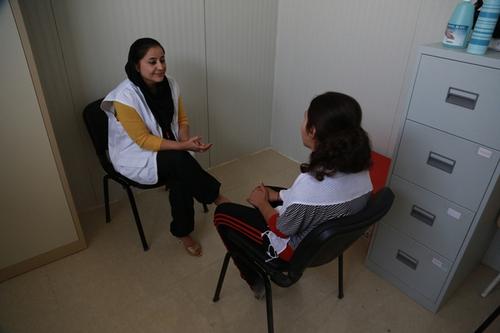
As soon as the door is closed, we spend time with them, and we listen

An insight into mental healthcare for Syrian refugees in Domeez camp, Iraq Project Update - 8 Oct 2013
 
Alma is a 16 year old girl from Syria who is receiving counselling from MSF in Domeez refugee camp, northern Iraq. Her testimony is below. The war and its aftermath have had far reaching consequences for the mental health of children. As of October 2013 in Domeez, children and adolescents comprise 50 percent of all MSF’s new patients. Every week, between 15 and 20 children and adolescents aged 18 and under are admitted to the program. 

"We’ve been living in the camp for six months, after coming from Damascus to escape the war. There are six people in my family and we all live in one tent. At first we were happy to be here, and to be safe. Compared to Damascus, it is better. There we lived amidst war, at least here it is safe. 

But I am not happy here. After I arrived here, when I got upset or angry, I would faint. Last week, this happened twice. In the last month, it has happened six times. 

I don’t know why it happens. After I faint, and I have gained consciousness, I lie there for an hour or so then I get up. I have shortness in breath after it happens and it takes an hour to feel ok again. 

Most of the time there is no reason.

I don’t sleep very well and I am scared when I sleep. When I wake up, I am still scared. I am afraid of the tents. They remind me of the funeral procession when my cousin was killed in Syria. I remember people crying and I feel that I have dark things in front of my eyes. 

Every second night, I have nightmares. 

I also don’t eat very much. From yesterday until now, I did not eat. 

My biggest wish is to go back to Syria with my family. I want to study, but it’s not possible, either here or in Syria. It is difficult to have hope for the future when we don’t know what will happen."
Syria

An invisible crisis - alarming psychological needs among refugees in Iraq

MSF is seeing an alarming deterioration in the mental health situation of Syrian refugees in Domeez refugee camp in northern Iraq. This deterioration is linked not only to what they have witnessed in Syria, but also the ongoing life of uncertainty, inadequate conditions, and the lack of hope for the future they face living in the camp. Project Update - 8 Oct 2013
 
Alma is a 16 year old girl from Syria who is receiving counselling from MSF in Domeez refugee camp, northern Iraq. Her testimony is below. The war and its aftermath have had far reaching consequences for the mental health of children. As of October 2013 in Domeez, children and adolescents comprise 50 percent of all MSF’s new patients. Every week, between 15 and 20 children and adolescents aged 18 and under are admitted to the program. 

"We’ve been living in the camp for six months, after coming from Damascus to escape the war. There are six people in my family and we all live in one tent. At first we were happy to be here, and to be safe. Compared to Damascus, it is better. There we lived amidst war, at least here it is safe. 

But I am not happy here. After I arrived here, when I got upset or angry, I would faint. Last week, this happened twice. In the last month, it has happened six times. 

I don’t know why it happens. After I faint, and I have gained consciousness, I lie there for an hour or so then I get up. I have shortness in breath after it happens and it takes an hour to feel ok again. 

Most of the time there is no reason.

I don’t sleep very well and I am scared when I sleep. When I wake up, I am still scared. I am afraid of the tents. They remind me of the funeral procession when my cousin was killed in Syria. I remember people crying and I feel that I have dark things in front of my eyes. 

Every second night, I have nightmares. 

I also don’t eat very much. From yesterday until now, I did not eat. 

My biggest wish is to go back to Syria with my family. I want to study, but it’s not possible, either here or in Syria. It is difficult to have hope for the future when we don’t know what will happen."
Syria

It is difficult to have hope for the future when we don’t know what will happen

Testimony of Alma, a 16 year old girl from Syria who is receiving counselling from MSF in Domeez refugee camp, northern Iraq. Voices from the Field - 8 Oct 2013
Four mothers posing in a corridor of the Hospital in Bili. All four of them are staying in the hospital with their child, that's suffering from a severe case of malaria. Since the beginning of the project in 2016, the pediatric ward already treated more than 4.000 cases of complicated/severe form of malaria.
Médecins Sans Frontières (MSF)

Independent medical humanitarian assistance

We provide medical assistance to people affected by conflict, epidemics, disasters, or exclusion from healthcare. Our teams are made up of tens of thousands of health professionals, logistic and administrative staff - most of them hired locally. Our actions are guided by medical ethics and the principles of independence and impartiality. We are a non-profit, self-governed, member-based organisation.

Learn more