



Ebola disease in DRC: find out how we're responding
Learn more
8007 Results
 
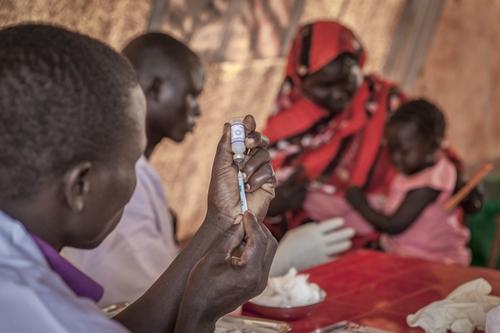
Sudanese refugees began streaming across the border into South Sudan in June 2011 when conflict erupted between the Khartoum government and the rebels of the Sudan People’s Liberation Movement-North (SPLM-N) in Sudan’s South Kordofan State. At the height of the crisis in Yida camp last summer, high mortality rates were reported among young children admitted to MSF’s hospital with respiratory tract infections, such as pneumonia, one of the leading causes of death. MSF determined that vaccinating with the pneumococcal conjugate vaccine (PCV) could result in a substantial mortality reduction in Yida. MSF has been working since September 2012 to procure PCV but faced significant delays due to lengthy negotiations and international legal procurement constraints. MSF was eventually able to obtain the vaccine from GSK at a reduced price, but delays have now pushed the planned vaccination into the logistically challenging rainy season.

The objective is to immunize approximately 5,000 children under the age of 2 against several pathogens, including haemophilus influenza type B and pneumococcus. This is the first time that PCV is being used in South Sudan and one of the first vaccines to be implemented in compliance with the new WHO emergency vaccination recommendations.
Access to medicines

Global alliance for vaccinations meets to examine progress, MSF points to needed policy changes

Key policy changes are urgently needed at GAVI Alliance to help reduce the number of children not benefitting from vaccination globally (22.6 million in 2012), MSF said ahead of meeting in Stockholm. Press Release - 28 Oct 2013
 
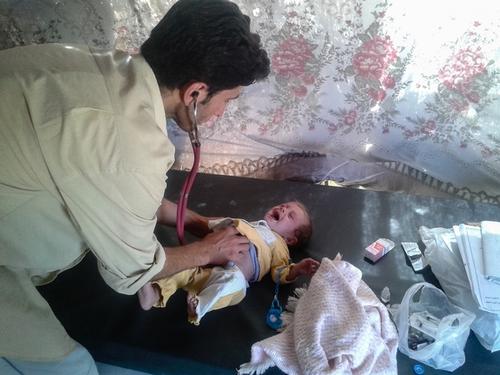
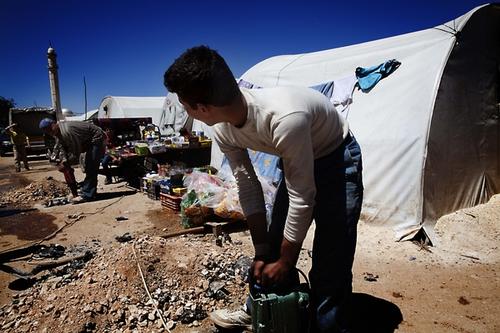
This IDP camp in Al Safira district (Aleppo province) is empty. After the October attack, IDPs  had fled north .
MSF had distributed some tents to IDPs. A medical student was running an OPD set up with MSF support
Syria

Civilians forced to flee Al Safira under heavy bombardment

More than 130,000 people have fled the district of Al Safira, in Aleppo province Press Release - 25 Oct 2013
 
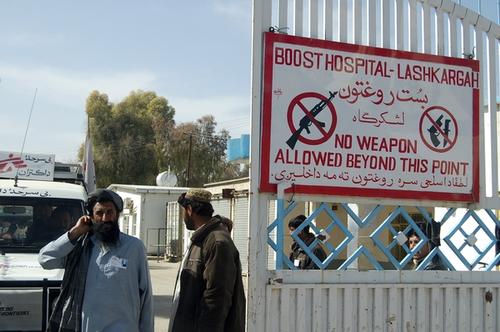
Boost hospital, Lashkargah, Helmand province.<br/>
Attacks on medical care

Don't Shoot the Ambulance: Medicine in the Crossfire

As physicians and hospitals in war zones multiply, their facilities have increasingly become military targets. Journal article - 24 Oct 2013
 
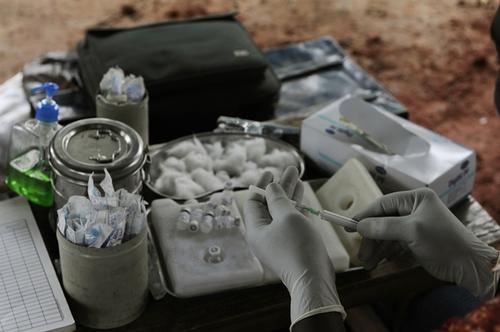
Twenty percent of all the babies born in the world each year—the equivalent of nearly five times the children born yearly in the United States—are not getting the basic vaccines they need to be protected from killer diseases, such as measles.And that’s why Venetia Dearden traveled to West African nation of Mali with Doctors Without Borders/Médecins Sans Frontières (MSF) to see firsthand the importance of vaccines to families and the lengths to which they must go to get them. When MSF teams stage vaccination campaigns in the West African nation of Mali, mothers will come from hours away, sometimes days away.In the first year of their life, children must receive vaccines five separate times. In certain parts of the world, it can be extremely difficult for children and their caregivers to come so often if they live far away from a vaccination point or can't afford the cost of transportation. As in many other countries, these women, who are overwhelmingly the stewards of their families when it comes to health issues, want the protection vaccines can provide them and their children against several potentially deadly diseases that plague the region.In the best-case scenario, MSF and other agencies would bring the vaccines to them, wherever they lived, in whatever conditions. But this isn’t possible at present, because many of the vaccines available today are not tailored for the difficult environments in which they must be used. To give but one example: establishing and sustaining cold chain is very difficult in places where electricity is hard to come by, to say nothing of ice. That’s why MSF has been advocating for a global approach to vaccine development and dissemination that takes into account the conditions in the countries where these vaccines are most needed to half preventable deaths, as well as the particular strains of diseases found in various locations.
Neglected diseases

The drug and vaccine landscape for neglected diseases (2000–11): a systematic assessment

This paper studies the research and development pipeline of drugs and vaccines for neglected diseases from 2000 to 2011. Journal article - 24 Oct 2013
 
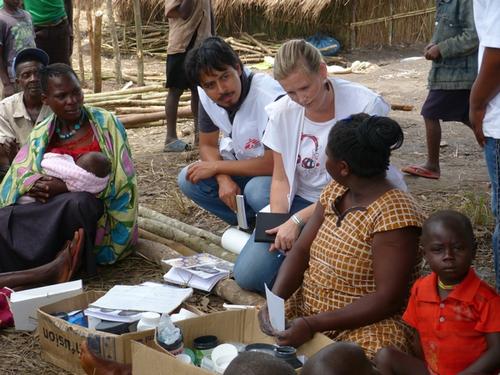
MSF expatriates Caroline Voûte and Frankin Frias Diaz visit an improvised health post managed by IDPs nurses supported by Medair.
Democratic Republic of Congo

“People have simply been abandoned" in South Irumu

Violent clashes in South Irumu, in eastern Democratic Republic of Congo, have forced more than 100,000 people to flee their homes. MSF calls on all parties to the conflict to respect civilians and healthcare facilities. Press Release - 24 Oct 2013
 
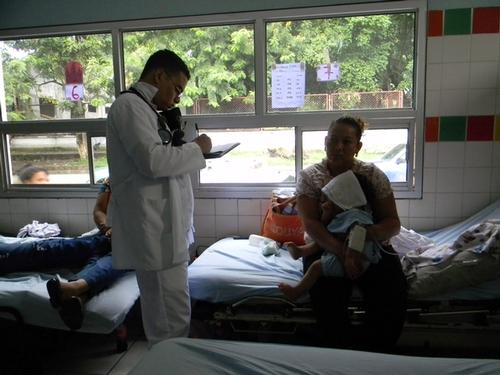
In Honduras, there are four different types of dengue, the population are in high risks of infection particularly during the rainy season, from May to November, when the mosquito responsible for spreading the disease proliferates.
Honduras

MSF fights deadly outbreak of dengue fever

MSF teams are responding to an epidemic of haemorrhagic dengue fever that is spreading through San Pedro Sula, Honduras’ second city. Project Update - 23 Oct 2013
 
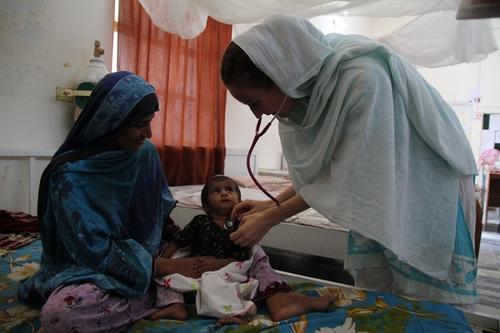
Dr Franziska Goettle (right) examines a malnourished child in the inpatient therapeutic feeding centre in the Dera Murad Jamali District Headquarter Hospital in eastern Balochistan, Pakistan.

MSF supports the Dera Murad Jamali District Headquarter Hospital by providing emergency obstetric care, neonatal and paediatric inpatient care, as well as therapeutic feeding programme, to local and displaced population.
Pakistan

Access Denied

We remain committed to providing impartial medical humanitarian assistance elsewhere in Balochistan and in other parts of Pakistan. Op-Ed - 21 Oct 2013
 
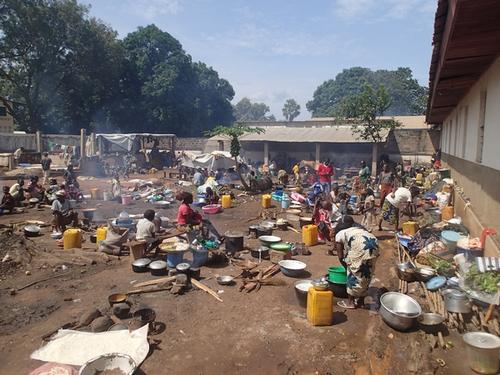
Makeshift IDP camp in Bossangoa.
Central African Republic

Fighting reaches unprecedented levels of violence

Press Release - 16 Oct 2013
 
A transit camp in Aleppo province, next to the Turkish border. Around November 2012, 4,000 displaced people were staying in this temporary settlement – in April 2013, there were around 10,000.
Syria

Political will shown to work for chemical weapons access in Syria – same now needed urgently for humanitarian aid

The political will shown for chemical weapons work in Syria must be applied to humanitarian access. Press Release - 15 Oct 2013
 
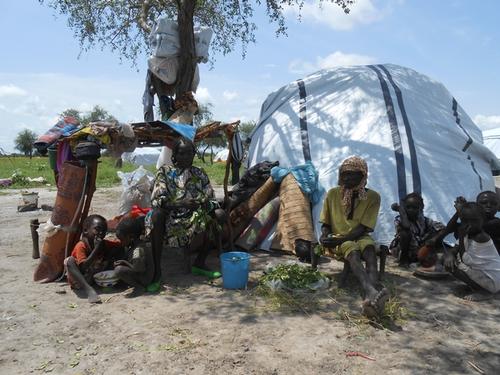
Some 2,500 Sudanese from the troubled South Kordofan State continue to arrive to Kodok and Lelo towns, in Fashoda and Malakal counties  in South Sudan’s Upper Nile State in dire need of humanitarian assistance The biggest concern is nutrition, children are very weak when they arrive and their condition can worsen even further if they don´t get proper care. In Kodok, more than 200 children under five are now receiving treatment in the ambulatory therapeutic feeding program. MSF medical teams are running a nutrition program through mobile clinics within the communities focusing on children under five years and women.
South Sudan

New refugees from Sudan in need of assistance

Some 2,500 Sudanese from the troubled South Kordofan State have arrived South Sudan’s Upper Nile state, in need of humanitarian assistance. Project Update - 11 Oct 2013
Four mothers posing in a corridor of the Hospital in Bili. All four of them are staying in the hospital with their child, that's suffering from a severe case of malaria. Since the beginning of the project in 2016, the pediatric ward already treated more than 4.000 cases of complicated/severe form of malaria.
Médecins Sans Frontières (MSF)

Independent medical humanitarian assistance

We provide medical assistance to people affected by conflict, epidemics, disasters, or exclusion from healthcare. Our teams are made up of tens of thousands of health professionals, logistic and administrative staff - most of them hired locally. Our actions are guided by medical ethics and the principles of independence and impartiality. We are a non-profit, self-governed, member-based organisation.

Learn more