



Ebola disease in DRC: find out how we're responding
Learn more
4637 Results
 
msf-placeholder
Access to medicines

MSF message for WHO member country delegations to 56th World Health Assembly

MSF, Oxfam and HAI are writing to present our concerns related to access to medicines. This issue will be discussed at the 56th World Health Assembly (WHA) on 19-28 May under the agenda items "IPRs, Innovation and Public Health" and "WHO's Medicines Strategy". Open Letter - 13 May 2003
 
msf-placeholder
Access to medicines

The G8 : no more broken promises

The G8 have the financial and pharmaceutical resources to do an enormous amount of good. They should do this. In other words, the G8 should move towards meeting past commitments rather than away from them, and to demonstrate to the developing world that it can put global health above the interests of industry in the developed world. No more broken promises. Project Update - 10 May 2003
 
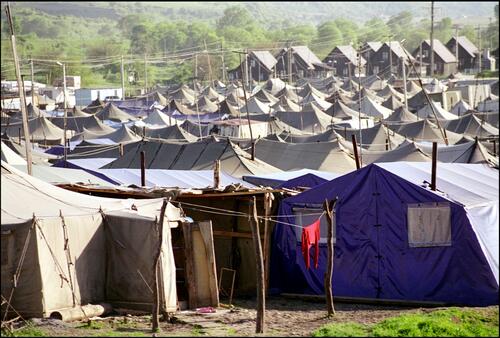
Bart camp, Ingushetia May 2002
Refugees, IDPs and people on the move

Report: Left without a choice: Chechens forced to return to Chechnya

Médecins Sans Frontières reveals the results of a survey carried out between the 3rd and 16th of February 2003 in the eight tent camps of displaced Chechens in Ingushetia. Report - 6 May 2003
 
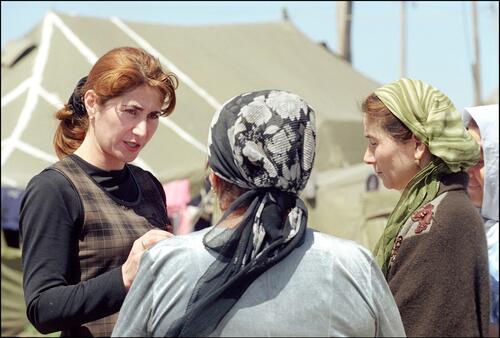
Aki Yurt tent camp, Ingushetia
Marina, field coordinator for MSF-B, talking with displaced women from Chechnya.
Refugees, IDPs and people on the move

Left without a choice: Chechens forced to return to Chechnya

As the tent camps are about to be closed in Ingushetia, an MSF survey shows that more than 98% of Chechen displaced families living in the camps do not want to go back to Chechnya Press Release - 6 May 2003
 
msf-placeholder
Kenya

MSF welcomes announcement to increase AIDS treatment

Principal actors urged to set aside reservations about treatment with antiretroviral medicines in Africa, and to act now to increase such treatment. Press Release - 25 Apr 2003
 
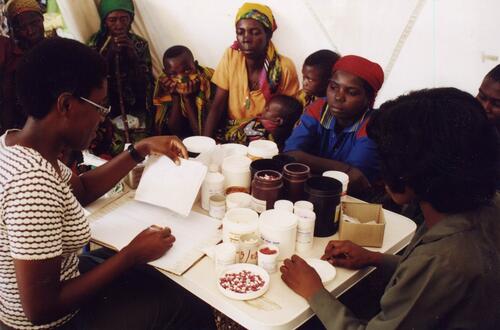
Malaria treatment programme in Kigova, Burundi, July 2002
Testing people for malaria using Paracheck.
Malaria

ACT NOW to get malaria treatment that works to Africa

This is an urgent call to international donors to join African countries in implementing World Health Organization (WHO) treatment guidelines for malaria. Report - 24 Apr 2003
 
A group of children affected by malaria, after consultation.
Malaria

ACT NOW to get malaria treatment that works to Africa

MSF is seeking to change the current dynamic in which the lack of political and financial support on the part of donors means that endemic countries are often encouraged to "leave alone" failing malaria treatment and are not given financial and technical help to implement more effective strategies.


Download this PDF file
from the International Activity Report
Report - 23 Apr 2003
 
msf-placeholder
Vietnam

MSF expands SARS intervention in Vietnam

"MSF has a great deal of experience in the isolation of diseases, and our presence has been important for the local staff, many of whom are understandably apprehensive about treating this mysterious illness" - MSF spokesperson. Press Release - 2 Apr 2003
 
msf-placeholder
Liberia

The protection of and assistance to these populations can no longer be guaranteed

The protection of and assistance to these populations can no longer be guaranteed. Press Release - 1 Apr 2003
 
msf-placeholder
Afghanistan

MSF strongly condemns killing of ICRC staff member in Afghanistan

The international medical humanitarian organization Médecins sans Frontières (MSF) is shocked and appalled by the killing of an expatriate staff member of the International Committee of the Red Cross. Press Release - 31 Mar 2003
Four mothers posing in a corridor of the Hospital in Bili. All four of them are staying in the hospital with their child, that's suffering from a severe case of malaria. Since the beginning of the project in 2016, the pediatric ward already treated more than 4.000 cases of complicated/severe form of malaria.
Médecins Sans Frontières (MSF)

Independent medical humanitarian assistance

We provide medical assistance to people affected by conflict, epidemics, disasters, or exclusion from healthcare. Our teams are made up of tens of thousands of health professionals, logistic and administrative staff - most of them hired locally. Our actions are guided by medical ethics and the principles of independence and impartiality. We are a non-profit, self-governed, member-based organisation.

Learn more