



Ebola disease in DRC: find out how we're responding
Learn more
8007 Results
 
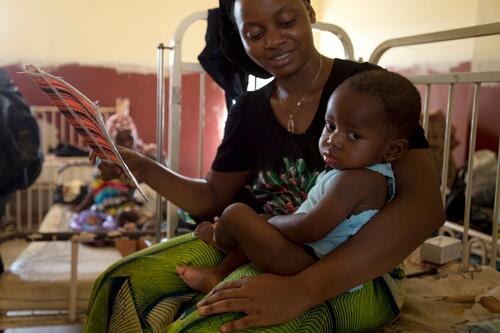
Children with complications admitted at the paediatric department ward of Donka hospital. Conakry. 

During vaccination, MSF also screens children that show signs of measles related complication and severe cases are referred to a nearby hospital where MSF supports the MOH staff (Ministry of Health).
Guinea

"People forget that you can still die from measles"

MSF launched a measles vaccination campaign in Conakry following the January 14 official declaration of an epidemic. Project Update - 20 Feb 2014
 
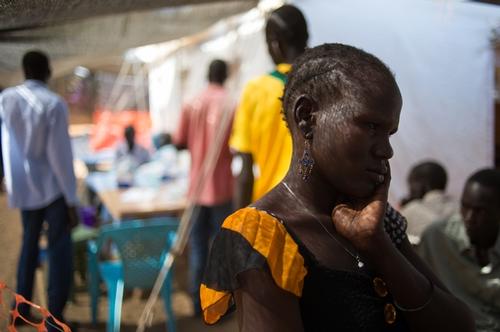
A lady waits for a consultation at the Médecins Sans Frontières (MSF) clinic set up at the camp for  displaced people in the grounds of the United Nations Mission to South Sudan (UNMISS) base in Juba, South Sudan, on January 12, 2014.
South Sudan

Dozens wounded treated amid new wave of violence in Malakal

More than 150 wounded people have been treated by MSF after a new wave of violence hit Malakal. Press Release - 20 Feb 2014
 
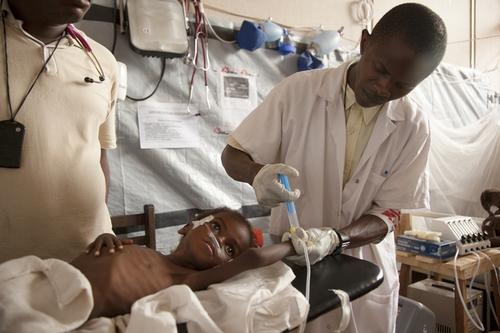
Dr Gilles Koukpo, MSF paediatrician, is treating a little girl who just arrived at the hospital in a state of shock, severely dehydrated. If not treated on time, children with measles can develop severe medical complications.
Democratic Republic of Congo

More measles vaccinations needed

MSF remains concerned that more needs to be done to ease a measles epidemic in CAR Press Release - 19 Feb 2014
 
Yemen is a country of transit for the thousands of migrants who leave the Horn of Africa to try to get to the countries of the Arabian Peninsula, mainly from Ethiopia to Saudi Arabia. During the trip and especially in Yemen, these people are victims of traffickers who extort money from them and torture them. Last April, the Yemeni authorities carried out a campaign to release hundreds of migrants held by traffickers and begin to repatriate them to their home countries. Since then, the number of people who voluntarily approach the detention center for migrants seeking repatriation has greatly increased.
The detention center in Sana'a, Yemen's capital, has a maximum capacity of 200-250; the centre currently houses about 750.
Yemen

“No patients, no problems:” Exposure to risk of medical personnel working in MSF projects in Yemen’s governorate of Amran

This paper provides a better understanding of the various forms of insecurity affecting MSF projects in Yemen. Journal article - 18 Feb 2014
 
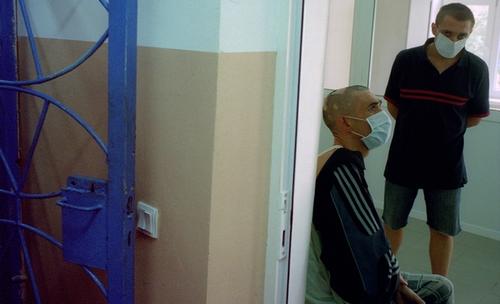
Two TB patients waiting to take their medication inside the Colony 3 TB prison
Ukraine

The challenges of treating prisoners with Drug-Resistant TB

MSF has been treating prisoners and ex prisoners with DR-TB in the Donetsk region of Ukraine. Voices from the Field - 18 Feb 2014
 
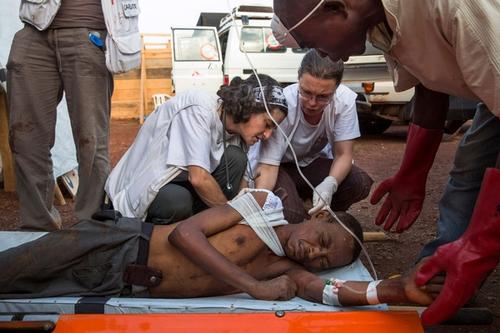
MSF staff at Mpoko camp are attending to the wounded man, who is about to be referred for emergency surgery at the Hopital Communautaire in another part of town, where another MSF team is working.
Central African Republic

International efforts to protect civilians in Central African Republic failing to stop slaughter

The extreme levels of violence against civilians illustrates the failure of international efforts.
Press Release - 18 Feb 2014
 
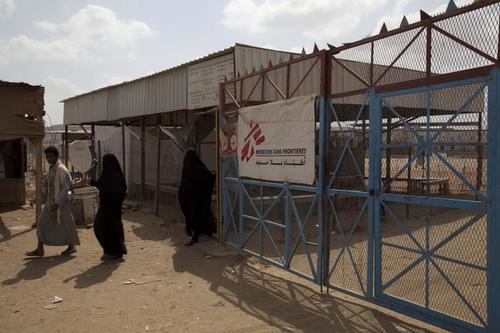
In June 2010, MSF opened a hospital on the outskirts of Al-Mazraq, in the north of Yemen’s Hajjah governorate, close to the region of Sadaa, with the aim of providing care to the displaced people living in the area. For nearly three years, MSF provided primary and specialist care to the displaced and local populations. The project closed in June 2013 because the IDP situation has stabilized.
Yemen

MSF suspends activities in Ad Dhale following security concerns

MSF suspends its support to the Al Nasser Hospital in Ad Dhale due to an increase in insecurity. Press Release - 15 Feb 2014
 
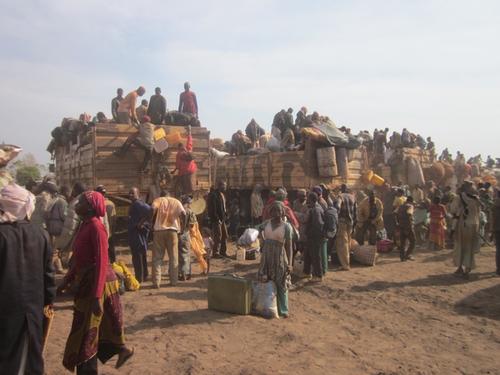
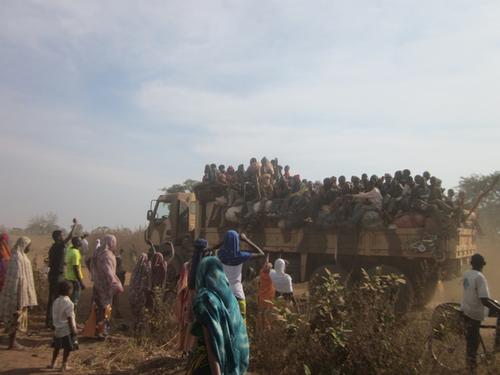
 *** Local Caption *** Plusieurs dizaines de milliers de personnes ont fui les violences ciblant les populations Peules et musulmanes dans le nord de la République Centrafricaine pour se réfugier dans le sud du Tchad. MSF intervient en urgence à Sido et Bitoye pour apporter aux réfugiés - dont la grande majorité sont des femmes - des soins médicaux d'urgence et des biens de première nécessité.<br/>

Dozens of thousands of people have fled violence targeting Fulani and Muslims communities in northern Central African Republic and sought refuge into southern Chad. MSF has set up two programs in Sido and Bitoye to provide emergency medical care and basic non-food items.
Chad

Tens of thousands of refugees from Central African Republic arrive

Approximately 35,000 people from CAR have taken refuge in southern Chad Project Update - 15 Feb 2014
 
 *** Local Caption *** Plusieurs dizaines de milliers de personnes ont fui les violences ciblant les populations Peules et musulmanes dans le nord de la République Centrafricaine pour se réfugier dans le sud du Tchad. MSF intervient en urgence à Sido et Bitoye pour apporter aux réfugiés - dont la grande majorité sont des femmes - des soins médicaux d'urgence et des biens de première nécessité.<br>

Dozens of thousands of people have fled violence targeting Fulani and Muslims communities in northern Central African Republic and sought refuge into southern Chad. MSF has set up two programs in Sido and Bitoye to provide emergency medical care and basic non-food items.
Refugees, IDPs and people on the move

Refugee crisis hits Central African Republic’s neighbours as more flee violence

Around 100,000 refugees have now fled from CAR to neighbouring Cameroon, Chad, Congo Brazzaville and DRC. Project Update - 15 Feb 2014
 
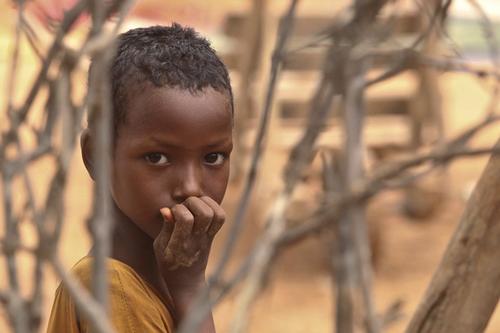
A Somali child - on the outskirts of Dagahaley refugee camp in Dadaab.

MSF is the only provider of medical care in Dagahaley, one of the five camps in the Dadaab refugee camp complex. Each month, teams carry out over 20,000 outpatient consultations and admit approximately 600 patients to the hospital
Somalia

Perspectives of refugees on returning to Somalia

MSF recently asked Somali refugees in Dadaab’s Dagahaley camp about their living conditions and their thoughts about returning to Somalia in the near future. The responses suggest that bad living conditions in the camp are not conducive to wanting to return, despite a widespread belief to the contrary. Journal article - 14 Feb 2014
Four mothers posing in a corridor of the Hospital in Bili. All four of them are staying in the hospital with their child, that's suffering from a severe case of malaria. Since the beginning of the project in 2016, the pediatric ward already treated more than 4.000 cases of complicated/severe form of malaria.
Médecins Sans Frontières (MSF)

Independent medical humanitarian assistance

We provide medical assistance to people affected by conflict, epidemics, disasters, or exclusion from healthcare. Our teams are made up of tens of thousands of health professionals, logistic and administrative staff - most of them hired locally. Our actions are guided by medical ethics and the principles of independence and impartiality. We are a non-profit, self-governed, member-based organisation.

Learn more