



Ebola disease in DRC: find out how we're responding
Learn more
8003 Results
 
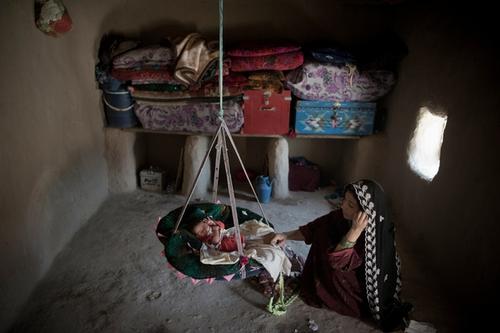
A camp for the internally displaced is located on the western outskirts of Kabul. Thousands of people live in the camp, most are from Helmand or Kandahar where they have fled their homes due to heavy fighting.  This baby was born inside a mud and tent home inside the camp. The mother has continued to bleed for a week since the birth and says she can't stand.
Afghanistan

Between rhetoric and reality: The ongoing struggle to access healthcare in Afghanistan

MSF report details how medical care remains out of reach for many patients. Report - 25 Feb 2014
 
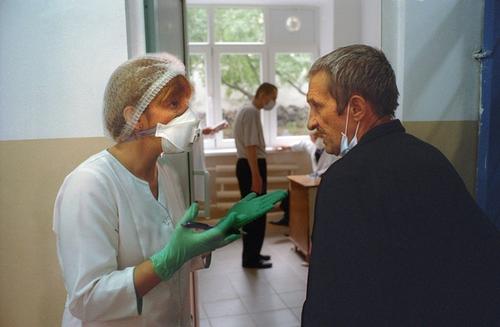
A nurse is trying to explain to a DR- TB patient that it is necessary that he takes his daily dose of medication. He is about to be released from prison on medical grounds, as he has a heart problem and is very ill from DR-TB. A serious challenge is to ensure that patients continue taking their treatment until they are cured.
Ukraine

MSF continues to reinforce its emergency teams

An MSF surgeon treated 20 wounded in Kiev following violent clashes between anti-government protestors and police. Project Update - 25 Feb 2014
 
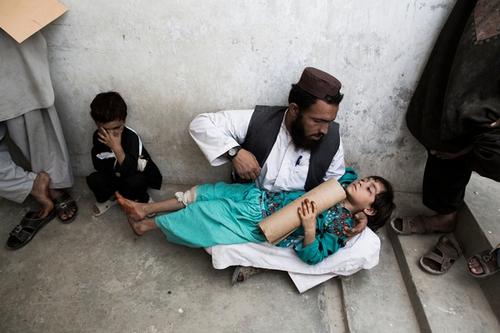
Abdul Ghani from Garsmir holds his 8 year old daughter Fatima waiting in line for an OPD appointment at Boost Hospital in Lashkar Gah, Helmand province, Southern Afghanistan.
Afghanistan

The ongoing struggle to access healthcare in Afghanistan

Medical care in Afghanistan remains ill-adapted to meet growing needs created by ongoing conflict. Press Release - 25 Feb 2014
 
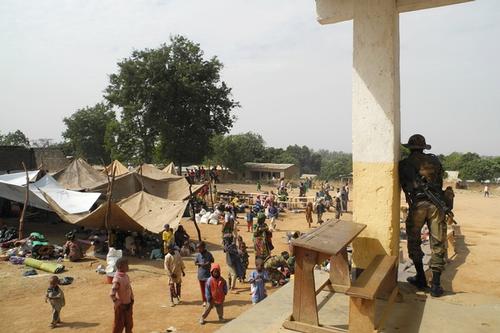
“Armed groups in the town looted our belongings and threatened to kill us,” says Mamadou, 33, owner of a grocery store in Bouar’s Haoussa district. “We had to leave to save our lives. We’d rather suffer in Cameroon than stay here.”
Central African Republic

"The people who leave take enormous risks"

Florent Uzzeni, deputy emergency programme manager, describes what he is seeing unfold on the ground. Voices from the Field - 24 Feb 2014
 
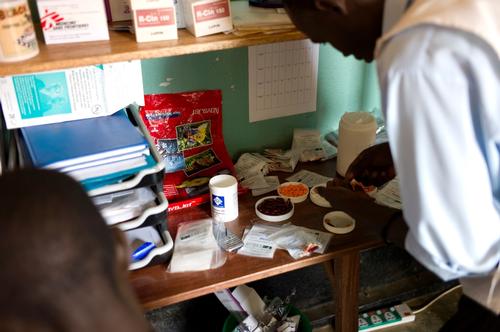
Preparing medication for MDRTB patients. Kitgum, northern Uganda
Tuberculosis

"Home is where the patient is": a qualitative analysis of a patient-centred model of care for Multidrug-Resistant tuberculosis

Ambulatory, community-based care for MDR-TB has been found to be effective in multiple settings with high cure rates. Journal article - 21 Feb 2014
 
District Matam, Zone Carriere, Site Secteur 2

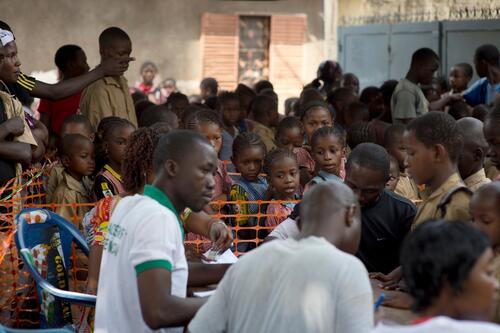
Children returning from school to get vaccinated. First they register to obtain their vaccination card.

MSF launched a vaccination campaign against measles in an attempt to control the epidemic that was declared by the government of Guinea on 14 January 2014. Together with the Ministry of Health, the teams of MSF should vaccinate around 400 000 children, ages 6 months to ten years, in 3 districts (Matoto, Ratoma, Matam) of the capital Conakry. 400 personnel will be working for two weeks to orchestrate this emergency response.
Guinea

The challenges of a vaccination campaign

MSF logistician, Grégoire Putz, describes the challenges of vaccinating 500,000 children. Voices from the Field - 20 Feb 2014
 
Children with complications admitted at the paediatric department ward of Donka hospital. Conakry. 

During vaccination, MSF also screens children that show signs of measles related complication and severe cases are referred to a nearby hospital where MSF supports the MOH staff (Ministry of Health).
Guinea

"People forget that you can still die from measles"

MSF launched a measles vaccination campaign in Conakry following the January 14 official declaration of an epidemic. Project Update - 20 Feb 2014
 
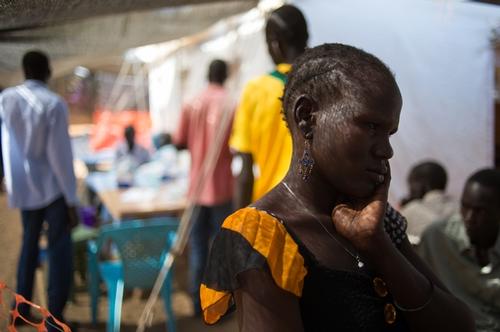
A lady waits for a consultation at the Médecins Sans Frontières (MSF) clinic set up at the camp for  displaced people in the grounds of the United Nations Mission to South Sudan (UNMISS) base in Juba, South Sudan, on January 12, 2014.
South Sudan

Dozens wounded treated amid new wave of violence in Malakal

More than 150 wounded people have been treated by MSF after a new wave of violence hit Malakal. Press Release - 20 Feb 2014
 
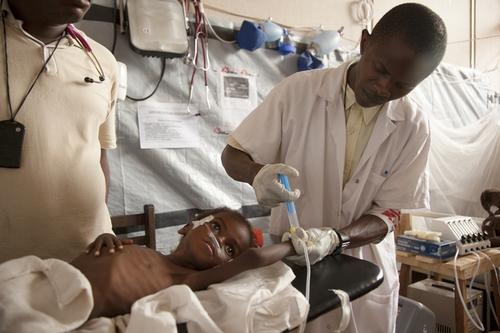
Dr Gilles Koukpo, MSF paediatrician, is treating a little girl who just arrived at the hospital in a state of shock, severely dehydrated. If not treated on time, children with measles can develop severe medical complications.
Democratic Republic of Congo

More measles vaccinations needed

MSF remains concerned that more needs to be done to ease a measles epidemic in CAR Press Release - 19 Feb 2014
 
Yemen is a country of transit for the thousands of migrants who leave the Horn of Africa to try to get to the countries of the Arabian Peninsula, mainly from Ethiopia to Saudi Arabia. During the trip and especially in Yemen, these people are victims of traffickers who extort money from them and torture them. Last April, the Yemeni authorities carried out a campaign to release hundreds of migrants held by traffickers and begin to repatriate them to their home countries. Since then, the number of people who voluntarily approach the detention center for migrants seeking repatriation has greatly increased.
The detention center in Sana'a, Yemen's capital, has a maximum capacity of 200-250; the centre currently houses about 750.
Yemen

“No patients, no problems:” Exposure to risk of medical personnel working in MSF projects in Yemen’s governorate of Amran

This paper provides a better understanding of the various forms of insecurity affecting MSF projects in Yemen. Journal article - 18 Feb 2014
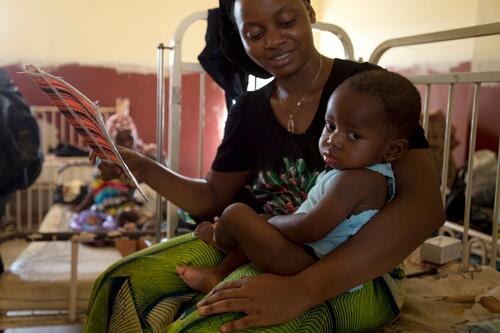
Four mothers posing in a corridor of the Hospital in Bili. All four of them are staying in the hospital with their child, that's suffering from a severe case of malaria. Since the beginning of the project in 2016, the pediatric ward already treated more than 4.000 cases of complicated/severe form of malaria.
Médecins Sans Frontières (MSF)

Independent medical humanitarian assistance

We provide medical assistance to people affected by conflict, epidemics, disasters, or exclusion from healthcare. Our teams are made up of tens of thousands of health professionals, logistic and administrative staff - most of them hired locally. Our actions are guided by medical ethics and the principles of independence and impartiality. We are a non-profit, self-governed, member-based organisation.

Learn more