



Ebola disease in DRC: find out how we're responding
Learn more
8003 Results
 
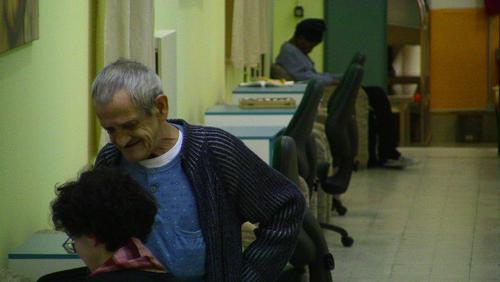
Homeless people treated in the MSF "medical home" for the homeless in Milan, Italy: a 20-beds health facility to address the needs of homeless people discharged from hospitals but still requiring medical follow-up. In Italy more than 13.000 people are considered homeless, with the biggest concentration in the town of Milan, where approximately 3.500 people sleep in the street.
Italy

An MSF “medical home” for the homeless in Milan

Essential medical services for Milan's homeless Project Update - 13 Mar 2014
 
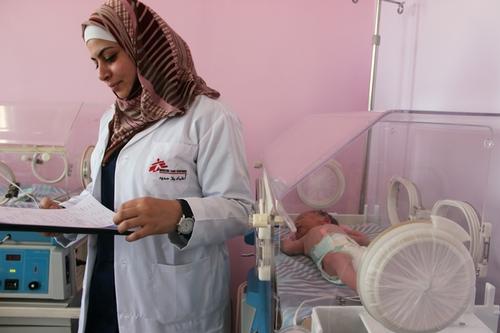
Newborn Syrian baby Zain Al-Abideen receives care from an MSF nurse in the neonatal unit at the mother and child hospital in Irbid.
Syria

MSF response to Syrian crisis

An update on MSF response to the Syrian crisis, including aid for Syrian refugees Project Update - 12 Mar 2014
 
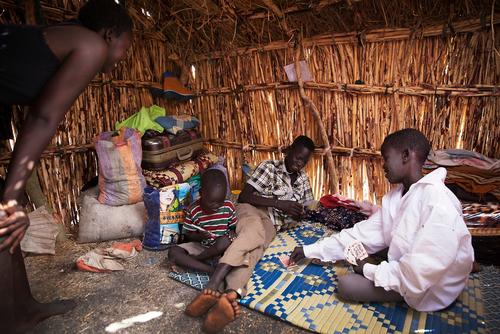
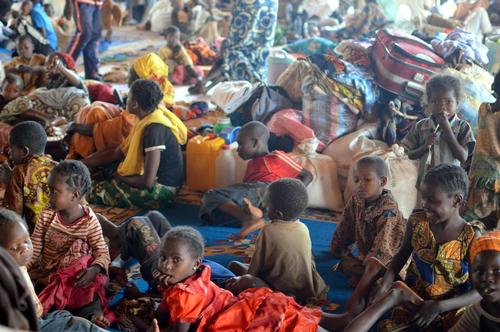
Children in a tent. Over 15,000 displaced people have reached Melut county, in South Sudan's Upper Nile State, after fleeing violence.
South Sudan

15,000 flee clashes in Upper Nile state

Violent clashes force 15,000 people to seek seek refuge in new camps Project Update - 11 Mar 2014
 
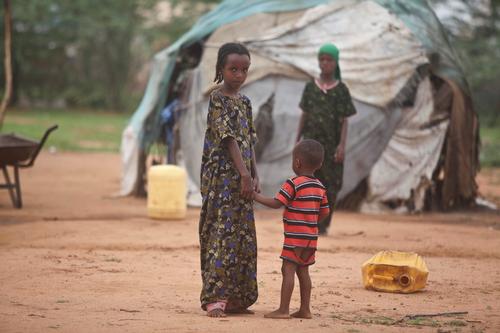
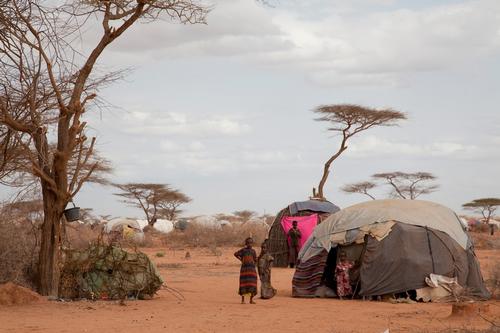
Somali refugee children who are living with their families in makeshift shelters on the outskirts of Dagahaley refugee camp in Dadaab. 

MSF is the only provider of medical care in Dagahaley, one of the five camps in the Dadaab refugee camp complex.  Each month, teams carry out over 20,000 outpatient consultations and admit approximately 600 patients to the hospital.

PHOTO/TOM MARUKO
Kenya

Humanitarian aid must be prioritised in Dadaab camps, despite return of refugees to Somalia

MSF urges donors and Government of Kenya to improve protection of refugees in Dadaab camps. Press Release - 10 Mar 2014
 
Somali refugees are settling the land at the edge of Dadaab refugee camp.
Kenya

Dadaab refugees: An uncertain tomorrow

MSF issues briefing paper highlighting appalling conditions in Dagahaley camp. Report - 10 Mar 2014
 
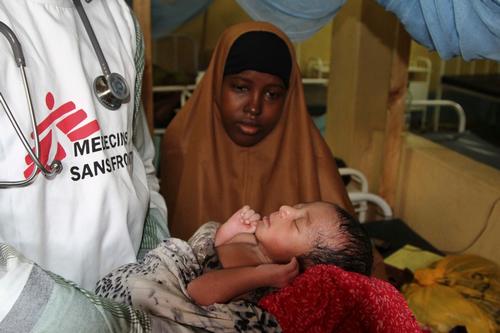
Muriya, Somali refugee and her newborn in MSF Dagahaley hospital in Dadaab refugee camp, Kenya, 2013 *** Local Caption *** Since 1991 successive crisis in Somalia have triggered several waves of displacement. Since the last famine episode mid-2011, half a million Somalis refugees now live in Kenya.
Women's health

Forced to Flee - women's health and displacement

On International Women’s Day 2014, as on every day, thousands of women will be forced to flee their homes. They
will join the 45 million other people worldwide who are displaced, whether due to conflict, persecution, or natural disasters. More than half of all those displaced are women and children.
Report - 8 Mar 2014
 
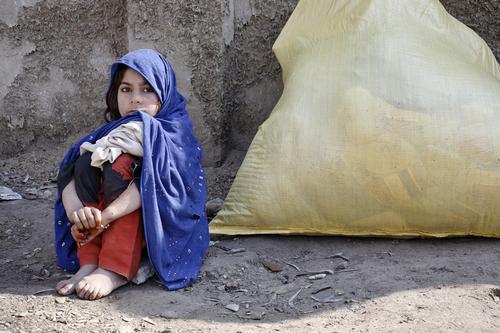
A girl sits next to relief items her family received in an MSF distribution.
 Since September 2008, MSF has been distributing relief items to displaced families living in improvised camps and with resident families. From September 2008 to March 2009, 30 000 people had benefited from MSF distributions in Peshawar, Charsadda and Mardan districts. *** Local Caption *** A massive influx of displaced people fleeing fighting in Bajaur Agency (500 000 people) in August 2008 and in Swat and Buner in April 2009 (1 to 2 million people) has caused significant strain on local families and health centres all around the region. Between 80  90% of the displaced population are living with resident families and improvised settlements all around the NWFP. The rest are living in official displaced persons camps. The dispersion of the displaced population over a large area and the general insecurity in the region have been major factors limiting MSF action.
Women's health

International Women's Day 2014: Forced to Flee

Stories from MSF's patients in Pakistan, Haiti, South Sudan, Philippines, Mauritania and Kenya. Voices from the Field - 7 Mar 2014
 
Poeun Pech (29) was tested seropositive three years ago. She lives in Sunsa Village, Pourk District, about 20km away from the hospital. She often comes to the hospital for her medicine but is now staying in the HIV ward because her health has worsened. She is malnourished and receives special therapeutic food. When she was 18 she left to work in a massage parlor in Sihanoukville. She married there and has now 2 boys (1 and 3 years old). Her husband left her when he heard he was seropositive. She returned to her parents home. Her mother is looking after her. The transport to the hopital is a very big problem, the trip costs 5USD per person. 
MSF in Cambodia has focused on an innovative approach, treating HIV/AIDS as a chronic disease alongside diabetes and hypertension, which also have high prevalence rates.  In Takeo MSF increasingly focused during 2007 on developing treatment for patients affected by tuberculosis (including multi drug-resistant TB). These activities included training national health staff on TB management and renovating TB wards in Takeo.
HIV/AIDS

Plasma Concentrations, Efficacy and Safety of Efavirenz in HIV-Infected Adults Treated for Tuberculosis in Cambodia

A study to assess the efficacy and safety of efavirenz 600 mg daily in HIV-tuberculosis co-infected patients. Journal article - 7 Mar 2014
 
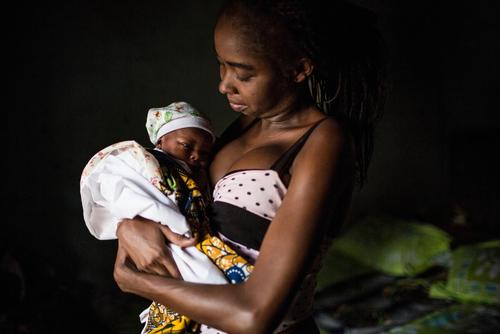
Today, Sonia continues to care for her child. But tensions in the neighborhood of PK5 remain. Shootings and exactions happen daily.

Sonia is 21 years old. She came to the Médecins Sans Frontières (MSF) hospital in M’Poko camp to deliver in the proximity of the Bangui international airport. Last December, while Sonia was more than 7 months pregnant, a wave of extreme violence struck Bangui, the capital of Central African Republic, obliging her to flee her neighborhood and seek refuge at the M’Poko camp. Today, the M’Poko Camp hosts around 40,000 people. The assistance is insufficient. People living there lack water, food and shelters while the rainy season approaches.

Since December, Médecins Sans Frontières (MSF) intervenes in the camp. Today, through a field hospital and three health posts in the camp, every day the MSF teams provide over 1000 consultations and help at least 10 women to give birth daily.
Women's health

Forced to Flee: Humanitarian Disasters Leave Women at Higher Risk

Tane Luna Ramirez from Médecins Sans Frontières reflects on the challenges of providing care for pregnant women as well as the heightened risk of sexual violence in disaster settings. Journal article - 7 Mar 2014
 
Deplaces a l'eglise a Carnot.<br/>Forced displaced in the church in Carnot. *** Local Caption *** Since February 1st, date of the anti-Balakas takeover of the city, a thousand people (mostly Peuls/Fulani in transit on their way to Cameroon) are trapped in the city ,victims of attacks and violences.
Central African Republic

Escalating violence endangering civilians and delivery of humanitarian aid

Escalating violence is endangering civilians Press Release - 7 Mar 2014
Four mothers posing in a corridor of the Hospital in Bili. All four of them are staying in the hospital with their child, that's suffering from a severe case of malaria. Since the beginning of the project in 2016, the pediatric ward already treated more than 4.000 cases of complicated/severe form of malaria.
Médecins Sans Frontières (MSF)

Independent medical humanitarian assistance

We provide medical assistance to people affected by conflict, epidemics, disasters, or exclusion from healthcare. Our teams are made up of tens of thousands of health professionals, logistic and administrative staff - most of them hired locally. Our actions are guided by medical ethics and the principles of independence and impartiality. We are a non-profit, self-governed, member-based organisation.

Learn more