



Ebola disease in DRC: find out how we're responding
Learn more
8003 Results
 
N'Djamena, Clement Community Center . 600 refugees from CAR are hosted in the " transit center " designed by the Chadian authorities to house people evacuated by plane from Bangui. 65 cargo planes chartered by Chad have enabled nearly 15,000 people to flee the violence and abuses in CAR . MSF conducts medical consultations in each of the eight sites hosting the CAR refugees in N'Djamena.
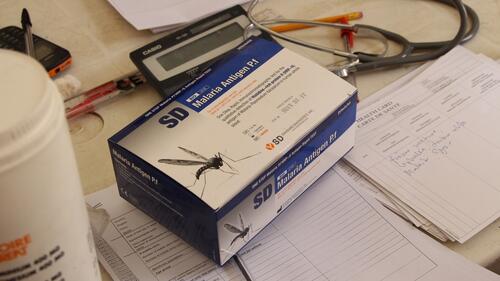
Malaria

Plasmodium falciparum clearance in clinical studies of artesunate-amodiaquine and comparator treatments in sub-Saharan Africa, 1999–2009

Studies on parasite clearance (PCT) for ACT malaria treatment. Journal article - 25 Mar 2014
 
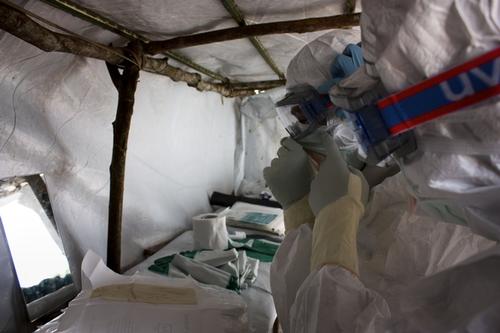
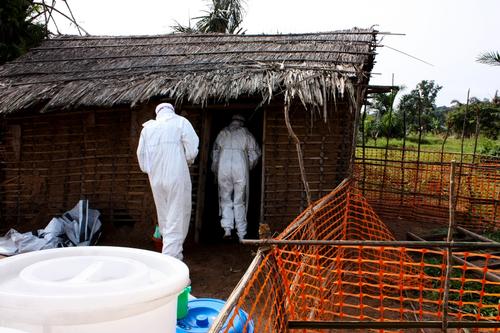
Kaluamba, isolation unit for suspected cases. An MSF team of nine Ebola specialists from the capitals Kinshasa, DRC, and Brussels, Belgium, is currently working in Western Kasai. Logisticians are building an isolation ward in the village of Kampungu, and putting in place all protection measures. The medical team is also providing care to all people suspected of having the disease.
Guinea

“There is no treatment and no vaccine for Ebola. The priority is to isolate suspected cases”

Interview with Dr Esther Sterk, MSF specialist on tropical diseases, on the Ebola epidemic. Voices from the Field - 24 Mar 2014
 
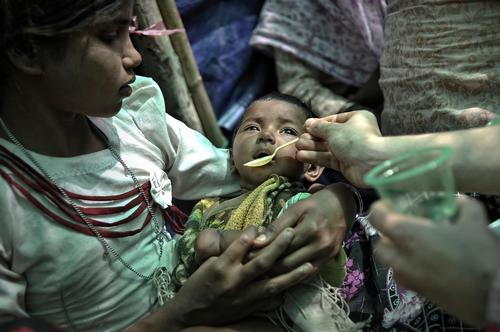
A doctor from MSF medical team gives ORS solution to the child with diarrhoea at MSF clinic in a refugee camp on the outskirts of Pauk Taw township, February 3, 2013. On that day, more than 80 cases of diarrhoea were treated by MSF medical team. photo by Kaung Htet
Myanmar

MSF acknowledges encouraging dialogue on Rakhine but clinics remain closed

MSF is engaged in discussions with the Union Government of Myanmar to maintain essential medical services for patients. Press Release - 24 Mar 2014
 
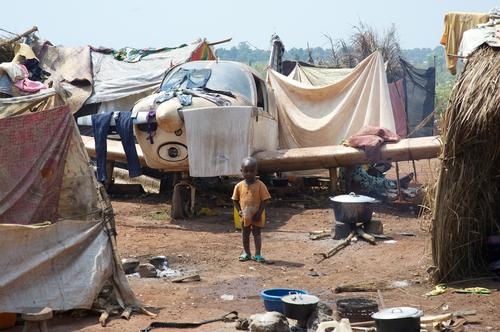
Mpoko IDP Camp at the airport. Hundreds of thousands of people fled the violence raging in Bangui since Decembre 5, 2013, seeking refuge in several camps in the city. Over 100,000 people are residing at the Mpoko camp at the airport. Some look for shelter under abandoned planes.
Central African Republic

A year of unimaginable violence, suffering and fear

Interview with Ronald Kremer, medical emergency coordinator who just returned from CAR. Voices from the Field - 24 Mar 2014
 
Kaluamba, isolation unit for suspected cases. An MSF team of nine Ebola specialists from the capitals Kinshasa, DRC, and Brussels, Belgium, is currently working in Western Kasai. Logisticians are building an isolation ward in the village of Kampungu, and putting in place all protection measures. The medical team is also providing care to all people suspected of having the disease.
Guinea

Ebola epidemic declared, MSF launches emergency response

MSF launches emergency response to fight ebola outbreak in Guinea. Project Update - 22 Mar 2014
 
Carolina Lopez, Spanish MSF Health Promoter explains to the Health Promotion team how to interact with women at the West Imey Market. It is their first Health Promotion activity at the market. They will explain to women the importance for pregnant women to go to the MSF clinic for maternal care, what is available to them and stress the signs of difficult pregnancies and deliveries to watch out for.
Women's health

Do non-monetary incentives for pregnant women increase antenatal attendance among Ethiopian pastoralists?

Studies on the relationship between antenatal attendance and non-monetary incentives. Journal article - 21 Mar 2014
 
Sputum being readied for testing in the GeneXpert TB diagnostic machine, Tboung Khmum District Referral Hospital, Cambodia
Tuberculosis

Does research make a difference to public health? Time for scientific journals to cross the Rubicon

Studies on how research affects public health. Journal article - 21 Mar 2014
 
msf-placeholder
Tuberculosis

Tuberculosis, a killer disease

On World TB Day, MSF warns that TB is again a killer disease Project Update - 21 Mar 2014
 
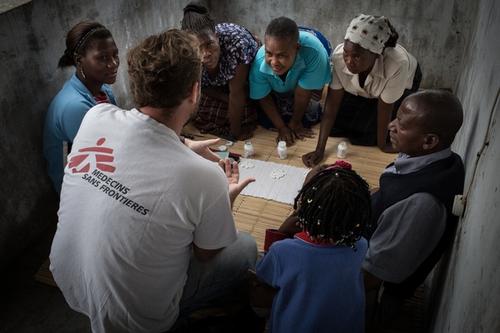
CAG (Community ART Group) meeting.
Maputo, Mozambique.
HIV/AIDS

A Qualitative Assessment of a Community Antiretroviral Therapy Group Model in Tete, Mozambique

A study to evaluate the relevance, dynamic and impact of the community ART groups in Tete. Journal article - 20 Mar 2014
 
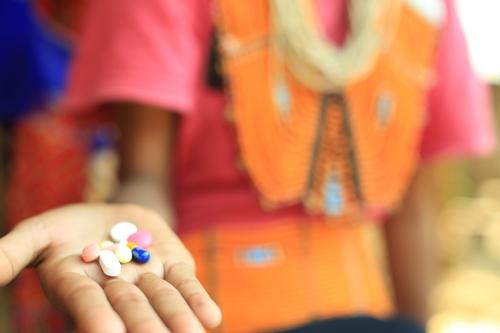
Aphe, care taker of Abino (pseudonym), 20 years old, MDR-TB patient gives her anti-TB medicines. Abino says, “I live in a big family of 10 members. Yet no one cares for me or talks to me, except my sister in law, Aphe. When I could not get up, she brought me food and water. She gives me the medicines on time every day.” 

Since 2010, Medecins Sans Frontieres (MSF) has been comprehensively supporting the Civil Hospital in Mon – a remote area of India’s north easternmost state, Nagaland. Together with the local authorities, MSF started treating patients with drug-susceptible TB and drug-resistant-TB (DR-TB) in April 2012.  Since then, around 255 sensitive TB patients have been put on treatment and eight DR-TB patients. People in this remote and mountainous region have severely limited access to health care, with very few health workers and almost no medical specialists. They must often travel for hours to reach the nearest hospital. For this reason, MSF has introduced the decentralized model of care in Mon. Medicines are given to these patients and their caretakers on a monthly basis, so that they can avoid the need to travel to clinic more often – an expense they can rarely afford.
Tuberculosis

Directly-Observed and Self-Administered Tuberculosis Treatment in a Chronic, Low-Intensity Conflict Setting in India

This study details experiences of an MSF tuberculosis programme in Andhra Pradesh-Chhattisgarh border area. Journal article - 20 Mar 2014
Four mothers posing in a corridor of the Hospital in Bili. All four of them are staying in the hospital with their child, that's suffering from a severe case of malaria. Since the beginning of the project in 2016, the pediatric ward already treated more than 4.000 cases of complicated/severe form of malaria.
Médecins Sans Frontières (MSF)

Independent medical humanitarian assistance

We provide medical assistance to people affected by conflict, epidemics, disasters, or exclusion from healthcare. Our teams are made up of tens of thousands of health professionals, logistic and administrative staff - most of them hired locally. Our actions are guided by medical ethics and the principles of independence and impartiality. We are a non-profit, self-governed, member-based organisation.

Learn more