



Ebola disease in DRC: find out how we're responding
Learn more
8007 Results
 
Following an attack in Kamango village in DRC the 11th of July around 50000 people fled and crossed the border to take refuge in Uganda  along the border. Most of refugees stayed at bordering areas within the hosting community and in a transit camp called Bubukwanga, 18 km from the Congolese border (close to Bundibugyo town) where 17000 have been registered by the UNHCR. MSF team has started an emergency intervention in the Transit Centre of  Bubukwanga since 18th of July : OPD (300 consultations per day (malaria, Acute respiratory infection, water diarrheas, malnutrition), IDP (30 beds), measle vaccination etc + water supply and sanitation.
Democratic Republic of Congo

MSF urges military personnel conducting operations in the Beni region to take every precaution to protect hostages’ lives

MSF urges military personnel conducting operations in the Beni region to take every precaution to protect hostages’ lives Press Release - 8 Apr 2014
 
All the wards in the Burauen district hospital were destroyed by the Typhoon Haiyan. MSF began supporting this health centre a few days after the storm.
Philippines

In the eye of the typhoon: MSF's Typhoon Haiyan response

When Typhoon Haiyan ripped through the central Philippines on 8 Nov 2013, it caused a disaster of a scale unprecedented in the past century. Report - 7 Apr 2014
 
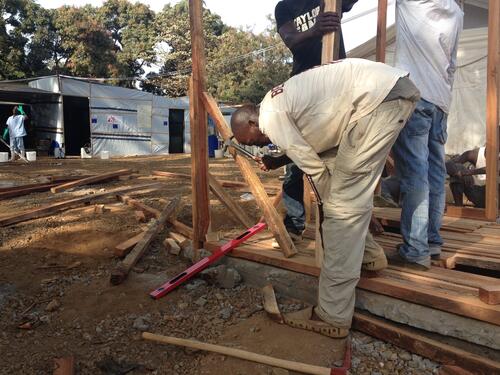
Construction workers in the Guinean capital Conakry work on latrines in the MSF Ebola treatment centre. Once completed, the centre will have 30 beds for suspected and confirmed cases of Ebola. MSF, the Guinean Ministry of Health and health actors are working to contain the Ebola outbreak in the country, which by the beginning of April had been recorded in four locations in the country, including the capital Conakry.
Guinea

An MSF epidemiologist explains the dangerous nature of Ebola

An MSF epidemiologist explains the dangerous nature of Ebola Voices from the Field - 7 Apr 2014
 
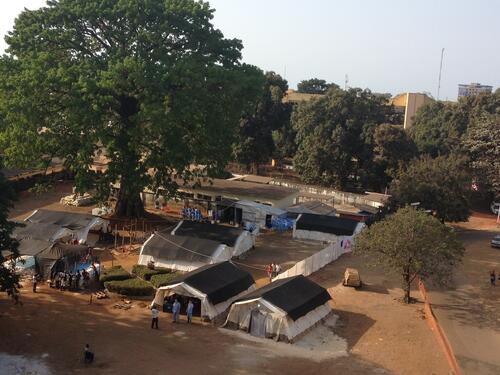
An overview of the MSF Ebola treatment centre in the Guinean capital Conakry. Once completed, the expanded centre will have 30 beds for suspected and confirmed cases of Ebola. MSF, the Guinean Ministry of Health and health actors are working to contain the Ebola outbreak in the country, which by the beginning of April had been recorded in four locations in the country, including the capital Conakry.
Guinea

Successes and challenges in response to Ebola outbreak

MSF is successfully treating victims of the Ebola crisis in Guinea Project Update - 7 Apr 2014
 
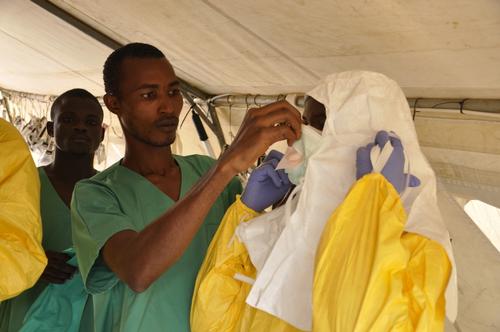
Members of the medical team are getting fully dressed with protective clothing prior to entering the ebola healthcare structure.
Guinea

"There is a lot to do in a very short time" to contain Ebola

MSF combats the Ebola outbreak in Guinea
Voices from the Field - 4 Apr 2014
 
The needs of displaced people in Don Bosco (30,000 people) are enormous. MSF has started a nutritional program in the camp.
Central African Republic

"The international response to the conflict is extremely disheartening"

An MSF humanitarian affairs officer describes the terrible conditions in Central African Republic. Voices from the Field - 4 Apr 2014
 
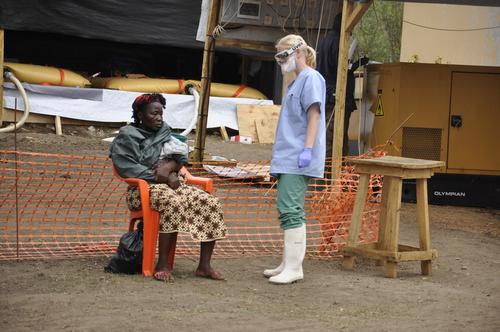
A woman went to the MSF structure as she thinks she might be infected by the ebola virus. Sisille, an mSF nurse, is talking with her to evaluate if she presents any symptoms of the disease.
Ebola and haemorrhagic fevers

MSF strengthens response to Guinea Ebola outbreak

MSF continues to reinforce its teams to respond to an outbreak of Ebola haemorrhagic fever in Guinea. Project Update - 3 Apr 2014
 
One of the best ways to reduce malaria transmission is through the use of ITNs (insecticide treated nets). In March 2012, MSF distributed more than 65,000.
Malaria

Can Timely Vector Control Interventions Triggered by Atypical Environmental Conditions Prevent Malaria Epidemics? A Case-Study from Wajir County, Kenya

Wajir County in Northeast Kenya is classified as having seasonal malaria transmission. The aim of this study was to describe in Wajir town the environmental conditions, the scope and timing of vector-control interventions and the associated resulting burden of malaria at two time periods (1996–1998 and 2005–2007). Journal article - 3 Apr 2014
 
Vaccination  à Bitoye au Tchad.<br/>Vaccination campaign in Betoye, southern Chad. *** Local Caption *** An estimated 6,000 refugees who fled violence in CAR settled in Bitoye in southern Chad. MSF provides in refugees camp in Bitoye primary health care and conducted in February 2014 a vaccination campaign against measles, meningitis A and polio.
Chad

Despite mass vaccination, measles cases in N’djamena not decreasing

Efforts to contain an ongoing measles epidemic affecting N’djamena must be immediately stepped up. Press Release - 1 Apr 2014
 
 In places of detention, overcrowding, inadequate heating, insufficient hot water, poor ventilation, a lack of access to the outdoors and a poor diet contribute to the emergence and spread of respiratory, gastrointestinal, dermatological and musculoskeletal diseases among detainees. Detention is also detrimental to their mental health: symptoms of anxiety, depression and psychosomatic manifestations are observed in many, while it is not uncommon for desperate migrants to go on hunger strike, to self-harm and even to attempt suicide.


In Greece, MSF has been responding since 2008 to the urgent medical and humanitarian needs of newly arrived migrants, as well as to asylum seekers and migrants in administrative detention. During 2013 and 2014, MSF worked in six immigration detention facilities in the north of Greece, and made assessment visits to 27 regular and border police stations, coastguard facilities and pre-removal centers across Greece.
In April 2014, MSF published the report “Invisible Suffering”, which highlights the massive impact of detention on the physical and mental health of migrants. The report also points out the gaps in healthcare provision and the absence of medical assessments, which lead to detainees with serious medical conditions being neglected or even being forced to interrupt their treatment.
Greece

Invisible Suffering

Prolonged detention of migrants and asylum seekers has devastating consequences, MSF warns. Report - 1 Apr 2014
Four mothers posing in a corridor of the Hospital in Bili. All four of them are staying in the hospital with their child, that's suffering from a severe case of malaria. Since the beginning of the project in 2016, the pediatric ward already treated more than 4.000 cases of complicated/severe form of malaria.
Médecins Sans Frontières (MSF)

Independent medical humanitarian assistance

We provide medical assistance to people affected by conflict, epidemics, disasters, or exclusion from healthcare. Our teams are made up of tens of thousands of health professionals, logistic and administrative staff - most of them hired locally. Our actions are guided by medical ethics and the principles of independence and impartiality. We are a non-profit, self-governed, member-based organisation.

Learn more