



Ebola disease in DRC: find out how we're responding
Learn more
8007 Results
 
Las familias de presos requieren, por lo general, atención psicológica. Mujeres, madres o hijos acusan todos  la ausencia del familiar preso. En el caso de Adel,  que se puso en huelga de hambre, agravó la condición de la familia. 
Prisoners’ families usually need psychological attention. Women, mothers, fathers, children, they are all affected by the absence of the prisoner. Adel’s case, who went into hunger strike, worsened the condition of his family.
Palestine

Occupied Minds - Crossing a checkpoint

Part IV of Occupied Minds, a series of stories about MSF patients affected by the Israeli-Palestinian conflict. Voices from the Field - 10 Apr 2014
 
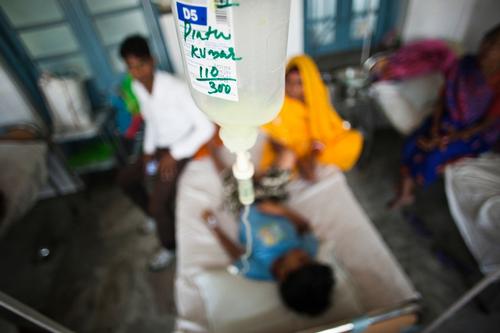
Kala Azar in Bihar, India. Sadar Hospital, Vaishali District.
In partnership with the State Health Society-Bihar, MSF has managed a Kala Azar diagnosis and treatment project in Vaishali District since 2007, and has treated more than 10,000 patients free-of-charge within government facilities. L-AmB (liposomal amphotericin B) has been used as a first line treatment. However, L-AmB is still very expensive and in order to investigate potential alternative treatments, MSF, in August 2012, partnered with the Bihar State Health Society and DNDi (Drugs for Neglected Diseases initiative) to further empirical research on safer and more effective treatments for Kala Azar in India. Kala azar is a disease endemic to Bihar.
India

Better detection, diagnosis and treatment needed for neglected complication of kala azar in Bihar

MSF is calling on the Bihar government and NVBDCP to recognise and treat Post Kala azar Dermal Leishmaniasis. Press Release - 10 Apr 2014
 
msf-placeholder
South Sudan

80,000 South Sudanese refugees in Ethiopia

Video: South Sudanese refugees in Ethiopia Project Update - 10 Apr 2014
 
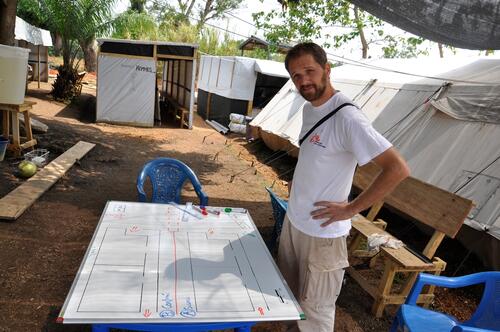
Pascal Piguet, Swiss log watsan in Guéckédou.
Guinea

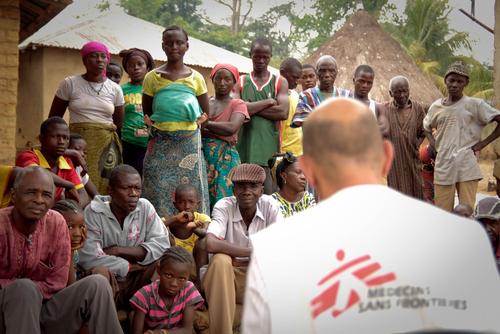
Interview with MSF logistician in Gueckedou

Interivew with Pascal Piquet, MSF logistician in Gueckedou, on MSF response to the Ebola outbreak. Voices from the Field - 10 Apr 2014
 
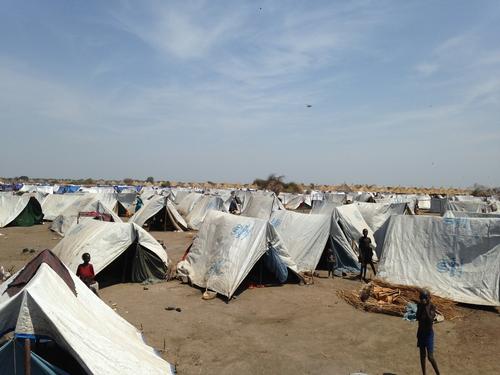
Luetchor refugee camp.<br> MSF has set up an outpatient and inpatient medical facility with a capacity of 75 bed in Luetchor refugee camp, serving a population of approximately 40 000 south Sudanese refugees as of April 1st 2014.  The refugees have fled violence, persecutions and food shortage in Jonglei, Upper Nile and Unity in neighboring   South Sudan
Ethiopia

Urgent assistance needed for South Sudanese refugees

Ethiopia: assistance needed for South Sudanese refugees Press Release - 10 Apr 2014
 
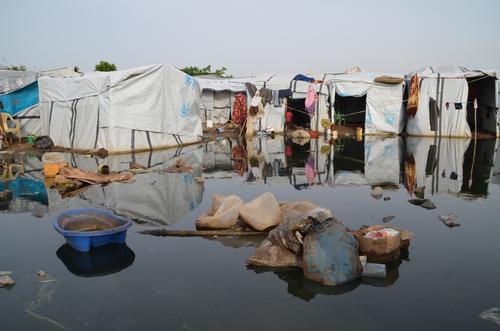
One of the most flooded areas in Tomping camp.

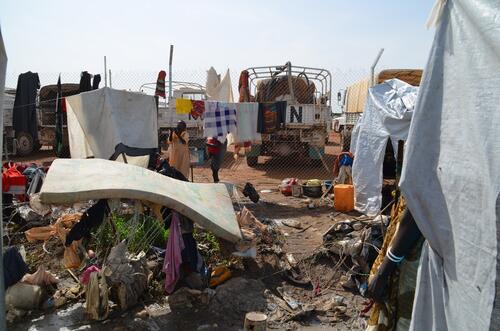
MSF is providing medical care in two camps in Juba, South Sudan, where 40,000 people are seeking refuge from widespread fighting that erupted in mid-December. Over 27,000 people are living in deplorable conditions in Tomping camp. The first rains of the season have left a significant part of the camp flooded and further degraded the poor sanitation conditions.
South Sudan

Displaced people speak of their lives

South Sudan: Displaced people speak of their lives Voices from the Field - 9 Apr 2014
 
IDPs are living inside the Protection of Civilians area of the UNMISS compound.

MSF is providing medical care in two camps in Juba, South Sudan, where 40,000 people are seeking refuge from widespread fighting that erupted in mid-December. Over 27,000 people are living in deplorable conditions in Tomping camp. The first rains of the season have left a significant part of the camp flooded and further degraded the poor sanitation conditions.
Sudan

Shameful attitude to vulnerable displaced shown by leadership of United Nations Mission in South Sudan (UNMISS)

Senior UNMISS officials have refused to improve living conditions for 21,000 displaced people living in a flood-prone part of a UN compound. Press Release - 9 Apr 2014
 
MSF is the only medical organization working in the M'Poko camp (Bangui airport area), where around 100,000 IDPs - who fled early december's violences and clashes in the capital - live in extremely precarious conditions. Every day, our teams conduct around 500 consultations, a hundred dressings and 7 deliveries.
Hepatitis C

Global response to hepatitis C hangs on access to new oral drugs

Global response to hepatitis C hangs on access to new oral drugs Press Release - 8 Apr 2014
 
In Greece, MSF has been responding since 2008 to the urgent medical and humanitarian needs of newly arrived migrants, as well as to asylum seekers and migrants in administrative detention. During 2013 and 2014, MSF worked in six immigration detention facilities in the north of Greece, and made assessment visits to 27 regular and border police stations, coastguard facilities and pre-removal centers across Greece.
In April 2014, MSF published the report “Invisible Suffering”, which highlights the massive impact of detention on the physical and mental health of migrants. The report also points out the gaps in healthcare provision and the absence of medical assessments, which lead to detainees with serious medical conditions being neglected or even being forced to interrupt their treatment.
Greece

MSF denounces Greek authorities’ decision to detain migrants indefinitely

MSF denounces Greek authorities’ decision to detain migrants indefinitely. Press Release - 8 Apr 2014
 
Patients counting and registering the number of pills. It’s CAG strategy. 
Maputo, Mozambique.
HIV/AIDS

High attrition among HIV-infected patients with advanced disease treated in an intermediary referral center in Maputo, Mozambique

Studies on high attrition among HIV-infected patients treated in referral centre in Mozambique. Journal article - 8 Apr 2014
Four mothers posing in a corridor of the Hospital in Bili. All four of them are staying in the hospital with their child, that's suffering from a severe case of malaria. Since the beginning of the project in 2016, the pediatric ward already treated more than 4.000 cases of complicated/severe form of malaria.
Médecins Sans Frontières (MSF)

Independent medical humanitarian assistance

We provide medical assistance to people affected by conflict, epidemics, disasters, or exclusion from healthcare. Our teams are made up of tens of thousands of health professionals, logistic and administrative staff - most of them hired locally. Our actions are guided by medical ethics and the principles of independence and impartiality. We are a non-profit, self-governed, member-based organisation.

Learn more