


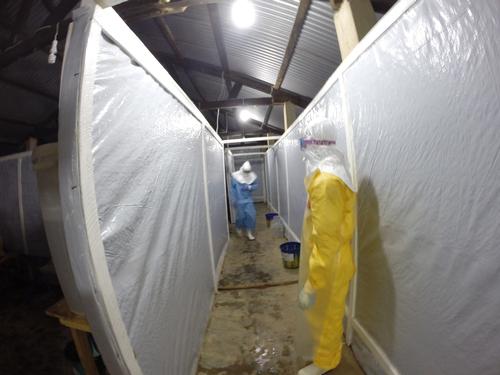

Ebola disease in DRC: find out how we're responding
Learn more
8007 Results
 
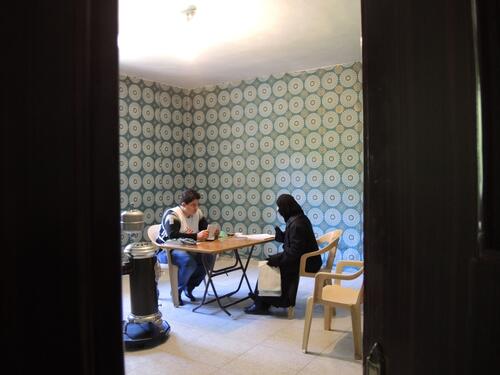
In Baalbeck, MSF has set up a primary health care clinic in a house, providing consultations and treatment to Syrian refugees. 

Dr. Ali Shukr, MSF: «Many patients suffer from chronic diseases, such as diabetes or hypertension, as well as acute diseases such as respiratory infections. We also see an increasing number of dermatological diseases due to the poor living conditions and lack of hygiene. For diabetics, one of the main problems is their diet: we provide the treatment but it’s not enough. They need to follow a strict diet. Yet, these patients usually don’t have the means to buy vegetables, fresh fruits, or do sports”.
Access to Healthcare

Stories from non-communicable chronic diseases patients in Lebanon

Stories from MSF's non-communicable chronic diseases patients in Lebanon Voices from the Field - 17 Apr 2014
 
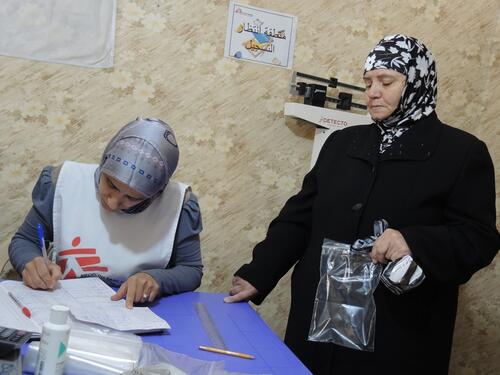
Leila, a 62 Syrian refugee suffers from diabetes. She comes to the MSF clinic in Baalbeck for treatment and medication. 

« What do you want me to eat when I’m fleeing a country at war? The doctor tells me to eat vegetables, but it’s difficult for me to get this type of food. My husband and I live from the aid we receive. I have no other solution but to eat what I can find”.
Lebanon

Treating chronic diseases among Syrian refugees, a priority for MSF

Treating chronic diseases among Syrian refugees: a priority for MSF Project Update - 16 Apr 2014
 
msf-placeholder
Central African Republic

Exodus of Muslims: Interviews with refugees in Chad

Video interviews with Central African refugees in Chad. Project Update - 16 Apr 2014
 
The Ebola epidemic confirmed by the Ministry of Health on March 22 is the first to affect Guinea. The priority of the teams on site is to identify patients with Ebola symptoms and isolate them, while providing high-quality care. In cooperation with the Ministry of Health, MSF created an isolation facility in Guéckédou and is setting up another in Macenta. Both towns are in the Forestière region of southern Guinea. Mobile teams are also evaluating the situation in Kissidougou and Nzérékoré and are monitoring bordering countries closely, particularly Sierra Leone and Liberia, where suspected cases have been reported.
Ebola and haemorrhagic fevers

Emergence of Zaire Ebola Virus Disease in Guinea — Preliminary Report

Preliminary Report on Emergence of Zaire Ebola Virus Disease in Guinea. Journal article - 16 Apr 2014
 
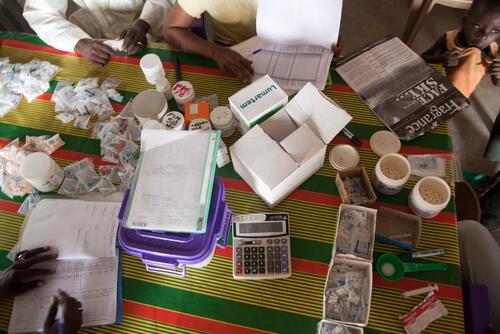
The drug dispensary at MSF's "Mango Clinic." The clinic is just outside Abare one of seven villages in Zamfara State, where MSF runs outreach clinics treating children affected by lead poisoning.
Nigeria

Association of Blood Lead Level with Neurological Features in 972 Children Affected by an Acute Severe Lead Poisoning Outbreak in Zamfara State, Northern Nigeria

Association of blood lead level with neurological features in children affected by Lead Poisoning in Nigeria. Journal article - 16 Apr 2014
 
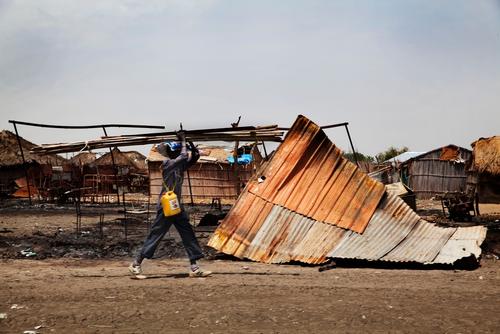
The South Sudanese key strategic town of Malakal came under attack on February 18. The clashes between government and opposition forces forced thousands of people to flee to other locations or to the UN compound in the town.
South Sudan

"No news from Malakal"

South Sudan: "No news from Malakal" Project Update - 14 Apr 2014
 
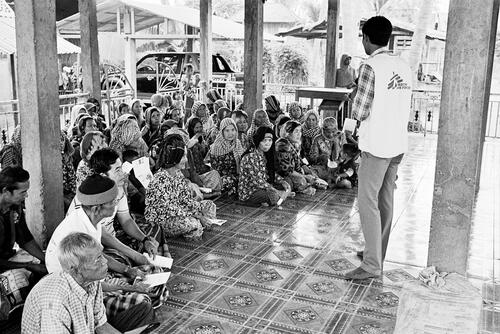
Outreach worker Khen Rith conducts TB health education and explains the Active Case Finding screening process to over 55 villagers at Angkor Chea village, Cambodia.
Tuberculosis

Active Case Finding in Cambodia: Searching for TB one village at a time

With the current health system in Cambodia at its limit, MSF has trialled an active case finding project that targets high-risk groups for TB. Project Update - 14 Apr 2014
 
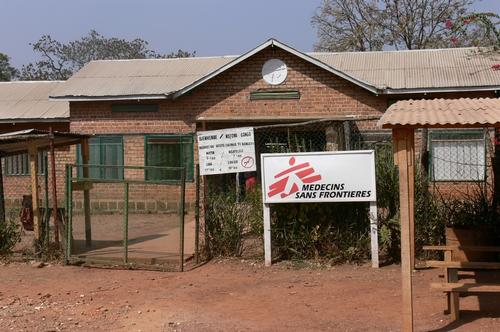
MSF fistula camp in Boguila, CAR: Exterior of main hospital in Boguila. 
Approximately two million women in Africa suffer from a fistula, which is a hole between the vagina and the bladder or rectum, through which urine or feces leak continuously. Fistulas can be caused by prolonged obstructed labor and childbirth or sexual violence in addition to lack of medical facilities. Women with fistulas are often outcasts from their communities because of the smell associated with their incontinence, and in some cases they are abandoned by their husbands. Chances for women to have their fistula repaired are slim, as many hospitals or health clinics do not have the proper instruments or knowledge and skills to carry out such a procedure.
Central African Republic

Thousands of people flee fighting in Boguila town

7,000 people flee the town, 40 women and children seek refuge in hospital Project Update - 12 Apr 2014
 
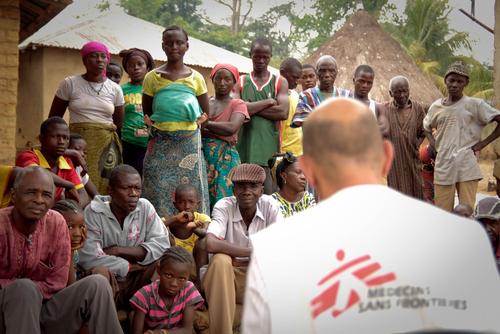
Epidemiologist Michel Van Herp explains to the population in Gbando what is Ebola and how to avoid transmission.

The Ebola epidemic confirmed by the Ministry of Health on March 22 is the first to affect Guinea. The priority of the teams on site is to identify patients with Ebola symptoms and isolate them, while providing high-quality care. In cooperation with the Ministry of Health, MSF created an isolation facility in Guéckédou and is setting up another in Macenta. Both towns are in the Forestière region of southern Guinea. Mobile teams are also evaluating the situation in Kissidougou and Nzérékoré and are monitoring bordering countries closely, particularly Sierra Leone and Liberia, where suspected cases have been reported.
Ebola and haemorrhagic fevers

MSF resumes activities in Ebola centre in southeast Guinea

MSF resumes activities in a treatment centre in southeast Guinea, after it was forced to suspend it’s work late last week following protests by a section of the local population. Press Release - 11 Apr 2014
 
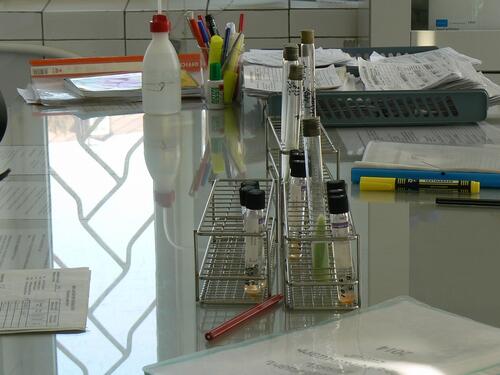
National Reference Laboratory, Abovyan. Sputum culture is currently used to detect TB, together with chest X-rays, sputum smear microscopy and Mantoux test. However, the growth of TB bacteria in culture is the only method allowing determining complete drug-susceptibility.<br> *** Local Caption *** Treatment options for patients with drug-resistant TB remain far short of what is needed. Treatments are long (up to 2 years), toxic (serious side-effects) and expensive. Furthermore, the cure rate is only 50%.
Bedaquiline, one of two new TB drugs to be developed in 50 years, is as yet only available for compassionate use, i.e., patients for whom most antibiotics are not effective. MSF has been administering a new treatment including bedaquiline to around thirty patients in Armenia since April 2013. Although we can not draw any definitive conclusions (at this point), several patients have shown significant signs of improvement and we have not observed any side effects associated with bedaquiline until now.
But, while compassionate use of this new drug gives cause for optimism to patients who have lost hope, it is not the solution for treating the hundreds of thousands of patients worldwide suffering from DR-TB. New, shorter, less toxic and cheaper treatments including bedaquiline and delamanid, the other new TB drug, need to be developed.
Tuberculosis

Intensive-Phase Treatment Outcomes among Hospitalized Multidrug-Resistant Tuberculosis Patients: Results from a Nationwide Cohort in Nigeria

Studies on Intensive-Phase Treatment Outcomes among Multidrug-Resistant TB Patients. Journal article - 10 Apr 2014
Four mothers posing in a corridor of the Hospital in Bili. All four of them are staying in the hospital with their child, that's suffering from a severe case of malaria. Since the beginning of the project in 2016, the pediatric ward already treated more than 4.000 cases of complicated/severe form of malaria.
Médecins Sans Frontières (MSF)

Independent medical humanitarian assistance

We provide medical assistance to people affected by conflict, epidemics, disasters, or exclusion from healthcare. Our teams are made up of tens of thousands of health professionals, logistic and administrative staff - most of them hired locally. Our actions are guided by medical ethics and the principles of independence and impartiality. We are a non-profit, self-governed, member-based organisation.

Learn more