



Ebola disease in DRC: find out how we're responding
Learn more
8009 Results
 
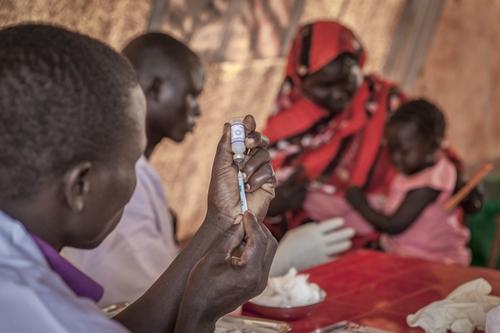
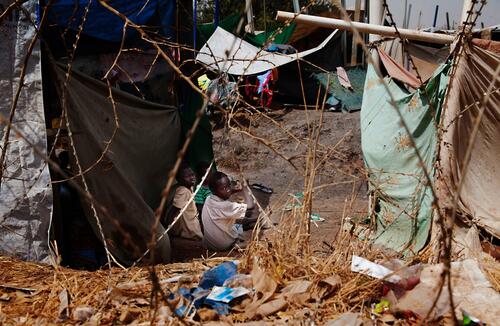
Sudanese refugees began streaming across the border into South Sudan in June 2011 when conflict erupted between the Khartoum government and the rebels of the Sudan People’s Liberation Movement-North (SPLM-N) in Sudan’s South Kordofan State. At the height of the crisis in Yida camp last summer, high mortality rates were reported among young children admitted to MSF’s hospital with respiratory tract infections, such as pneumonia, one of the leading causes of death. MSF determined that vaccinating with the pneumococcal conjugate vaccine (PCV) could result in a substantial mortality reduction in Yida. MSF has been working since September 2012 to procure PCV but faced significant delays due to lengthy negotiations and international legal procurement constraints. MSF was eventually able to obtain the vaccine from GSK at a reduced price, but delays have now pushed the planned vaccination into the logistically challenging rainy season.

The objective is to immunize approximately 5,000 children under the age of 2 against several pathogens, including haemophilus influenza type B and pneumococcus. This is the first time that PCV is being used in South Sudan and one of the first vaccines to be implemented in compliance with the new WHO emergency vaccination recommendations.
Access to medicines

Vaccinating Children beyond the 'Cold Chain'

More than 22 million children worldwide did not complete basic childhood vaccinations in 2012 and an estimated 1.5 million children aged under five die every year from vaccine-preventable diseases. Report - 29 Apr 2014
 
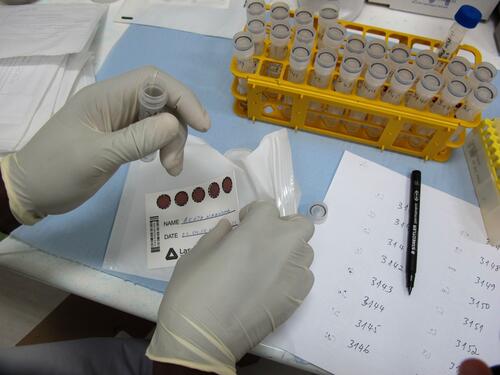
In Maputo, Mozambique, Jose Macamo hospital. Viral load monitoring has been used for years in Western countries, and is recommended by the World Health Organization as the gold standard of care for HIV. Contrary to the CD4 test that gives only an indirect indication of the disease’s progression, this technology calculates precisely how much virus is present in the patient’s body. It allows physicians to detect right away how well the ARV treatment is working, if the patient is not taking his drugs properly or has developed resistance to the first line of HIV drugs.
HIV/AIDS

A three-tier framework for monitoring antiretroviral therapy in high HIV burden settings

The provision of antiretroviral therapy (ART) in low and middle-income countries is a chronic disease intervention of unprecedented magnitude and is the dominant health systems challenge for high-burden countries, many of which rank among the poorest in the world. Journal article - 28 Apr 2014
 
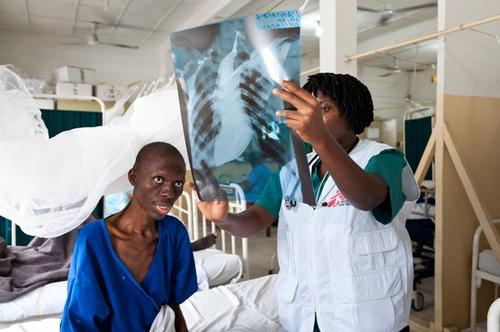
Dr Maria Machako is in charge of MSF’s HIV-AIDS hospital in Kinshasa - CHK, Centre Hospitalier Kabinda. In CHK, the MSF team fights for every life, but will be able to save only three out of four patients because patients arrive very late, in a very advanced stage of the disease.
HIV/AIDS

West and Central Africa patients have been ' left behind' by the AIDS revolution

West and Central Africa patients have been 'left behind' by the AIDS revolution Press Release - 28 Apr 2014
 
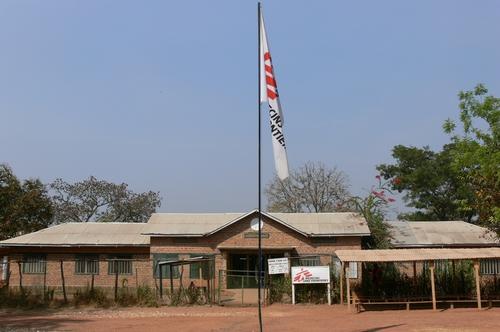
MSF fistula camp in Boguila, CAR: Exterior of main hospital in Boguila. 
Approximately two million women in Africa suffer from a fistula, which is a hole between the vagina and the bladder or rectum, through which urine or feces leak continuously. Fistulas can be caused by prolonged obstructed labor and childbirth or sexual violence in addition to lack of medical facilities. Women with fistulas are often outcasts from their communities because of the smell associated with their incontinence, and in some cases they are abandoned by their husbands. Chances for women to have their fistula repaired are slim, as many hospitals or health clinics do not have the proper instruments or knowledge and skills to carry out such a procedure.
Central African Republic

Three MSF workers among sixteen unarmed civilians killed at Boguila Hospital

16 civilians, including 3 MSF staff were killed during an armed robbery on MSF hospital grounds Boguila Project Update - 28 Apr 2014
 
msf-placeholder
HIV/AIDS

Proof that the project is working

Video: HIV. Proof that the project is working. Project Update - 28 Apr 2014
 
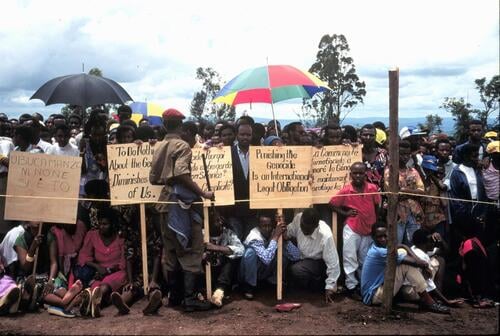
KIGALI, RWANDA, AFRICA, 30.04.95. Tutsi survivors of the genocide at the one year anniversary of the genocide. Beneath umbrellas.
Rwanda

Rwanda, 20 years later: “I am left with a great sadness”

Dr. Jean-Hervé Bradol pays tribute to hundreds of murdered Rwandan MSF colleagues. Voices from the Field - 28 Apr 2014
 
The South Sudanese key strategic town of Malakal came under attack on February 18. The clashes between government and opposition forces forced thousands of people to flee to other locations or to the UN compound in the town. Roughly 21,000 people were crammed into this camp.
South Sudan

MSF condemns unspeakable violence in Bentiu

Accounts of gruesome targeted killings; consequences of the violence leaves thousands in peril Press Release - 28 Apr 2014
 
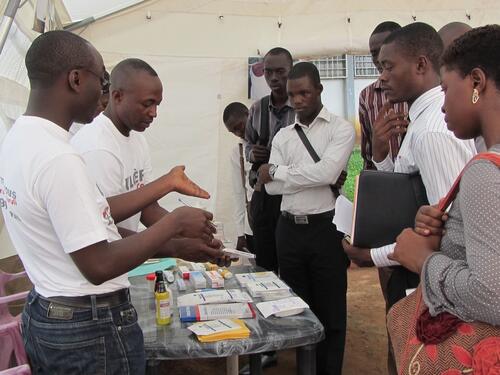
Medicine students in front of new dressing used by MSF to treat wounds caused by Buruli Ulcer. The MSF medical team is explaining how to use them.
HIV/AIDS

Impact of HIV on the Severity of Buruli Ulcer Disease: Results of a Retrospective Study in Cameroon

HIV-positive patients are at higher risk for Buruli Ulcer. HIV-induced immunosuppression appears to have an impact on Buruli Ulcer clinical presentation and disease evolution. Journal article - 26 Apr 2014
 
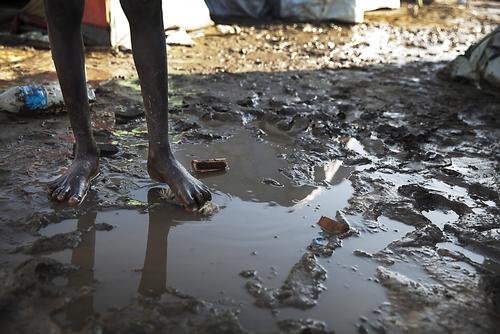
MSF is providing medical care in two camps in Juba, South Sudan, where 40,000 people are seeking refuge from widespread fighting that erupted in mid-December. Over 27,000 people are living in deplorable conditions in Tomping camp. The first rains of the season have left a significant part of the camp flooded and further degraded the poor sanitation conditions.
Malaria

Malaria control in emergencies: time for action

What can be done beyond just waiting for malaria to sweep in and then treating people who become ill, as MSF and other aid organisations are now doing? We now have tools - from weather monitoring to close surveillance of new cases - to predict the onset of a malaria peak and a large proportion of severe cases, so shouldn’t we be taking more aggressive preventive measures? Opinion - 25 Apr 2014
 
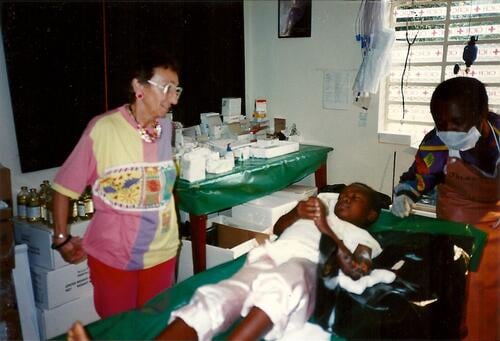
Madeleine Boyer (infirmière anesthésiste). au chevet d'un jeune patient.<br>
Rwanda

Twenty years after the Rwandan genocide: “We don’t talk about things that are hard to recount”

Nurse anesthetist Madeleine Boyer describes recollections of her two missions to Kigali in 1994 Voices from the Field - 25 Apr 2014
Four mothers posing in a corridor of the Hospital in Bili. All four of them are staying in the hospital with their child, that's suffering from a severe case of malaria. Since the beginning of the project in 2016, the pediatric ward already treated more than 4.000 cases of complicated/severe form of malaria.
Médecins Sans Frontières (MSF)

Independent medical humanitarian assistance

We provide medical assistance to people affected by conflict, epidemics, disasters, or exclusion from healthcare. Our teams are made up of tens of thousands of health professionals, logistic and administrative staff - most of them hired locally. Our actions are guided by medical ethics and the principles of independence and impartiality. We are a non-profit, self-governed, member-based organisation.

Learn more