



Ebola disease in DRC: find out how we're responding
Learn more
8007 Results
 
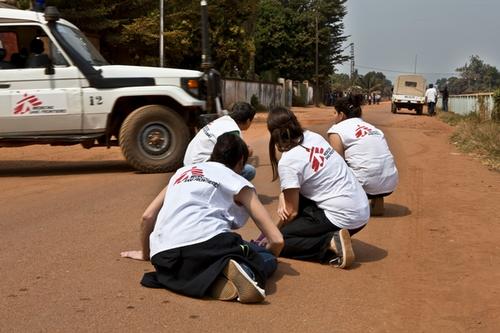
Access to hospitals and health centres has been a challenge for MSF teams in Bangui while fighting has been taking place in the city. In the pictures, a support team heading to Castors Health Centre has to take cover from gunfire.
Central African Republic

MSF calls upon government and all parties to the conflict to publicly condemn attacks against civilians and humanitarian workers

CAR: Following the massacre in Boguila and abuses against civilians, MSF reduces medical activities Press Release - 5 May 2014
 
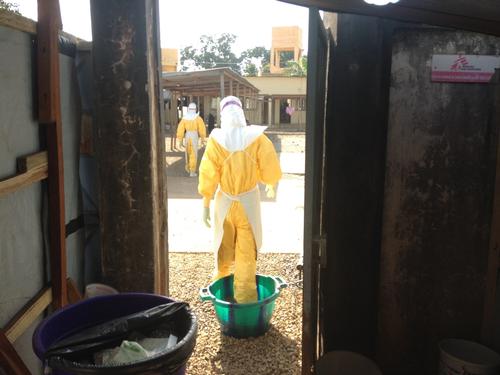
MSF staff walk into the area where there are patients who are either suspected or confirmed as having Ebola. Since late March MSF has been working in the south east of the country and in the capital, helping health authorities tackle the virus, which had not been seen in the West African country before the 2014 outbreak.
Ebola and haemorrhagic fevers

MSF remains vigilant in Ebola outbreaks in Guinea and Liberia

Although the Ebola epidemic has been contained, the outbreak is not yet over. Project Update - 2 May 2014
 
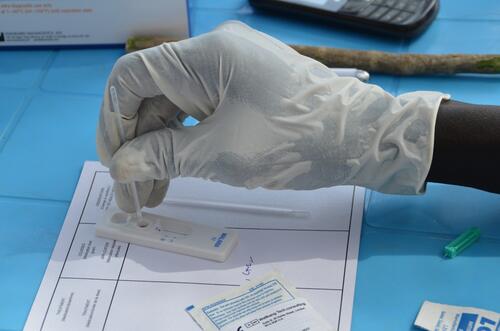
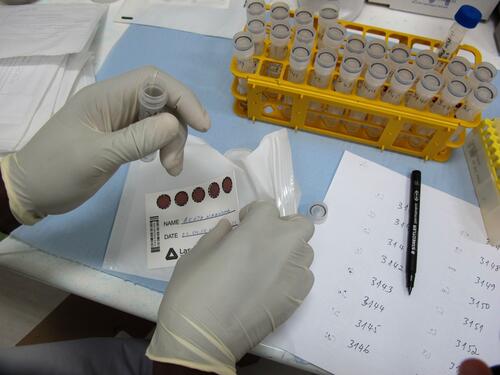
Malaria rapid test. The beginning of the rainy season is always followed by a peak of malaria cases.

MSF is providing medical care in two camps in Juba, South Sudan, where 40,000 people are seeking refuge from widespread fighting that erupted in mid-December. Over 27,000 people are living in deplorable conditions in Tomping camp. The first rains of the season have left a significant part of the camp flooded and further degraded the poor sanitation conditions.
Malaria

Paediatric Pharmacovigilance: Use of Pharmacovigilance Data Mining Algorithms for Signal Detection in a Safety Dataset of a Paediatric Clinical Study Conducted in Seven African Countries

Use of Pharmacovigilance data mining algorithms for signal detection in a safety dataset of a paediatric clinical study. Journal article - 1 May 2014
 
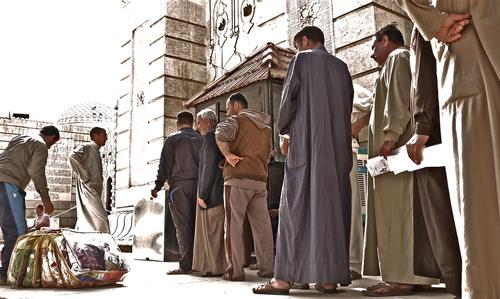
Violence in Anbar province, western Iraq, has caused some 380,000 people to flee their homes, with more than 18,000 people seeking refuge in Tikrit, the capital of neighbouring Salah al-Din province, over the past month. Despite a very volatile security situation in Tikrit, a MSF team is providing the displaced people with relief items and assessing their medical needs.
Iraq

MSF provides aid to people displaced by violence from Anbar province

MSF provides aid to people displaced by violence from Anbar province Project Update - 30 Apr 2014
 
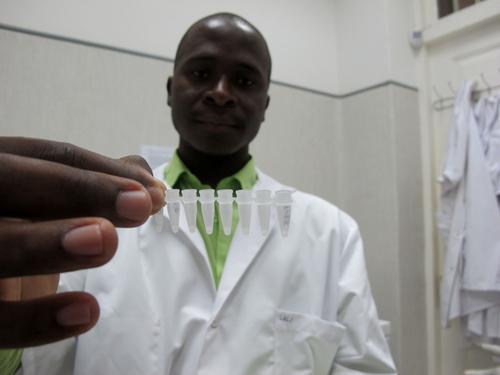
In Maputo, Mozambique, Jose Macamo hospital. Viral load monitoring has been used for years in Western countries, and is recommended by the World Health Organization as the gold standard of care for HIV. Contrary to the CD4 test that gives only an indirect indication of the disease’s progression, this technology calculates precisely how much virus is present in the patient’s body. It allows physicians to detect right away how well the ARV treatment is working, if the patient is not taking his drugs properly or has developed resistance to the first line of HIV drugs. 
A few months ago, when MSF – with support from UNITAID – introduced the machine in the hospital, 25 years old Ilidio was handpicked by his supervisor from the Mozambican Ministry of Health to be one of the three lab technicians trained to operate the machine, and he’s quite proud to show off his delicate handling of the state-of-the-art technology. “I had heard of it at school, and it was very exciting to go from theory to practice”, he says.
Mozambique

Bringing high-end care to those who need it most

MSF introduced viral load monitoring in Mozambique last year, the gold standard of care for HIV patients. Project Update - 30 Apr 2014
 
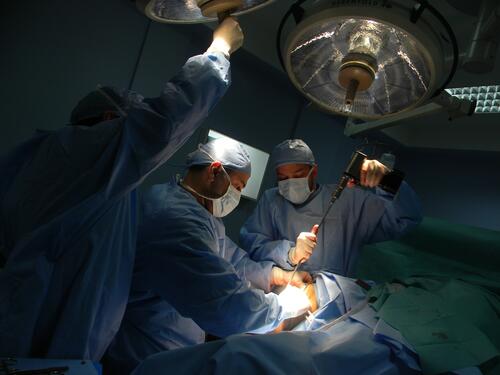
Since the Amman Reconstructive Surgery Project was set up in 2006, over 3,000 patients from the region have arrived at project. The project has received patients from Iraq, Gaza, Yemen and Syria.
Jordan

MSF Reconstructive Surgery Project in Amman Continues to Support Victims of Violence from Iraq

Despite the complexity of the overall situation in Iraq, and particularly in Anbar province, MSF continues to offer reconstructive surgical care to victims of violence in Anbar and from all over Iraq. But the security situation is posing huge challenges. Project Update - 29 Apr 2014
 
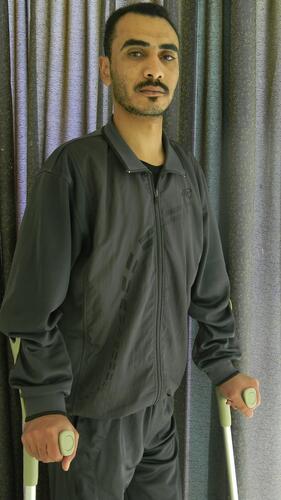
Diya, 29, is from Anbar province. He was injured in 2009 while returning 
from a family visit when a bomb exploded directly under the car he was driving. The explosion killed his mother, wife, brother and son. Diya was the only survivor.

Diya was admitted to the Amman Reconstructive Surgery Project in 2012 and has successfully completed his treatment. He was discharged in February 2014.
Iraq

Diya's story - A patient from Anbar

Diya was injured in 2009 returning from a family visit, a bomb exploded under the car he was driving Voices from the Field - 29 Apr 2014
 
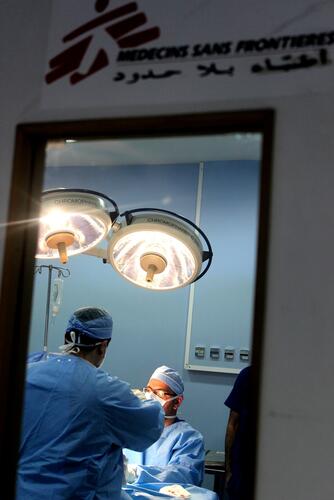
Iraqi surgeon, Dr. Ali Al-Ani operating on a patient at the Amman Reconstructive Surgery Project.

“Each new case is a challenge and each wounded patient is incomparable to another.” says Dr Al-Ani.
Jordan

Interview of Dr. Ali Al-Ani, Orthopedic Surgeon at Amman Reconstructive Surgery Project

Interview of Dr. Ali Al-Ani, Orthopedic Surgeon at Amman Reconstructive Surgery Project Voices from the Field - 29 Apr 2014
 
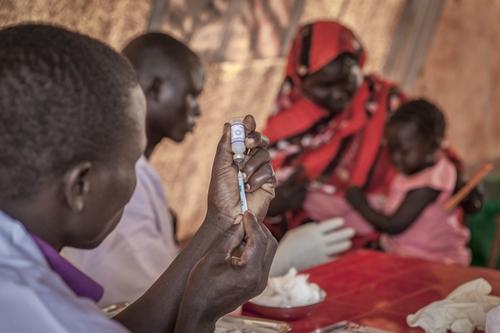
Sudanese refugees began streaming across the border into South Sudan in June 2011 when conflict erupted between the Khartoum government and the rebels of the Sudan People’s Liberation Movement-North (SPLM-N) in Sudan’s South Kordofan State. At the height of the crisis in Yida camp last summer, high mortality rates were reported among young children admitted to MSF’s hospital with respiratory tract infections, such as pneumonia, one of the leading causes of death. MSF determined that vaccinating with the pneumococcal conjugate vaccine (PCV) could result in a substantial mortality reduction in Yida. MSF has been working since September 2012 to procure PCV but faced significant delays due to lengthy negotiations and international legal procurement constraints. MSF was eventually able to obtain the vaccine from GSK at a reduced price, but delays have now pushed the planned vaccination into the logistically challenging rainy season.

The objective is to immunize approximately 5,000 children under the age of 2 against several pathogens, including haemophilus influenza type B and pneumococcus. This is the first time that PCV is being used in South Sudan and one of the first vaccines to be implemented in compliance with the new WHO emergency vaccination recommendations.
Access to medicines

Vaccinating Children beyond the 'Cold Chain'

More than 22 million children worldwide did not complete basic childhood vaccinations in 2012 and an estimated 1.5 million children aged under five die every year from vaccine-preventable diseases. Report - 29 Apr 2014
 
In Maputo, Mozambique, Jose Macamo hospital. Viral load monitoring has been used for years in Western countries, and is recommended by the World Health Organization as the gold standard of care for HIV. Contrary to the CD4 test that gives only an indirect indication of the disease’s progression, this technology calculates precisely how much virus is present in the patient’s body. It allows physicians to detect right away how well the ARV treatment is working, if the patient is not taking his drugs properly or has developed resistance to the first line of HIV drugs.
HIV/AIDS

A three-tier framework for monitoring antiretroviral therapy in high HIV burden settings

The provision of antiretroviral therapy (ART) in low and middle-income countries is a chronic disease intervention of unprecedented magnitude and is the dominant health systems challenge for high-burden countries, many of which rank among the poorest in the world. Journal article - 28 Apr 2014
Four mothers posing in a corridor of the Hospital in Bili. All four of them are staying in the hospital with their child, that's suffering from a severe case of malaria. Since the beginning of the project in 2016, the pediatric ward already treated more than 4.000 cases of complicated/severe form of malaria.
Médecins Sans Frontières (MSF)

Independent medical humanitarian assistance

We provide medical assistance to people affected by conflict, epidemics, disasters, or exclusion from healthcare. Our teams are made up of tens of thousands of health professionals, logistic and administrative staff - most of them hired locally. Our actions are guided by medical ethics and the principles of independence and impartiality. We are a non-profit, self-governed, member-based organisation.

Learn more