


Ebola disease in DRC: find out how we're responding
Learn more
8015 Results
 
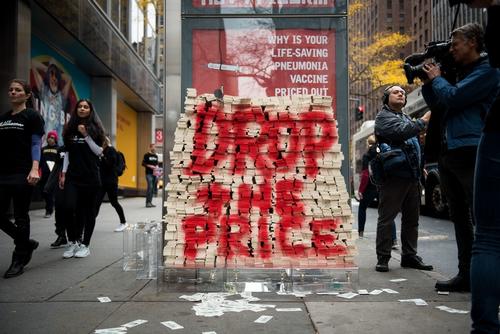
In New York, on Word Pneumonia Day 2015 (Nov 12), MSF volunteers attempted to deliver more than $17 million of fake cash - the equivalent of one day of profits from the pneumonia vaccines for Pfizer globally -  to Pfizer's CEO Ian Read. The same day, MSF launched a global petition to ask Pfizer and GlaxoSmithKline (GSK) to reduce the price of the pneumococcal vaccine to $5 dollars per child (for all three doses) in developing countries. Credit: Edwin Torres.
Website

A Fair Shot

Médecins Sans Frontières (MSF) has been campaigning for lower vaccine prices since 2014. In 2016 after years of efforts and public campaigning Pfizer and GSK finally announced that they were reducing the price of the vaccine to slightly more than 9 US dollars per child for humanitarian organisations like MSF. While this is definitely a step in the right direction, it means that millions of children are still left unvaccinated in countries where their parents or governments can’t afford the vaccine. afairshot.org
 
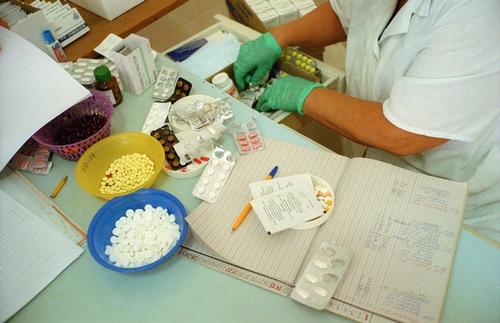
A nurse dispensing TB medication inside Colony 3 TB prison.
Ukraine

MSF provides urgently needed medical supplies to hospitals receiving wounded in eastern Ukraine

MSF provides urgently needed medical supplies to hospitals receiving wounded in eastern Ukraine Project Update - 30 May 2014
 
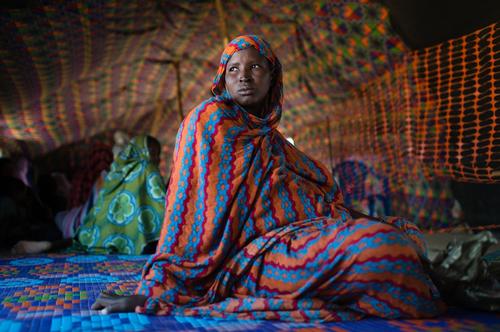
MSF antenatal care, Mbera refugee camp, Mauritania, 2013 *** Local Caption *** Since January 2012, the Malian crisis has resulted in population movements, notably towards Mauritania. This 21 years woman is expecting her fourth child.

International Financial Report 2013

Annual Report - 30 May 2014
 
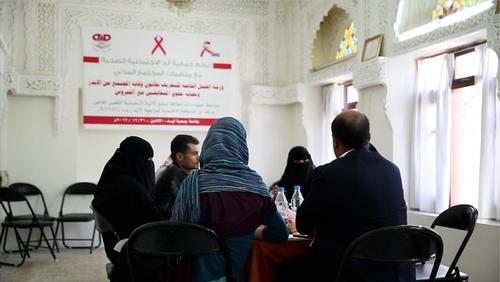
Since the beginning of the year, MSF is working in Sana’a, the capital of Yemen, to help reduce the stigma faced by people living with HIV and improve their access to quality healthcare.
Meeting at the AID Association, one of the organisations working in Yemen to support people living with HIV.
Yemen

Driving ARVs through a city under siege

Abdulbaset Alzamar, a Yemeni nurse working with HIV positive patients with MSF, talks about his experience. Voices from the Field - 30 May 2014
 
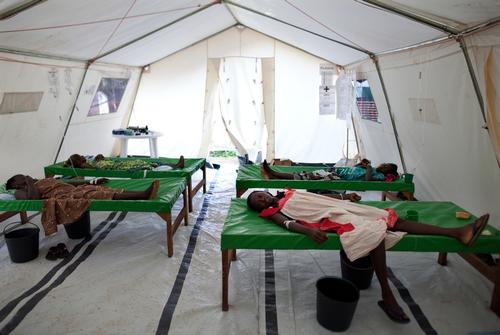
Patients lie in a Médecins sans Frontières cholera treatment tent at a community health center in Bandim district, Bissau, Guinea-Bissau, Nov. 14, 2012. A cholera epidemic started in April in West Africa's densely-populated, low-lying coastal areas, killing hundreds of people in Sierra Leone and Guinea. By mid-November, more than 2,100 cholera cases had been reported in Guinea-Bissau.
Cholera

Use of Vibrio cholerae Vaccine in an Outbreak in Guinea

Use of Vibrio cholerae Vaccine in an Outbreak in Guinea Journal article - 29 May 2014
 
PK5 is an area where traditionally Muslims and Christians live together. At the beginning of January, 30% of our patients were Muslim, but this has now decreased to only a few as they have fled or fear to go outside. Beginning of February, MSF start a mobile clinic to the large central mosque in Bangui (PK5 neighborhood), where about 2,000 displaced Muslims are living in fear and not daring to get to our clinic. MSF provides daily water supply on this site (20m3 per day) + PK 12 camps : MSF is carrying out mobile clinics in the PK12 camp, where there are approximately 1,500 displaced people.
Central African Republic

New Violence in Bangui - A Day in the General Hospital

A Day in the General Hospital Project Update - 29 May 2014
 
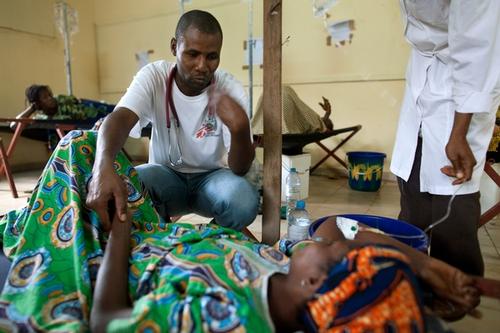
Dr. Djibeirou Yay talks with Assitou, who is recovering from cholera, at Donka Cholera Treatment Center in Conakry, Guinea, Aug. 16, 2012.
Guinea is currently struggling to contain a cholera outbreak, which has affected over 3,300 people throughout the country and 2,250 in Conakry and claimed at least 80 lives in the capital, according to the Ministry of Health. MSF team works in extremely impoverished areas of the densely-populated capital, where proper systems for drainage and waste disposal are almost non-existent. As of 20 August 2012, MSF, in collaboration with the Ministry of Health, is already running cholera treatment centres and rehydration points in the city, and has treated almost 2800 patients.
Guinea

Oral cholera vaccine highly effective during outbreak in Guinea

Vaccine Should Be Used to Help Control and Prevent Deadly Outbreaks Press Release - 28 May 2014
 
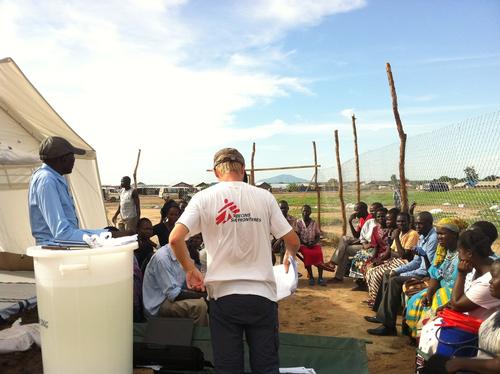
Health Promotion team receive training to create awareness about the disease at the CTC in Gudele, one of the most affected suburbs in Juba city.
South Sudan

MSF cholera response continues to expand in Juba, South Sudan

The cholera outbreak in Juba continues to spread: MSF expands response Project Update - 28 May 2014
 
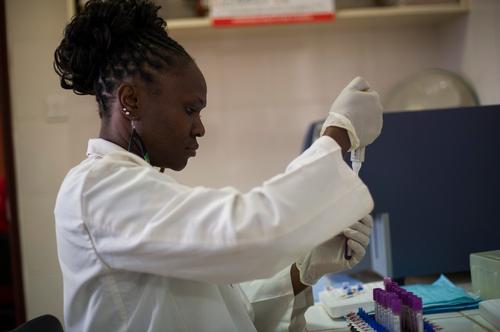
Mercy Oluya, a lab technician at the MSF Kibera South Health Facility in Nairobi’s Kibera slum, Kenya, checks for immunity levels in blood in the centre’s lab. As well as offering primary and maternity healthcare, management of chronic diseases such as HIV, the centre is equipped with a fully functioning lab, able to do blood analysis and tests for tuberculosis.
HIV/AIDS

Impact and programmatic implications of routine viral load monitoring in Swaziland

Impact and programmatic implications of routine viral load monitoring in Swaziland Journal article - 28 May 2014
 
Deplaces a l'eglise a Carnot.<br/>Forced displaced in the church in Carnot. *** Local Caption *** Since February 1st, date of the anti-Balakas takeover of the city, a thousand people (mostly Peuls/Fulani in transit on their way to Cameroon) are trapped in the city ,victims of attacks and violences.
Central African Republic

An account from Carnot, Central African Republic: "Let's be clear - we are witnessing a true cleansing in CAR"

A testimony by Muriel Masse, MSF’s project coordinator in Carnot, CAR Voices from the Field - 28 May 2014
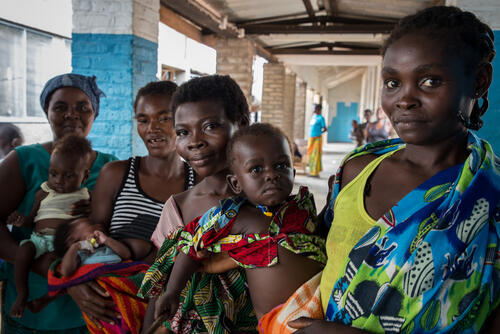
Four mothers posing in a corridor of the Hospital in Bili. All four of them are staying in the hospital with their child, that's suffering from a severe case of malaria. Since the beginning of the project in 2016, the pediatric ward already treated more than 4.000 cases of complicated/severe form of malaria.
Médecins Sans Frontières (MSF)

Independent medical humanitarian assistance

We provide medical assistance to people affected by conflict, epidemics, disasters, or exclusion from healthcare. Our teams are made up of tens of thousands of health professionals, logistic and administrative staff - most of them hired locally. Our actions are guided by medical ethics and the principles of independence and impartiality. We are a non-profit, self-governed, member-based organisation.

Learn more