




Ebola disease in DRC: find out how we're responding
Learn more
7999 Results
 
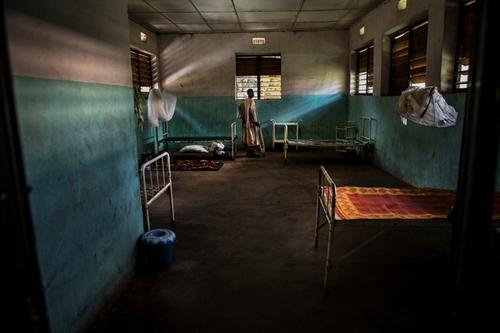
Sign in front MSF Base in Pinga, Democratic Republic of Congo where MSF has been working since February 2013. In Pinga, a small town in the North Kivu province of the Democratic Republic of Congo, MSF provides medical care to people affected by conflict while trying to reach those cut off from assistance by insecurity.
 
At present, (August 2013) all medical activities in Pinga and its immediate surroundings have been suspended after increasing insecurity and threats to humanitarian workers.
Attacks on medical care

Attacks on medical missions: overview of a polymorphous reality: the case of Médecins Sans Frontières

Attacks on medical missions: overview of a polymorphous reality: the case of Médecins Sans Frontières Journal article - 25 Jun 2014
 
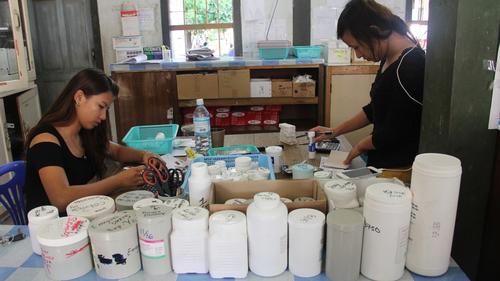
paracheck being done in the Nyumanzi Transit camp.  *** Local Caption *** Around 52,000 South Sudanese refugees have settled in Adjumani district, in northern Uganda. And refugees are still arriving. Upon their arrival, they stay in a transit centre before being transferred to a permanent settlement. MSF is providing health care in the transit centre and three permanent camps. In Dzaipi, MSF is running an OPD, an IPD and a therapeutic nutritional centre.
Malaria

Population pharmacokinetics of quinine in pregnant women with uncomplicated Plasmodium falciparum malaria in Uganda

The aim of this study was to investigate the pharmacokinetic properties of oral quinine in pregnant women with uncomplicated malaria in Uganda using a population approach. Journal article - 25 Jun 2014
 
Reynaldo Jr. Soria, MSF anaesthetist from the Philippines, is about to give spinal anaesthesia to a patient. 

More than one month after the typhoon Haiyan hit in the Philippines, the humanitarian needs seen by MSF teams vary from place to place, and there are still some areas that are under-served by aid. In some areas we are seeing people’s medical needs declining, but in other areas there is still a need for our support. Taking into account the progressive deployment of aid to rural areas and the number of organisations providing primary healthcare, MSF is adapting its activities in the Philippines.

MSF will gradually decrease its activities in areas of Ormoc and Burauen on Leyte island, and in northern Iloilo province on Panay island, starting from the end of December. MSF will however continue working in Tacloban, on Leyte island, and in Guiuan, on Samar island, providing surgery, inpatient care, psychological care and other support until the health system is functioning again at adequate levels.
Global

MSF and the aid system: Choosing not to choose

This paper explores MSF's relationship with the aid system. Journal article - 25 Jun 2014
 
In a crowded reception room, patients wait for care at Nap Kenbe – Creole for ‘staying well’ – surgical centre in Tabarre, eastern Port-au-Prince. Teams provide emergency trauma, orthopaedic and abdominal surgery for victims of gun crime and domestic violence as well as people injured in road accidents.
Surgery & trauma care

Saving life and limb: limb salvage using external fixation, a multi-centre review of orthopaedic surgical activities in Médecins Sans Frontières

A report on orthopaedic management of open fractures in less developed countries. Journal article - 25 Jun 2014
 
African Union Soldiers from MISCA guarding Muslim IDP camp in Carnot Catholic Church
Central African Republic

Humanitarian impasse in a Muslim enclave

More than 90% of the western CAR's Muslim inhabitants have fled violence in the past few months Project Update - 24 Jun 2014
 
Chaman (Baluchistan) – MSF provides comprehensive emergency obstetric care, neonatal nursery, paediatric and gynaecological inpatient care, emergency referrals, and nutrition services at a hospital of the Ministry of Health. Women rush to collect a token number for the antenatal clinic. All are wearing the traditional burka or long shawls (chaddar) to cover themselves. They are being attended by a health educator.
Pakistan

For women in Pakistan to deliver a baby is a battle between life and death

For women in Pakistan to deliver a baby is a battle between life and death Voices from the Field - 23 Jun 2014
 
Madaoua district hospital. Madaoua is one of the five districts where seasonal malaria chemoprevention (SMC) was implemented in 2013.
The combination of malnutrition and malaria is fatal. Both diseases pose a threat to younger children between June and October. It is a critical period because of the so-called hunger gap in between harvests when child malnutrition increases and because during the rainy season malaria cases are more frequent.
In 2013, MSF and the Ministry of Health jointly implemented seasonal malaria chemoprevention for the first time in Niger - a strategy that consists of administering a full anti-malarial treatment course during the seasonal malaria peak to children between 3 and 59 months of age. During these four months, children take three amodiaquine tablets and one sulfadoxine/pyrimethamine tablet for three days each month.
Niger

‘By humanising comprehensive care, we improve nutritional programmes’

Psychosocial care for children and mothers in nutritional programmes Voices from the Field - 23 Jun 2014
MSF is treating the most severe cases and providing emergency referrals to other structures at the Bangui airport. MSF has on average been carrying out 500 consultations, performed 100 dressings, and assisted 7 deliveries at the airport each day. MSF is the only medical provider at the camp, where 100,000 displaced people have sought shelter.

International Activity Report 2013

Annual Report - 22 Jun 2014
 
The logistics team erects an incinerator in the isolation ward.
Ebola and haemorrhagic fevers

Ebola in West Africa: Epidemic requires massive deployment of resources

Ebola in West Africa: Epidemic requires massive deployment of resources Press Release - 21 Jun 2014
 
msf-placeholder
Iraq

“There are severe shortages of drugs, and medical staff are fleeing the conflict areas en masse”

“There are severe shortages of drugs, and medical staff are fleeing the conflict areas en masse” Voices from the Field - 20 Jun 2014
Four mothers posing in a corridor of the Hospital in Bili. All four of them are staying in the hospital with their child, that's suffering from a severe case of malaria. Since the beginning of the project in 2016, the pediatric ward already treated more than 4.000 cases of complicated/severe form of malaria.
Médecins Sans Frontières (MSF)

Independent medical humanitarian assistance

We provide medical assistance to people affected by conflict, epidemics, disasters, or exclusion from healthcare. Our teams are made up of tens of thousands of health professionals, logistic and administrative staff - most of them hired locally. Our actions are guided by medical ethics and the principles of independence and impartiality. We are a non-profit, self-governed, member-based organisation.

Learn more