




Ebola disease in DRC: find out how we're responding
Learn more
7999 Results
 
For Arnon Chipondoro, hearing that his daughter Elizabeth was HIV positive was not a shock, but a relief : a possibility for him to share his secret with someone else. Both of them have been on ARV treatment for three years, a treatment that allow to control the disease and live a long and healthy life – if and only people on ARV can access their treatment without fail so as to be able to take it every single day. Arnon and Elizabeth are now members of a Community ART Group, or CAG, which, they say, has transformed their lives. In a CAG, members take turn to take the three hours long hike to get to the nearest clinic and pick up the drugs for the whole group. It’s a simple but very efficient way to manage disease: in other places where MSF has introduced the CAGs, retention in care is at over 90% of patients after four years of their initiation on treatment, against only two third in traditional models of care.
Zimbabwe

Divided we fall

New system of HIV treatment transforms lives in Zimbabwe Project Update - 25 Jul 2014
 
msf-placeholder
Myanmar

MSF welcomes offer to resume operations in Rakhine, Myanmar but remains cautious

MSF welcomes offer to resume operations in Rakhine, Myanmar but remains cautious Press Release - 25 Jul 2014
 
msf-placeholder
HIV/AIDS

More positive stories needed

HIV in countries with low antiretroviral therapy coverage Project Update - 25 Jul 2014
 
Samrajam Yellamali, a HIV / XDRTB patient receives her TB medication  at the MSF clinic during her visit for routine check up.
Tuberculosis

Impact of Introducing the Line Probe Assay on Time to Treatment Initiation of MDR-TB in Delhi, India

To evaluate before and after the introduction of the line Probe Assay (LPA) the overall time to MDR-TB diagnosis and treatment initiation; the step-by-step time lapse at each stage of patient management; and the lost to follow-up rates.

Journal article - 24 Jul 2014
 
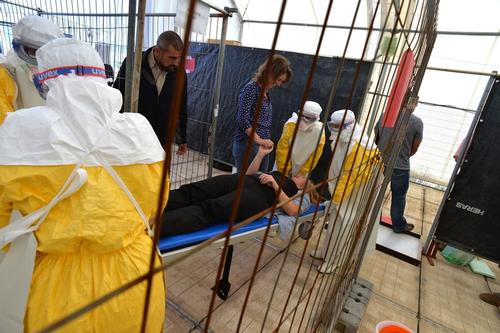
Kailahun. Sierra Leone. Médecins Sans Frontières (MSF) Ebola Treatment Centre. A nurse enters the high-risk area after getting dressed with protective clothing.
Ebola and haemorrhagic fevers

Operational Update: The Ebola outbreak in West Africa

As the Ebola outbreak continues to spread in west Africa, MSF is stepping up its response in the most affected areas. Project Update - 24 Jul 2014
 
MSF teams run mobile clinics to provide medical care for IDPs. They provide primary healthcare consultations, chronic disease treatment as well as reproductive healthcare consultations. On average, the team is performing 60 consultations each day.
Iraq

Hospitals destroyed by air strikes leave Iraqis without healthcare

Hospitals destroyed by air strikes leave Iraqis without healthcare in Iraq Press Release - 24 Jul 2014
 
msf-placeholder
Eswatini

Surviving drug-resistant TB: “I’m still over the moon”

Khanyi describes her delight at being cured of TB Project Update - 24 Jul 2014
 
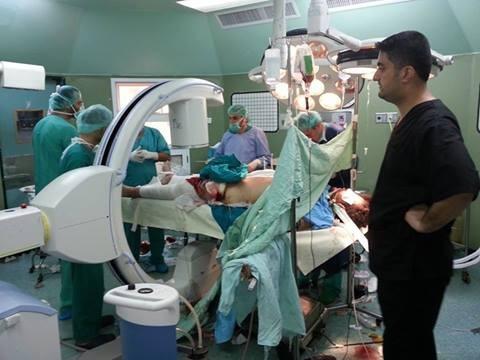
Early morning of July 20 in Shifa Hospital. Ambulance staff are bringin in 2 of their colleagues that got killed.
Palestine

A night at the Al-Shifa Hospital

Waves of wounded patients streamed into the emergency department the Al-Shifa Hospital Project Update - 23 Jul 2014
 
ART drugs at MSF's clinic in Myitkyina, Kachin state, Myanmar. MSF treats more than 30,000 HIV/AIDS patients across the country. C Aye Pyae Sone / MSF
Myanmar

MSF treats first CMV retinitis patients with oral drug

MSF announces CMV retinitis patients receiving new treatment Press Release - 23 Jul 2014
 
msf-placeholder
Myanmar

First patients take oral drug for HIV-related blindness

Treatment available for first time in Myanmar for AIDS-related illness Press Release - 23 Jul 2014
Four mothers posing in a corridor of the Hospital in Bili. All four of them are staying in the hospital with their child, that's suffering from a severe case of malaria. Since the beginning of the project in 2016, the pediatric ward already treated more than 4.000 cases of complicated/severe form of malaria.
Médecins Sans Frontières (MSF)

Independent medical humanitarian assistance

We provide medical assistance to people affected by conflict, epidemics, disasters, or exclusion from healthcare. Our teams are made up of tens of thousands of health professionals, logistic and administrative staff - most of them hired locally. Our actions are guided by medical ethics and the principles of independence and impartiality. We are a non-profit, self-governed, member-based organisation.

Learn more