


Ebola disease in DRC: find out how we're responding
Learn more
4636 Results
 
Second cholera epidemic in Lubango in the year 2006. There were 3626 cholera cases in 3 and half months, 94 people died. MSF managed the cholera treatment centre.
An underlying epidemic of bloody diarrhea in November made the intervention particularly difficult. Within two weeks, 14 of 26 patients with bloody diarrhea died.
Cholera

Murky Waters: Why the cholera epidemic in Angola was a disaster waiting to happen

Since February 2006, Luanda is going through its worst ever cholera epidemic, with an average of 500 new cases per day. The outbreak has also rapidly spread to the provinces and to date, 11 of the 18 provinces are reporting cases. Report - 17 May 2006
 
msf-placeholder
War and conflict

Violence continues in Darfur as MSF treats 46 war wounded from latest attack

Of the wounded, 30 are civilians, including two women and four elderly men. Many of them required urgent surgery. Project Update - 15 May 2006
 
msf-placeholder
Access to medicines

MSF supports opposition to Gilead's tenofovir patent application in India

Patenting tenofovir would set dangerous precendent for global access to newer essential drugs. Press Release - 10 May 2006
 
msf-placeholder
Angola

As the number of infected people reaches 20,000, response to Angola cholera epidemic remains insufficient

"Many factors have conspired to make this cholera outbreak one of the worst ever seen in Angola. But with what we know today there can be no excuse for not doing everything humanly possible to prevent the death toll from climbing much higher," says Richard Veerman, MSF Head of Mission in Angola. Press Release - 27 Apr 2006
 
msf-placeholder
Access to Healthcare

Access to health care - Colombia's cycle of violence

There are many rural medical staff that assume exceptional levels of personal risk to provide medical attention. They frequently recount stories of armed groups exerting pressure and control over their movements or work.
Download the complete MSF report in PDF format: Living in Fear: Colombia's Cycle of Violence (English)
Vivir Con Miedo (Espagnol)
Project Update - 27 Apr 2006
 
msf-placeholder
Access to medicines

World Intellectual Property Day: Governments should ignore the conclusions of WHO report on intellectual property and public health at their own risk

"The CIPIH report clearly signals that innovation is meaningless if the people who need it do not have access to it," said Ellen 't Hoen, Director of Policy and Advocacy at MSF's Campaign for Access to Essential Medicines. Press Release - 26 Apr 2006
 
msf-placeholder
Chad

Around the clock surgery in N'djamena's main hospital

"We had to perform quite a lot of double inferior limbs amputations. Most of the wounded are quite young. We've been treating girls and even a three-year old baby." Press Release - 14 Apr 2006
 
msf-placeholder
Democratic Republic of Congo

'Ketudi Byakudya' - We don't have enough food

Executive summary to the MSF Report: Food, nutrition and mortality situation of IDP's in Dubie, Katanga 23-25 March 2006. Project Update - 10 Apr 2006
 
Violence generated by the ongoing conflict presents a major public health concern in Colombia, and not enough priority is placed upon dealing with the medical consequences of this chronic reality. Of greatest concern is the almost complete absence of mental health services.  As a consequence thousands deal with mental trauma in their lives and have no hope for assitance.  One of the greatest consequences on the health of those caught up in Colombia's conflict is receiving the least attention and priority by the Government and other agencies.
Colombia

Living in fear: Colombia's cycle of violence

Médecins Sans Frontières (msf) has worked in Colombia for 21 years providing medical care to civilian populations isolated by the conflict, and more recently to those internally displaced in urban settings. This report seeks to raise awareness of the human cost of the conflict by giving a voice to those who bear the brunt of its harsh consequences. Report - 7 Apr 2006
 
msf-placeholder
Lesotho

Lesotho's painfully slow fight to treat HIV

Despite all the money and attention, the rollout of treatment in Lesotho has been glacially slow. This raises some alarming questions, because in many ways, this ought to be a comparatively easy country in which to respond to AIDS: It's tiny; it's culturally, ethnically and linguistically homogeneous; and it's peaceful and democratic. Project Update - 6 Apr 2006
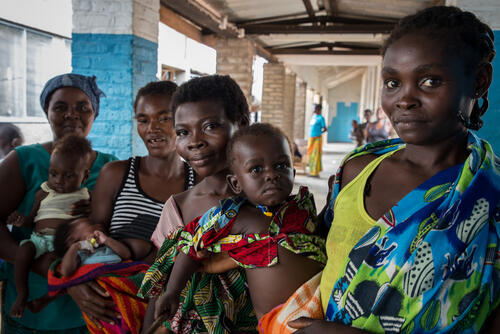
Four mothers posing in a corridor of the Hospital in Bili. All four of them are staying in the hospital with their child, that's suffering from a severe case of malaria. Since the beginning of the project in 2016, the pediatric ward already treated more than 4.000 cases of complicated/severe form of malaria.
Médecins Sans Frontières (MSF)

Independent medical humanitarian assistance

We provide medical assistance to people affected by conflict, epidemics, disasters, or exclusion from healthcare. Our teams are made up of tens of thousands of health professionals, logistic and administrative staff - most of them hired locally. Our actions are guided by medical ethics and the principles of independence and impartiality. We are a non-profit, self-governed, member-based organisation.

Learn more