




Ebola disease in DRC: find out how we're responding
Learn more
8008 Results
 
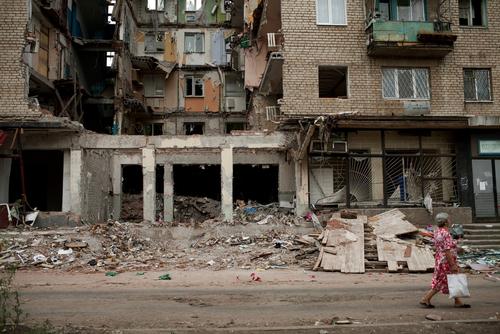
An apartment block in Mykolayivka that was hit by shelling in July, which caused a gas explosion. The violence gripping many parts of eastern Ukraine is high intensity, hitting not only military targets but also apartment buildings and hospitals. For civilians in the war zones, few places are safe to hide.
Ukraine

Effects of conflict spreading whilst health system struggles to cope

Ukraine: Effects of conflict spreading whilst health system struggles to cope Project Update - 29 Aug 2014
 
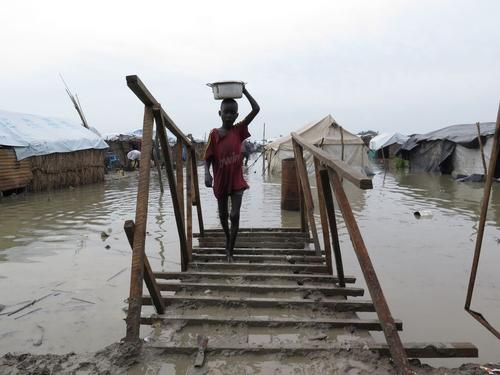
In South Sudan, 40,000 people are crowded into a flooded United Nations Protection of Civilians compound in Bentiu, Unity State. Living conditions are horrific but it is the only refuge they have from widespread armed violence outside. (August 2014)
South Sudan

The struggle to protect civilians in South Sudan

Contained by wires and barricades designed to keep violence out, the people inside many POC sites are under dire threat from disease, malnutrition and strife within Voices from the Field - 29 Aug 2014
 
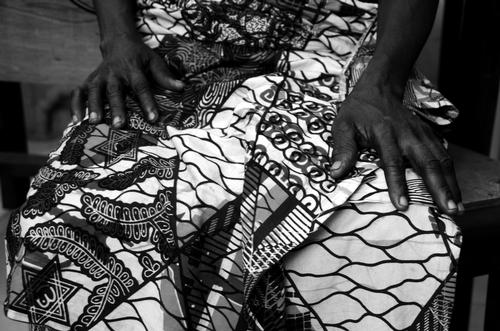
C. 48 ans. Des Séléka en déroute se sont introduits violemment dans la maison (avril 2014) à la recherche des hommes de la famille. Son mari étant décédé et son fils enfui, les hommes se sont vengeaient sur elle et sa belle-fille. Au passage, ils ont volé tous son argent, l’empêchant de faire repartir son commerce. Son fils a rejeté sa belle-fille qui a dû retourner dans sa famille et n’a à ce jour pas bénéficié d’une prise en charge.<br>
C. 48. Seleka men violently broke into the house (April 2014) in search of the family men. Her husband was dead and her son fled. Therefore, men had revenge on her and her stepdaughter. They also stole all her money, preventing her to restart her business. Her son rejected her stepdaughter who had to return to her family and did not received proper support to date. <br>
MSF fournit des soins médicaux et psychologiques aux victimes de violence sexuelle à l'hôpital général de Bangui en République centrafricaine. Les activités ont débuté le 5 juillet 2014. En près d’un moins, l’équipe avait déjà pris en charge 75 patients ; femmes, hommes et enfants. <br>  
MSF provides medical and psychological care to victims of sexual violence in the general hospital of Bangui in the Central African Republic. Activities began on July 5th 2014. In nearly a month, the team had already dealt with 75 patients; women, men and children.
 *** Local Caption *** MSF has worked in the Central African Republic since 1997 and currently has more than 300 international staff and more than 2,000 Central African workers in the country. Since December 2013, MSF has doubled its medical assistance in response to the ongoing crisis,  from 10 to 21 projects and is running an additional six emergency projects for Central African refugees in the neighbouring countries of Chad, Cameroon and the Democratic Republic of Congo.<br> 
MSF travaille en République centrafricaine depuis 1997 et compte actuellement plus de 300 personnels internationaux et plus de 2 000 employés centrafricains dans le pays. Depuis décembre 2013, MSF a doublé son assistance médicale en réponse à la crise actuelle, passant de 10 à 21 projets, et gère 6 projets d'urgence supplémentaires pour les réfugiés dans les pays voisins tels que le Tchad, le Cameroun et la République démocratique du Congo.
Central African Republic

MSF treats victims of sexual violence in Bangui

Gallery: MSF treats victims of sexual violence in Bangui, Central African Republic Photo Story - 28 Aug 2014
 
msf-placeholder
Ebola and haemorrhagic fevers

MSF response to the WHO new Ebola roadmap

MSF's response to the WHO Ebola roadmap announced today, 28th August 2014.
Statement - 28 Aug 2014
 
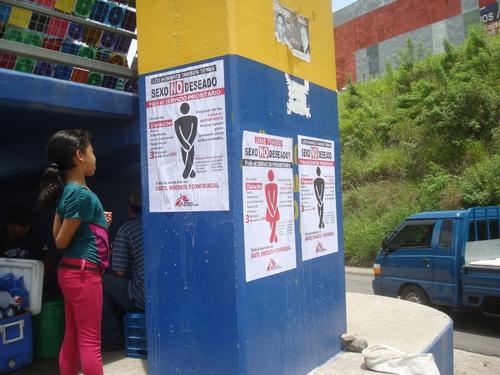
Tegucigalpa is consider one of the most dangerous cities in the world, the problematic of sexual violence impacts directly in the youngest population, most of the cases reported indicates that young women are the majority of the victims. MSF improves every day in different areas of the city an strategy of health promotion to inform to the population about the consequences of violence and the importance of receive an emergency attention after being a victim of rape.
Honduras

MSF makes care for rape survivors a priority

Aurelia left for work at 5 am, when the streets of Tegucigalpa were still deserted. As she walked, a white sedan car with tinted windows drew up at the curb. Project Update - 28 Aug 2014
 
msf-placeholder
Palestine

Life has returned to Gaza

Dr. Abu Abed is the MSF medical team leader in Gaza Voices from the Field - 27 Aug 2014
 
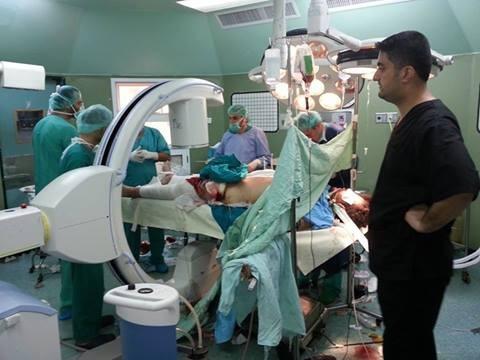
Operating theatre in Al Shifa hospital Gaza city<<br/>bloc operatoire a l'hopital d'Al Shifa a Gaza. *** Local Caption *** In response to the current emergency, MSF is supporting Al Shifa hospital in Gaza city with a full surgical team and emergency medical equipment. MSF has made donations from its emergency stocks to the central pharmacy for the north and south of the Gaza Strip. MSF’s post-operative clinic in Gaza is running at only 10 to 30 percent of its capacity due to the intensity of the bombing, which is preventing patients from reaching the clinic. MSF’s regular activities in Nasser hospital, Khan Younis, have been interrupted by the conflict. MSF has been working in Gaza for more than 10 years, providing medical, surgical and psychological care; its teams also responded to the emergencies in 2009 and 2012.
Palestine

Medical care through war and truce

Activity in the largest hospital in Gaza continues unabated. Project Update - 27 Aug 2014
 
msf-placeholder
Liberia

MSF’s new Ebola management centres already overwhelmed

MSF’s new Ebola management centres in Liberia already overwhelmed Press Release - 27 Aug 2014
 
msf-placeholder
Ebola and haemorrhagic fevers

MSF deeply saddened by deaths of a Guinean, a Liberian and a Sierra Leonean colleague

MSF deeply saddened by deaths of a Guinean, a Liberian and a Sierra Leonean colleague Statement - 26 Aug 2014
 
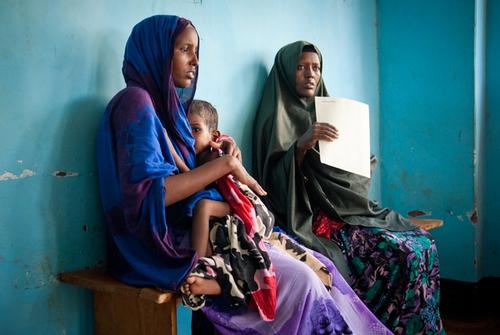
Mothers with young children waiting to be seen by the medical doctor in the telemedicine consultation. 
Many international staff were based here in previous years. But due to the insecurity, the hospital is now completely run by Somali staff paied and employed by MSF. It is MSF general policy to have all its structures ‘weapon free’. At the entrance of the Guri-el Hospital, all persons entering the hospital compound are checked with a metal detector. As a result of the ‘weapon free’ policy, the MSF structures are recognized as neutral places where patients feel safe in a country where weapons abound. Nearly all children arrive at the hospital with severe or moderate malnutrition. The paediatric wards are completely full. 
On top of the malnutrition, many have measles. Infectious diseases like watery and bloody diarrhea have recently become more common. The other main issues in children are lower respiratory tract infections, gastroenteritis and malaria. Because of the collapse of the healthcare system, a large proportion of the population has not been vaccinated against measles and other diseases. The combination of acute malnutrition and measles can be deadly for children in Somalia.
Several camps for displaced people are located around the town of Guri-el. People have been fleeing violence (and more recently the drought). They have abandoned everything and live in very basic makeshift shelters. An MSF teamcarries out medical and nutritional consultations several times a week in the camps.
Somalia’s humanitarian crisis continues to be one of the worst in the world. This year, Somalis have faced the devastating effects of drought, compounding a long-lasting conflict and the absence of a functioning health care system. Throughout 2011 Médecins Sans Frontières (MSF) ran medical projects in up to 22 different locations in south-central Somalia, the epicenter of the crisis, as well as large-scale programs in the Somali refugee camps in Ethiopia and Kenya. In the period from May to December 2011, MSF treated over 95,000 patients for malnutrition, and treated over 6,000 patients for measles and vaccinated almost 235,000 children against the disease. Within its various health care structures MSF assisted in over 5,500 deliveries and provided over 450,000 consultations. However, despite intense negotiations with armed groups, access to the most affected regions inside south-central Somalia has remained difficult. MSF first worked in Somalia in 1979 and has been present in the country with few interruptions since 1991, when a civil war erupted following the downfall of the country's dictator, Siad Barre. MSF has worked in several locations: Baidoa, Dinsor, Huddur, Jamaame, Jowhar, Kismayo, Marere, and the capital, Mogadishu, in the south; Galcayo and Guri El in the north-central area; and Belet Weyne in central Somalia. Teams have addressed a host of different crises in their many projects, focusing in particular on nutrition, emergency care for people wounded in conflict, mother and child healthcare, and treatment of infectious diseases, including cholera, measles, kala azar, and tuberculosis (TB). MSF is the only international organization providing medical and nutritional care in Guri-el town in Galgaduud region of South Central Somalia..Previously, more than 15 international staff were based here but they had to be withdrawn due to security threats. Somalis employed and trained by MSF now run the hospital, regional MSF staff from Somali origin ran the emergency projects. Access to health care is a major issue in Somalia. In a circle of 150km around Guri-el, there are no medical doctors except for those at the MSF supported hospital.
Access to Healthcare

The development of a multilingual tool for facilitating the primary-specialty care interface in low resource settings: the MSF tele-expertise system

The development of a multilingual tool for facilitating the primary-specialty care interface in low resource settings. Journal article - 26 Aug 2014
Four mothers posing in a corridor of the Hospital in Bili. All four of them are staying in the hospital with their child, that's suffering from a severe case of malaria. Since the beginning of the project in 2016, the pediatric ward already treated more than 4.000 cases of complicated/severe form of malaria.
Médecins Sans Frontières (MSF)

Independent medical humanitarian assistance

We provide medical assistance to people affected by conflict, epidemics, disasters, or exclusion from healthcare. Our teams are made up of tens of thousands of health professionals, logistic and administrative staff - most of them hired locally. Our actions are guided by medical ethics and the principles of independence and impartiality. We are a non-profit, self-governed, member-based organisation.

Learn more