


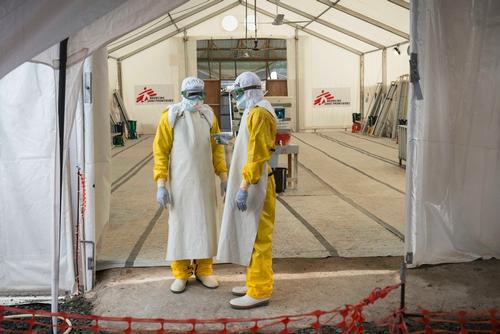

Ebola disease in DRC: find out how we're responding
Learn more
7999 Results
 
Portrait of Mishenko Aleksander Grigorievich, 57 years old, in Svitlodarsk Civil Hospital in Donetsk region. Aleksander is from Debaltsevo, a city of 25,000 people in Donetsk region in eastern Ukraine. The edge of the city hugs the frontline in the ongoing conflict between Ukrainian and rebel forces. Despite a ceasefire agreement signed on 5 September, people living on the outskirts of the city continue to experience shelling on an almost daily basis. Alexander was wounded on 13 October and is being treated in Svitlodarsk hospital. MSF has been supporting the hospital with urgently needed medical supplies for treating wounded patients. Aleksander is receiving counselling from an MSF psychologist to help him deal with the traumatic experience.
Ukraine

Testimonies from patients and medical staff in the Donetsk region

Aleksander is from Debaltseve, a city of 25,000 people in Donetsk region in eastern Ukraine. The edge of the city hugs the frontline in the ongoing conflict between Ukrainian and rebel forces. Voices from the Field - 2 Dec 2014
 
MSF delivers medical supplies for treating wounded patients to Lissychansk City hospital in Luhansk region.
Ukraine

Gallery: Ukraine's war ravaged eastern regions

Photo Story - 2 Dec 2014
 
The destroyed psychiatric hospital in Semenovka, on the outskirts of Slavyansk, Donetsk region. The hospital was evacuated as heavy fighting drew closer. After one side took the building as a base, it was completely destroyed in heavy clashes. Shrapnel marks can be seen all over the outside, while the inside was obliterated. Months later, the hospital remains unusable.
Ukraine

“People are extremely anxious; they just don’t know what the next months hold.”

With winter settling in in eastern Ukraine, Médecins Sans Frontières (MSF) is continuing its support to hospitals on both sides of the frontline, and expanding its psychological assistance to help people living in some of the hardest hit areas. Despite the signing of a ceasefire agreement on 5 September, fighting has continued in several cities and towns, with particularly heavy clashes taking place over the past two weeks. Crisis Update - 1 Dec 2014
 
Paoua hospital.
Cathy Beuve, MSF nurse. *** Local Caption *** In CAR, despite an overall increase in aid in recent years, access to health care remains a major problem, even in areas that are not directly affected by the conflict. A majority of Central Africans continue to live in extremely precarious conditions. Several mortality surveys conducted by MSF in particular regions of the country highlight crude mortality rates and specific extremely high - sometimes three to five times higher than the emergency threshold.<br>

These mortality rates are partly attributable to a structural deficit of the health system that does not allow the public to have access to basic health care for diseases such as malaria, respiratory infections and diarrheal diseases.<br>

In Paoua, MSF teams are working in collaboration with the Ministry of Health in all hospital reference departments (pediatrics, surgery, maternity, emergency, hospitalization and HIV & TB treatment). In 2011, MSF issued more than 72,000 consultations in Paoua hospital and peripheral health centers, and more than 6600 patients have been hospitalized. The teams have conducted over 8000 ANC consultations and 1432 deliveries. MSF also supports patients with advanced AIDS and cases of co-infection HIV / TB. In 2011, 247 patients received antiretroviral therapy.<br>
HIV/AIDS

‘Double victims’ – in conflict zones, people with HIV are twice as vulnerable

The past decade has seen major improvements in people’s ability to access lifesaving HIV treatments – but if you live in Central African Republic (CAR), South Sudan or parts of Yemen, you could be forgiven for thinking nothing has changed. The fact is that in most unstable areas, HIV services remain largely non-existent. Voices from the Field - 1 Dec 2014
 
Since July 2007, MSF has been running a kala azar diagnostic and treatment project in Vaishali district, in the centre of the Indian state of Bihar. In the four years, about 8,000 patients have been treated at the Sadar Hospital, and in five MSF-supported health centres. The initial cure rate of kala azar cases is at 98 per cent. Kala azar is a disease endemic to Bihar. Transmitted by the sand fly, the disease mainly affects the spleen and, if left untreated, is fatal for virtually all patients.
Kala azar

Increased access to diagnosis and treatment of HIV-VL co-infection is imperative for eliminating kala azar

Fast-tracked development of integrated kala azar and HIV guidelines needed Press Release - 1 Dec 2014
 
Patient being treated by MSF medical staff in White Nile State in Sudan.
Sudan

Separated by borders, united by needs

MSF provides medical assistance to South Sudanese in White Nile State, Sudan Project Update - 27 Nov 2014
 
Cacilda Fumo has been on ART for over 10 years. She is a Community ART Group (CAG) member also, a self-formed group of six people patients maximum and minimum two stable on ART. In this programme, groups of patients were established, with patients taking turns to collect antiretroviral medicines for group members.
Mozambique

Not alone anymore

With 1.6 million people infected by HIV, or over one in ten adults, Mozambique has one of the highest HIV prevalence in the world. To tackle this public health crisis, the Mozambican government last year launched an ambitious acceleration plan that aims at doubling the number of its HIV positive citizens on ARV treatment. Voices from the Field - 26 Nov 2014
 
Community ART Group (CAG) member holding  her remaining pills.
In a CAG, members get together to count their remaining pills at the end of the month, as a means to check if everyone has taken their pills regularly After the pill count they will discuss about adherence and challenges they encountered. The following day.aCAG representative will go to the health cCentre to pick up the drug refill  for all group members.
HIV/AIDS

Community models of care explained

Explaining patient-centred care of HIV/AIDs, and the community models of care that support it. Project Update - 26 Nov 2014
 
MSF cares for hundreds of sexual violence survivors every year in its medical and mental health programmes in Cauca, Nariño and Caquetá, in the south of Colombia.
Colombia

Sexual violence, an unattended medical emergency

On International Day for the Elimination of Violence against Women MSF stresses the need for an emergency focus across all institutions involved in the response Press Release - 25 Nov 2014
Four mothers posing in a corridor of the Hospital in Bili. All four of them are staying in the hospital with their child, that's suffering from a severe case of malaria. Since the beginning of the project in 2016, the pediatric ward already treated more than 4.000 cases of complicated/severe form of malaria.
Médecins Sans Frontières (MSF)

Independent medical humanitarian assistance

We provide medical assistance to people affected by conflict, epidemics, disasters, or exclusion from healthcare. Our teams are made up of tens of thousands of health professionals, logistic and administrative staff - most of them hired locally. Our actions are guided by medical ethics and the principles of independence and impartiality. We are a non-profit, self-governed, member-based organisation.

Learn more