



Ebola disease in DRC: find out how we're responding
Learn more
8003 Results
 
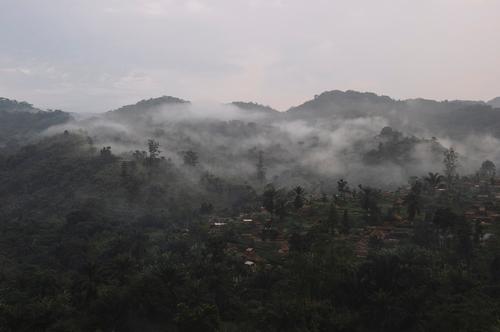
Mist rises out of the forest at dawn over the village of Ngomashi in Masisi territory in the east of the Democratic Republic of the Congo on August 15, 2014. Ngomashi is four hours trek over mountains and through bush from the end of the nearest road, and holds the main health centre providing health care to many of the remote villages in the area.
Democratic Republic of Congo

Gallery: An ambitious vaccination campaign in war-torn Congo

Photo Story - 8 Dec 2014
 
msf-placeholder
Palestine

"I'm talking to you, but I am dead"

Gilles Pelissier, MSF project coordinator in Gaza, took advantage of the cease fire to go south of the Gaza Strip to see what conditions the numerous families in schools and emergency accommodation centres were living in. Voices from the Field - 8 Dec 2014
 
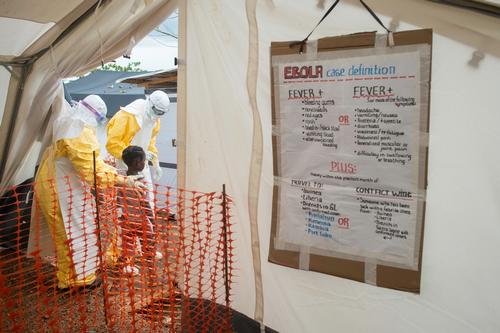
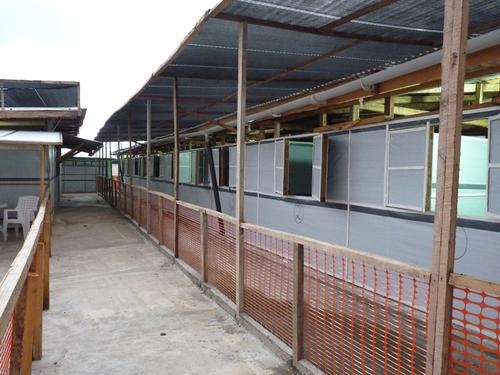
Kailahun. Sierra Leone. Médecins Sans Frontières (MSF) Ebola Treatment Centre. MSF staff show the way inside the Treatment Centre to a patient most likely infected with the Ebola virus.
Ebola and haemorrhagic fevers

FAQ - Ebola, About the Disease

Ebola is one of the world’s most deadly diseases. It is a highly infectious virus that can kill up to 90 percent of the people who catch it, causing terror among infected communities. Project Update - 8 Dec 2014
 
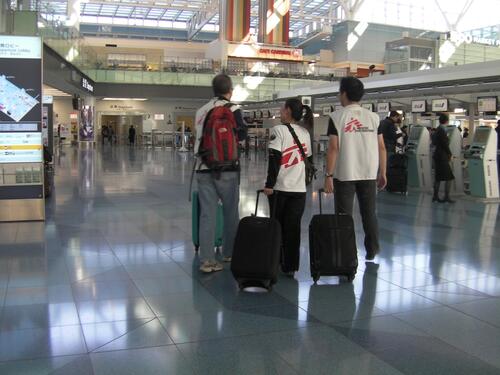
A surgical team consisting of surgeon Mikio SHIOZAWA, anesthesiologist Ikusuke HATSUKARI and nurse Yuko SHIRAKAWA leaves Tokyo International Airport for Manila, the Philippines, on the afternoon of Saturday, 6 December, 2014. They will stand by in Manila and be prepared to move in case the typhoon causes casualties. MSF has organised two helicopters that can quickly transport the team to Palo in Leyte Province, where MSF has a field project, or to another location. Yuko says, "We are closely monitoring the situation. If the typhoon strikes the country, we will react as fast as we can to reach the population in need."
Philippines

MSF teams are preparing for typhoon Hagupit

MSF reinforces its teams and a dozen volunteers prepare to take in wounded Crisis Update - 5 Dec 2014
 
10 beds: The MSF Transit Unit at Redemption Hospital has a 10-bed capacity. Suspected patients are admitted to individual rooms at this short -stay center while waiting for the response of their blood tests.  If the test comes back negative, they will be discharged. If positive, they will be transferred to an Ebola Management Center.
Liberia

MSF Ebola Transit Unit to support the safe re-opening of Redemption Hospital for regular service

As part of continuing efforts to combat Ebola in Liberia, Médecins Sans Frontières (MSF) has set up a ten-bed Ebola Transit Unit near Redemption Hospital in the densely populated slum community of New Kru Town on the outskirts of Monrovia. Project Update - 5 Dec 2014
 
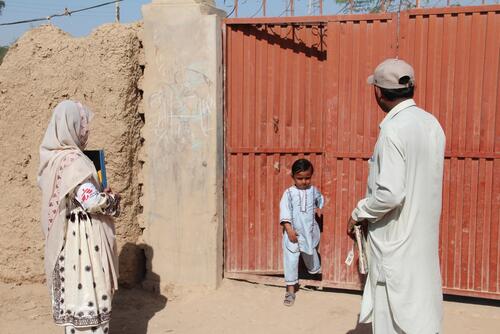
MSF staff members travel door-to-door in Dera Murad Jamali, Dera Allah Yar and Usta Muhammad, checking children for malnourishment. The identified malnourished children are then enrolled in feeding programmes at centers established in these areas
Pakistan

A guide to malnutrition in Balochistan

Portraits of patients and staff in MSF's therapeutic feeding programme Voices from the Field - 5 Dec 2014
 
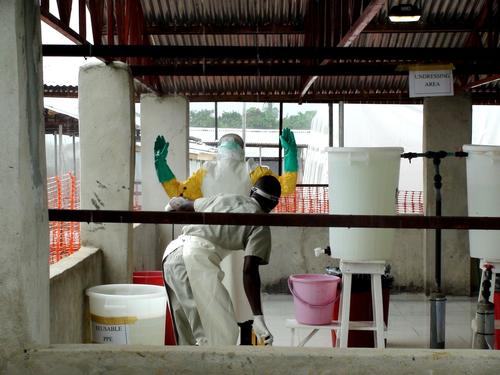
A member of the hygienist team in the MSF Ebola case management centre in Bo, Sierra Leone has left the High Risk Zone. In the undressing area he is sprayed with chlorine before undressing safely with the help of his colleague.
Ebola and haemorrhagic fevers

On the frontline against Ebola

What hygienists in an Ebola case management centre do, and why their job is so important. Project Update - 4 Dec 2014
 
MSF has worked in Kirkuk since 2010 and since July has rapidly increased its assistance to the displaced population, operating mobile clinics in six locations throughout the city, focusing on chronic disease and maternal and pediatric care. Since July, MSF teams provided 5.821 medical consultations. MSF is also distributing 25,000 blankets and more than 3,700 kits with hygiene items to displaced families in Kirkuk.
Iraq

Thousands of displaced in Kirkuk lacking essential aid

Thousands fleeing violence are in desperate need of care. Press Release - 4 Dec 2014
 
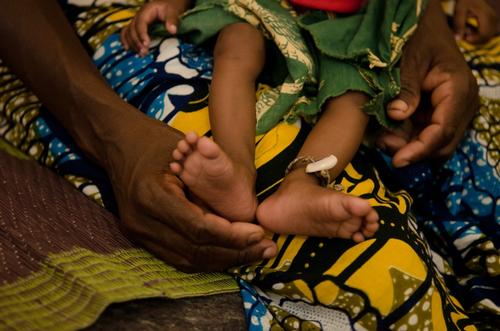
Fatimatou Oumarou and her grand-daughter at MSF ITFC in the district hospital of Batouri. She fled the Central African Republic with her brother, mother and pregnant daugher when the anti-balaka burnt down their house. They walked for months in the forest before reaching Cameroon. Her daughter died a month after giving birth in Cameroon. Fatimatou doesn't know what happened of her husband or her daughter's husband. 
Since May 2014, MSF provides medical care for severely malnourished children in the ITFC of the district hospital of Batouri. Currently, around 80 patients are taken care of daily. Most of them have fled the violence in the Central African Republic and walked for months towards Cameroun. Between January and October 2014 almost 130,000 Central African seek refuge in Cameroun, 97,000 of them in the East Region of the country.
Cameroon

Gallery: Central African refugees in Cameroon

Photo Story - 4 Dec 2014
 
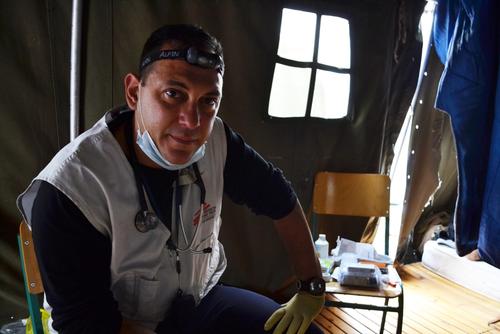
A tent at the Police Station of Kos is used as a bedroom and health screening room at the same time, due to lack of proper facilities 
 “Most of these people have been rescued at sea. When we examine them, they are usually very cold and have suffered considerably. From what I’ve seen, the conditions on arrival are  inadequate for their needs, and major improvements need to be made” says Dimitris Jannussis, MSF Doctor.
Greece

Testimonies from Syrian refugees and MSF staff

The people who arrive in the Greek islands have gone through a lot of hardship. We have seen people suffering from hypothermia and respiratory tract infections. They have suffered a lot, both physically and psychologically. Voices from the Field - 3 Dec 2014
Four mothers posing in a corridor of the Hospital in Bili. All four of them are staying in the hospital with their child, that's suffering from a severe case of malaria. Since the beginning of the project in 2016, the pediatric ward already treated more than 4.000 cases of complicated/severe form of malaria.
Médecins Sans Frontières (MSF)

Independent medical humanitarian assistance

We provide medical assistance to people affected by conflict, epidemics, disasters, or exclusion from healthcare. Our teams are made up of tens of thousands of health professionals, logistic and administrative staff - most of them hired locally. Our actions are guided by medical ethics and the principles of independence and impartiality. We are a non-profit, self-governed, member-based organisation.

Learn more