





Ebola disease in DRC: find out how we're responding
Learn more
8003 Results
 
msf-placeholder
Ukraine

War Torn Minds

Irina is staying with her four children at a centre for displaced people in the town of Konstantinovka. The centre, formerly a shelter for homeless people, was under reconstruction when the conflict started in eastern Ukraine. Although it wasn’t yet finished, the local authorities decided to open the centre for people who had to flee the fighting in nearby areas. It’s now run by local people and eight families live in the centre, sharing the small kitchen and old bathroom.
Irina shares her story and MSF’s psychologist Elena talks about the enormous emotional impact of the violence.
Project Update - 10 Feb 2015
 
 *** Local Caption *** Since May 2011, MSF runs a gynecology and obstetrics 30-beds hospital in Peshawar. The neonatology unit now has 15 inpatients beds for newborns with serious medical complications. The care offered by MSF are totally free. If there are many private maternity hospitals in the district of Peshawar, specialist obstetric services are not very accessible to the most vulnerable women (refugees, displaced, poor) or from FATA (Federal Administration Tribal Areas) as often expensive or of poor quality when they exist in public structures.
In 2013, 374 new born and 3 717 women were admitted to the MSF hospital in Peshawar, nearly 40% with complications during pregnancy. Every week, an average of 62 deliveries were attended (the figure has doubled since 2012), 10 by caesarean section.<br/>
Depuis mai 2011, MSF gère un hôpital gynéco-obstétrique de 30 lits à Peshawar. L’unité de néonatalogie dispose désormais de 15 lits d’hospitalisation pour les nouveau-nés présentant de graves complications médicales. Les soins offerts par MSF sont totalement gratuits. S’il existe de nombreuses maternités privées dans le district de Peshawar, les services obstétriques spécialisés sont très peu accessibles aux femmes les plus vulnérables (réfugiées, déplacées, démunies) ou originaires des FATA (zones tribales sous administration fédérale), car souvent coûteux ou de mauvaise qualité quand ils existent dans les structures publiques.
En 2013, 374 nouveau-nés et 3717 femmes ont été admises à l’hôpital MSF de Peshawar, dont près de 40% présentant des complications lors de la grossesse. Chaque semaine, 62 accouchements ont été assistés en moyenne (le chiffre a doublé par rapport à 2012), dont 10 par césarienne.
Pakistan

Six months at Peshawar’s neonatal unit

A look back at Dr Ley's experience heading up the neonatal unit at MSF’s obstetrics and gynaecology hospital. Voices from the Field - 9 Feb 2015
 
Ebola is finally declining in Liberia, although gaps remain in infection control and prevention, surveillance, case investigation and contact tracing. Access to medical care for non-Ebola patients is still a major issue due to the collapse public health system.
Ebola and haemorrhagic fevers

“We need to make sure that no one slips through the cracks”

Numbers of Ebola patients may be going down, but epidemiologist Amanda Tiffany, who works for MSF’s Epicentre, explains why every last contact needs to be traced to help bring the epidemic to an end. Project Update - 9 Feb 2015
 
MSF mobile clinic staff during blood tests to diagnose sleeping sickness in the village of Basoloy, Doromo region, northeastern DRC.
Democratic Republic of Congo

Sleeping sickness in Orientale province

Photo Story - 6 Feb 2015
 
"Saliha" counselling patient at the MSF women's health clinic in Kamrangirchar. In 2016, the team at the clinic, situated in a slum area in the south of Dhaka, provided medical and psychological support to 535 victims of sexual violence and intimate partner violence. In 2017, the numbers are set to be even higher.
Bangladesh

MSF providing psycho-social care to victims of arson attacks in Dhaka, Bangladesh

The trauma, coupled with permanent disfigurement, can lead to severe psychological problems Project Update - 5 Feb 2015
 
CENTRAL AFRICAN REPUBLIC, MATCHIKA, 29 SEPTEMBER 2014  People line up to have an MSF-nurse examine them, at a mobile clinic in the village of Matchika, a village almost 30 kilometres from Bambari, Ouaka province.
Central African Republic

‘The suffering of the people is fuelling the armed conflict in CAR’

Interview on the evolution of conflict in the Central African Republic Voices from the Field - 5 Feb 2015
 
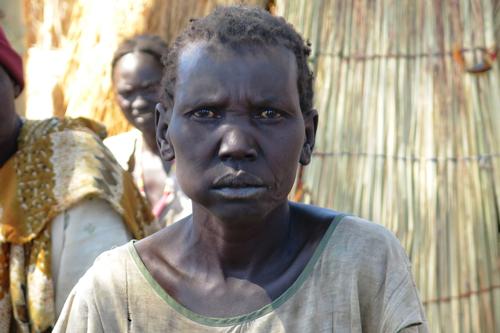
Abok Mawein arrived in Calek from Abyei in November. She told MSF that:  “When militia attacked the area I fled from my village. They attacked in the night and I lost my children and husband in the chaos, until now I don’t know if they are alive or not. Life here is very difficult. There is no food so I collect wild fruit and leaves that I boil and eat.
South Sudan

Thousands of newly displaced in Northern Bahr el Ghazal in desperate need of humanitarian support

People fleeing violence in the contested area between Sudan and South Sudan are in desperate need of food, water and medical care. Project Update - 4 Feb 2015
 
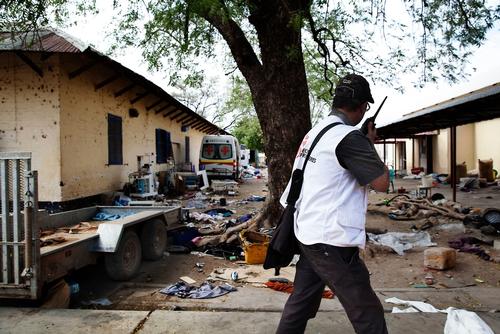
The South Sudanese key strategic town of Malakal came under attack on February 18. The clashes between government and opposition forces forced thousands of people to flee to other locations or to the UN compound in the town. The Malakal Teaching hospital was attacked by armed men. Upon their return to the hospital, MSF teams found eleven bodies. Some patients had been shot in their beds.
South Sudan

Healthcare on the frontline

Midwife Siobhan O’Malley on providing neutral and impartial care in Malakal and Bentiu, key towns hardest hit by the fighting. Voices from the Field - 4 Feb 2015
 
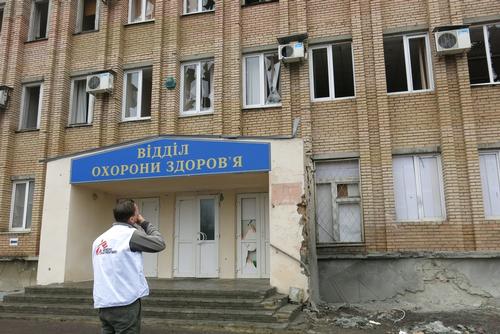
In the last two weeks of January 2014, fighting in eastern Ukraine has escalated. On 30 January, an MSF team returned to Marinka hospital, 35 kilometres west of Donetsk city, where they had delivered medical supplies five days earlier. The day after the delivery was made, 26 January, the hospital was hit by shelling and all staff were relocated to a nearby town. MSF has supported the hospital in nearby Kurakhovo and will distribute relief items to people in Marinka and surrounding communities.
Ukraine

Thousands trapped in eastern Ukraine: MSF calls for safety of civilians and respect for medical facilities

In just the last two weeks, five medical facilities supported by MSF have either been damaged or destroyed by shelling or rockets. Project Update - 3 Feb 2015
 
Ebola is finally declining in Liberia, although gaps remain in infection control and prevention, surveillance, case investigation and contact tracing. Access to medical care for non-Ebola patients is still a major issue due to the collapse public health system.
Liberia

Ebola drug trial in Liberia halted

Significant drop in number of cases and manufacturer's announcement that it would no longer participate in the trial. Press Release - 3 Feb 2015
Four mothers posing in a corridor of the Hospital in Bili. All four of them are staying in the hospital with their child, that's suffering from a severe case of malaria. Since the beginning of the project in 2016, the pediatric ward already treated more than 4.000 cases of complicated/severe form of malaria.
Médecins Sans Frontières (MSF)

Independent medical humanitarian assistance

We provide medical assistance to people affected by conflict, epidemics, disasters, or exclusion from healthcare. Our teams are made up of tens of thousands of health professionals, logistic and administrative staff - most of them hired locally. Our actions are guided by medical ethics and the principles of independence and impartiality. We are a non-profit, self-governed, member-based organisation.

Learn more