



Ebola disease in DRC: find out how we're responding
Learn more
8003 Results
 
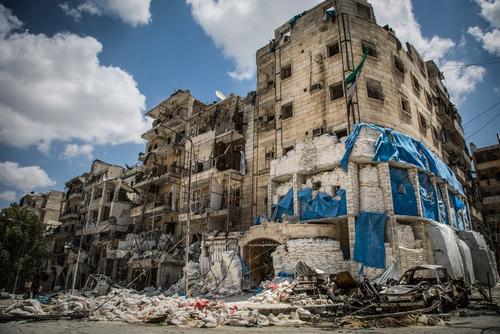
A hospital in east Aleppo is patched up with sandbags after it was hit by airstrikes in April 2016, killing one doctor and injuring several nurses.
Syria

Aleppo surviving on a fragile humanitarian lifeline

The brutal violence against the medical mission has put the healthcare system on the verge of collapse Crisis Update - 10 Mar 2015
 
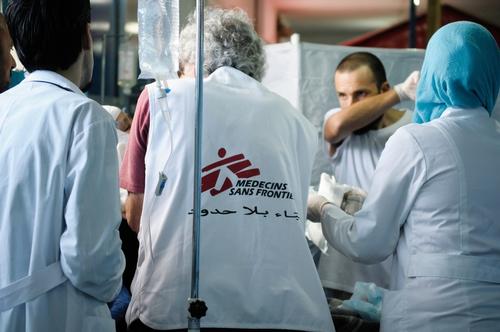
In the ER section of an MSF hospital in Syria.
Syria

Aleppo: Medical Aid Besieged

From medical care under fire to the near impossibility of humanitarian action - MSF’s account of two years in Aleppo Report - 10 Mar 2015
 
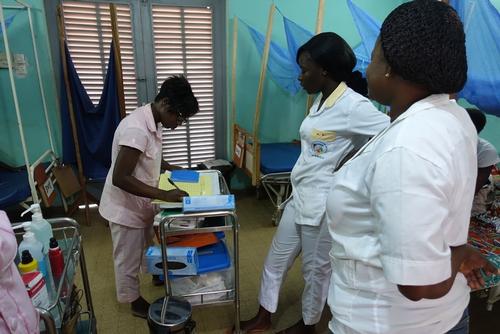
In collaboration with the Ivorian Ministry of Health , MSF began operations July 4, 2014 in the Regional Hospital of Katiola , a town located 55 km north of Bouaké, in the central region Hambol . The project objective is to support pregnant women and newborns with quality care. MSF supports gynecological emergency obstetric and neonatal . In November 2014, the medical teams attended 170 deliveries , including 19 caesarean .
Côte d'Ivoire

Everyday life at MSF’s Katiola maternity centre

The stories of three patients at the maternity centre in Katiola, Côte d’Ivoire Voices from the Field - 6 Mar 2015
 
International Women's Day
Women's health

“Because Tomorrow Needs Her” Explores Multiple Health Challenges Affecting Women

Global women's health multimedia feature. Press Release - 6 Mar 2015
 
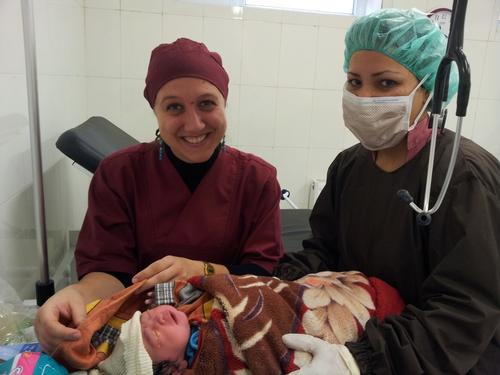
Elodie Barniet, midwife.
Afghanistan

A unit for “kangaroo mothers” in Kabul

Paediatric nurse Elodie Barnet, on opening MSF’s maternity centre at the Dasht-e-Barchi hospital Voices from the Field - 6 Mar 2015
 
Honduras es considerada uno de los países más peligrosos del mundo, y en la actualidad las consecuencias de salud  que sufren las personas expuestas a la violencia  no son consideradas una emergencia de salud pública. MSF implementa desde el 2011 un proyecto que brinda asistencia médica, psicológica y social para las consecuencias de la violencia, incluida la violencia sexual.

Uno médico y psicóloga de MSF brindan diariamente atención para las consecuencias físicas y de salud mental producida por la violencia, sobretodo después de una agresión sexual. Toda esta atención está asegurada a través de un abordaje multidisciplinario e integrado conocido como “Servicio Prioritario” para responder en un solo lugar las necesidades de una persona y evitar la re-victimización.

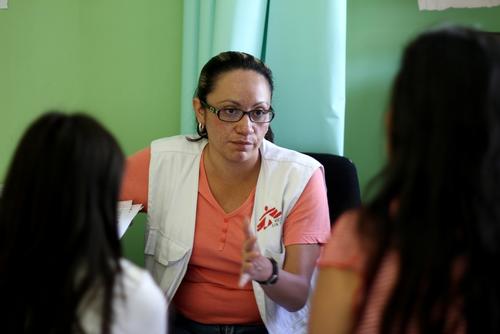
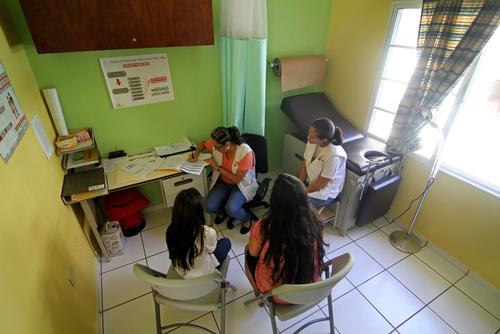
Diana, médico de MSF explica a una adolescente acompañada por su familiar sobre las consecuencias en salud que tiene una agresión sexual. En 2014, el 57% de las personas atendidas por MSF eran personas menores de 18 años.

Honduras is considered as one of the most dangerous countries in the world. Yet, the medical consequences of violence are not considered as a public health emergency. Since 2011, MSF has been providing medical, psychological and social attention to victims of violence, including sexual violence, in the capital of Tegucigalpa. 

An MSF medical doctor and psychologist provide daily medical care to treat the physical and mental health consequences of violence, mostly after a sexual assault. This package of medical attention is available in two of the capital’s health centres and the main public hospital. It is known as the “priority service”, created to respond to the needs of the patient in one single place in order to avoid further exposure and victimization. 

Diana, MSF medical doctor, explains to an adolescent girl, who is accompanied by a family member, the consequences of a sexual assault on health. In 2014, 57 per cent of MSF’s patients were under 18 years of age.

In 2014, Médecins Sans Frontières treated 779 victims of violence including 527 victims of sexual violence, and carried out 1,654 mental health consultations.
Sexual violence

International Women's Day: Surviving sexual violence during adolescence

Survivors of sexual violence can face long-term physical and mental health consequences. Project Update - 5 Mar 2015
 
Honduras es considerada uno de los países más peligrosos del mundo, y en la actualidad las consecuencias de salud  que sufren las personas expuestas a la violencia  no son consideradas una emergencia de salud pública. MSF implementa desde el 2011 un proyecto que brinda asistencia médica, psicológica y social para las consecuencias de la violencia, incluida la violencia sexual.

Diana y Carmen, médico y psicóloga de MSF, brindan diariamente atención para las consecuencias físicas y de salud mental producida por la violencia, sobretodo después de una agresión sexual. Toda esta atención está asegurada a través de un abordaje multidisciplinario e integrado conocido como “Servicio Prioritario” para responder en un solo lugar las necesidades de una persona y evitar la re-victimización.

Honduras is considered as one of the most dangerous countries in the world. Yet, the medical consequences of violence are not considered as a public health emergency. Since 2011, MSF has been providing medical, psychological and social attention to victims of violence, including sexual violence, in the capital of Tegucigalpa. 

Diana and Carmen, MSF medical doctor and psychologist, provide daily medical care to treat the physical and mental health consequences of violence, mostly after a sexual assault. This package of medical attention is available in two of the capital’s health centres and the main public hospital. It is known as the “priority service”, created to respond to the needs of the patient in one single place in order to avoid further exposure and victimization.

Since 2011, Médecins Sans Frontières has offered emergency medical and psychological support to victims of sexual violence in Tegucigalpa, Honduras. In 2014, Médecins Sans Frontières treated 779 victims of violence including 527 victims of sexual violence, and carried out 1,654 mental health consultations.
Honduras

International Women's Day: “It is terrible to see a patient—a 12 year-old girl—who has been abused by five or six m

In Honduras, Médecins Sans Frontières is helping young survivors of sexual violence rebuild their lives. Project Update - 5 Mar 2015
 
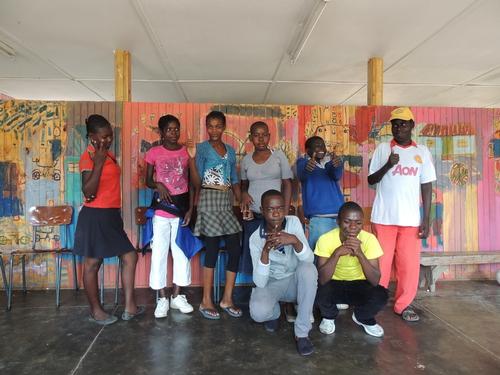
In Epworth, near the Zimbabwean capital, Harare, medical, humanitarian, aid agency, Doctors Without Borders/Médecins Sans Frontières (MSF) has set up HIV support groups where adolescents can meet others living a similar reality. Through sharing their stories, and connecting with one another, the newfound solidarity gradually helps them to become more self-confident.

Epworth is a semi-urban area located just outside the Zimbabwean capital, Harare, where the majority of the population lives below the poverty line. The HIV test positivity rate in Epworth remains just below 20%, which is higher than reported at the national level (15%). In 2014, MSF placed 165 HIV positive patients aged under 20 years on ART in Epworth. Eight percent of these patients were under 15 years of age. In 2015 MSF will continue to advocate for increased access to HIV testing and treatment for children and adolescents.
Zimbabwe

Stigma, confusion, silence: life as a young girl with HIV in Zimbabwe

Telling a child that they have HIV can be a long and delicate process. Voices from the Field - 5 Mar 2015
 
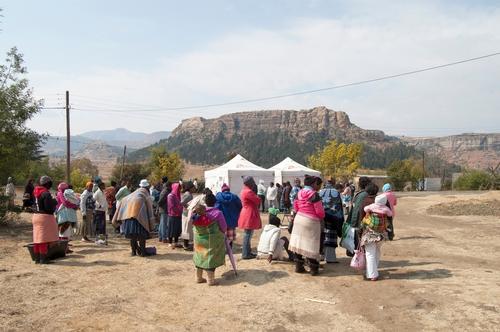
 Women wait to talk to an expert at MSF's family planning clinic, Roma, Lesotho. The clinics provide free advice on family planning, something which is difficult to get in Lesotho.
Lesotho

Gallery: Family Planning in Lesotho

Portraits of women from Lesotho attending MSF family planning clinics Photo Story - 5 Mar 2015
 
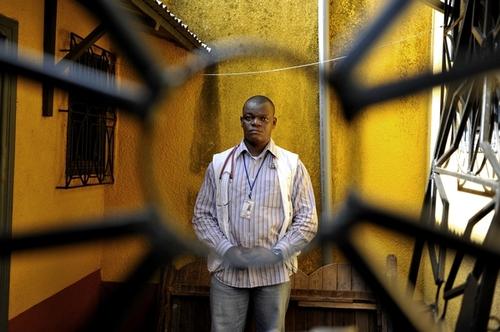
Dr Armel KONE (medecin Duekue) *** Local Caption *** Bien que les affrontements aient cesse, fin mars 2011, dans la plupart de l\'Ouest du pays, des populations deplacees vivent toujours dans des camps, comme celui de la Mission catholique a  Duekoue et celui de Nazareth a  Guiglo, ou MSF a ouvert des centres de sante. Des equipes mobiles de MSF donnent des consultations dans des villages touches par les violences entre Guiglo et Blolequin ainsi qu\'au nord-est de Duekoue. Les cas graves et les urgences chirurgicales, medicales, pediatriques et obstetriques sont traites a  l\'hopital de Duekoue. Dans le petit hopital de Nikla a  Guiglo, MSF prend en charge les urgences medicales, donne des consultations externes et refere les urgences chirurgicales a  l\'hopital de Duekoue. A Abidjan, les equipes de MSF prennent en charge les urgences chirurgicales et medicales ainsi que les cas de gynecologie-obstetrique et donnent des consulations externes dans l\'hopital d\'Abobo sud . Pour desengorger cet hopital surcharge, MSF intervient dans les hopitaux d\'Anyama et Houphouet-Boigny. MSF apporte par ailleurs un soutien a  cinq centres de sante dans le quartier d\'Abobo.
Central African Republic

From Bangui to Carnot: a year in CAR with MSF

From the horrors of Bangui to the exodus of Muslims from Central African Republic to Sido in Chad, Dr Armel recounts his frenetic year in a country in utter chaos. Voices from the Field - 5 Mar 2015
Four mothers posing in a corridor of the Hospital in Bili. All four of them are staying in the hospital with their child, that's suffering from a severe case of malaria. Since the beginning of the project in 2016, the pediatric ward already treated more than 4.000 cases of complicated/severe form of malaria.
Médecins Sans Frontières (MSF)

Independent medical humanitarian assistance

We provide medical assistance to people affected by conflict, epidemics, disasters, or exclusion from healthcare. Our teams are made up of tens of thousands of health professionals, logistic and administrative staff - most of them hired locally. Our actions are guided by medical ethics and the principles of independence and impartiality. We are a non-profit, self-governed, member-based organisation.

Learn more