



Ebola disease in DRC: find out how we're responding
Learn more
8003 Results
 
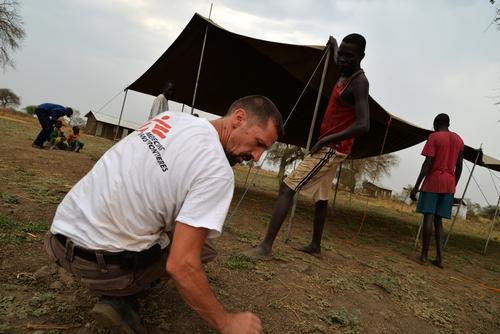
 *** Local Caption *** Since the on-start of the conflict in South Sudan, mid-December 2013, according to the UNCHR, more than 1,400,000 persons have been internally displaced and more than 450,000 would have sought refuge in the neighboring countries, amongst which 190,000 in Gambella region, western Ethiopia. The rainy season has temporarily slowed the stream of people arriving into the camps. The rate of new arrivals has slowed down in the last several months, from 1000 new arrivals per day in February to approximately 100 per week today. However UNHCR forecast expected an additional of 110,000 new arrivals in 2015 with restarting of the fighting in South Sudan during the dry season.<br/>
The current refugee population in Gambella region remains in a critical situation and additional population influxes could further destabilize an already difficult situation. In order to reduce child mortality, MSF is carrying out vaccination campaign targeting 50,000 children for PCV / vaccine and  26,000 children for DPT- Hib-HepB vaccine.<br/>
This vaccination campaign is a challenge due to logistical constraints (cold chain, waste management, transport, access, etc.) and the 2 doses minimum required for effective protection.<br/>
Extended preventive package in emergency situations is a major issue. New preventive strategy, including vaccination, could improve more rapidly the mortality and burden of diseases in acute phase of emergencies. This intervention is an example showing that is possible to extend the vaccination package in emergency situation and should be a first step to review current policy.
Ethiopia

MSF broadens vaccination package for South Sudanese refugees

MSF teams in Gamballa expanding the vaccine package being provided to South Sudanese refugees to include PCV (Pneumococcal conjugate vaccine) and Hib (Haemophilus influenzae type B) in order to reduce child mortality. Project Update - 5 May 2015
 
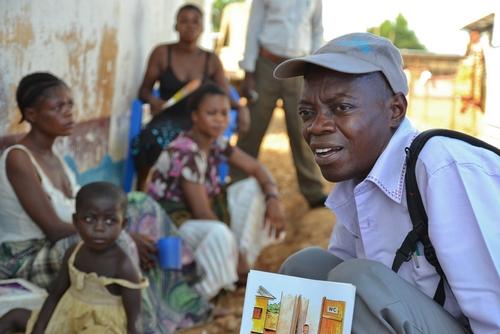
Health promoter Fabi gives information about best practices for hygiene to patients and care aids at the Bikenge health centre.
--

--
The 42-bed health centre is jointly run with the Ministry of Health. MSF has set up new temporary structures including an emergency room, a pediatric ward, a post-operative care ward, a maternity ward and operating theatre, as well as a triage area, a pharmacy, a lab and four consultation rooms. In late 2015 and early 2016 a new health centre, better adapted to the needs of the population, will be built. The organisation is also rehabilitating a local water source for use at the health centre and by the local population.
Democratic Republic of Congo

MSF begins medical activities in Bikenge, Maniema Province

Its remote location means that access to quality healthcare is more or less impossible for most people. Voices from the Field - 5 May 2015
 
An MSF team visits heavily affected villages in the mountains to the north-west of Kathmandu by helicopter, where little or no assistance has reached. They did a health and damage assessment and provided basic medical assistance to patients. While the most critically injured people were evacuated in the days immediately after the earthquake, those remaining have been trapped in their villages as roads and walking tracks have been cut off by avalanches and landslides. MSF's teams are seeing people in need of basic healthcare, as well as a number of people presenting with wounds sustained in the earthquake that have now become infected.
Nepal

MSF starts reaching people in remote mountain regions by helicopter and on foot following the earthquake

Medical teams have started reaching people, spread across isolated mountain villages, by helicopter and on foot. Crisis Update - 5 May 2015
 
msf-placeholder
Nepal

“Some villages are 80-100 percent destroyed. It was beyond my expectations.”

Anne Kluijtmans, an MSF nurse from Holland, was on holiday in Nepal when the earthquake struck on Saturday 25 April. She quickly joined the MSF teams who had arrived in the country to respond. Project Update - 5 May 2015
 
msf-placeholder
Yemen

ICRC and MSF alarmed by attacks on country’s lifelines

The disruption of key logistic infrastructure, including airports, sea ports, bridges and roads, is creating a catastrophic humanitarian situation. Press Release - 4 May 2015
 
msf-placeholder
Syria

Main hospital in Aleppo stops activities after being targeted

Al Sakhour hospital provided life-saving operations to around 400,000 people Press Release - 4 May 2015
 
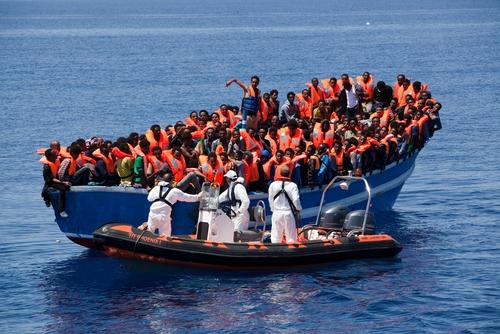
MSF and MOAS rescue team to assist people in distress, 369 person have been found on a 12 meters wooden boat in the Mediterranean sea.

Will Turner (Emergency Coordinator) and MOAS rescue team on board of the RHIB. 

As part of the rescue operation, the team will provide people first with life jackets to prevent drowning and then operate transfer  onto the MY Phoenix. 

During transfer, the Rhib can take between 10 to 20 people on board. The team have to do many rides before taking everybody safe on board of the MY Phoenix.
Mediterranean migration

MSF and MOAS rescue 369 people on first outing

This weekend more than 6,000 people were rescued from the Mediterranean Sea while making the treacherous crossing from Libya to Europe - 369 of those were rescued by the MY Phoenix, a search and rescue vessel run in partnership by MSF and MOAS. Press Release - 4 May 2015
 
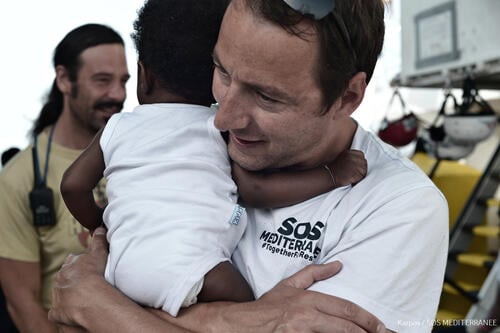
Médecins Sans Frontières/Doctors Without Borders (MSF) is urging European Member States to facilitate the immediate disembarkation of 629 people rescued over the weekend in Mediterranean and now onboard Aquarius, a dedicated search and rescue vessel run by SOS MEDITERRANEE in partnership with MSF. Aquarius remains in international waters off Malta and Italy, the countries with the closest ports of safety but which continue to refuse permission to dock.
Website

SOS MEDITERRANEE

SOS MEDITERRANEE is a European maritime and humanitarian organization for the rescue of life in the Mediterranean. It was founded by citizens in May 2015 in response to the deaths in the Mediterranean and the failure of the European Union to prevent these deaths. SOS MEDITERRANEE
 
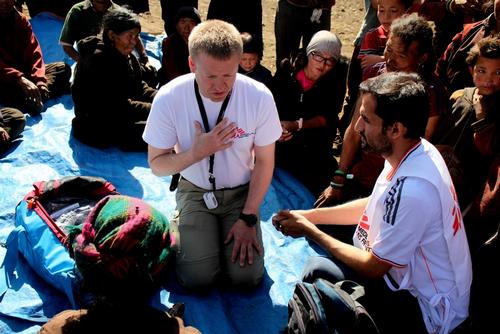
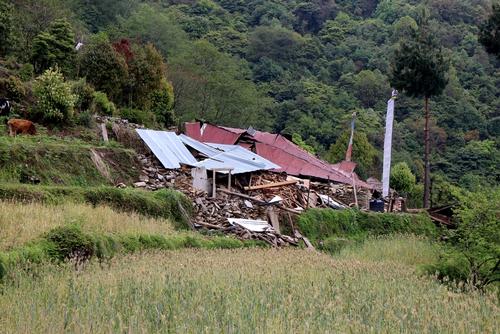
A 3 person MSF team began running mobile clinics by helicopter to remote villages in the mountains to the north of Kathmandu. Many villages have been completely or partially destroyed, and people are living under makeshift shelters. The earthquake and subsequent avalanches have cut off access to many villages so people are stuck with no way out.
Nepal

MSF doctor describes the challenge of getting aid to hardest hit areas

Interview with one of the first MSF doctors to be deployed to Nepal following last week's earthquake. Voices from the Field - 1 May 2015
 
msf-placeholder
Yemen

Crisis update – 27 April

Over 1,266 war wounded have been treated. Assistance needs to be scaled up dramatically. Crisis Update - 30 Apr 2015
Four mothers posing in a corridor of the Hospital in Bili. All four of them are staying in the hospital with their child, that's suffering from a severe case of malaria. Since the beginning of the project in 2016, the pediatric ward already treated more than 4.000 cases of complicated/severe form of malaria.
Médecins Sans Frontières (MSF)

Independent medical humanitarian assistance

We provide medical assistance to people affected by conflict, epidemics, disasters, or exclusion from healthcare. Our teams are made up of tens of thousands of health professionals, logistic and administrative staff - most of them hired locally. Our actions are guided by medical ethics and the principles of independence and impartiality. We are a non-profit, self-governed, member-based organisation.

Learn more