Ebola disease in DRC: find out how we're responding
Learn more
8003 Results
 
msf-placeholder
Iraq

MSF provides assistance to the displaced and refugees in Kurdistan

Médecins Sans Frontières (MSF) has been working in the Erbil region or northern Iraq since 2013 providing primary healthcare and mental health services to Syrian refugees who have fled from the conflict that continues to rage in their country. MSF also assists Iraqis who have been forced out of their homes by the violence. Crisis Update - 26 May 2015
 
msf-placeholder
Ebola and haemorrhagic fevers

Experts support a varied approach to Ebola trials

In a letter to the Wall Street Journal today, 19 experts from Africa, Asia, Europe and the US set out their support for the use of a range of clinical trial designs during the Ebola epidemic. Open Letter - 26 May 2015
 
msf-placeholder
Access to medicines

Governments take decisive step towards more affordable vaccines

Resolution passes at World Health Assembly, calling for more affordable vaccines and greater transparency on vaccine pricing Press Release - 25 May 2015
 
MSF distributes tons of roofing materials in Gorkha District, Nepal on May 7 2015.
MSF provides material to families so that they have the opportunity to
rebuild their homes. The teams also distributes blankets, hygiene and
kitchen kits by helicopters to remote villages.


On 25 April a magnitude 7.8 earthquake killed more than 8,000 people and destroyed massive amounts of property, including numerous temples that were on the list of UNESCO World Heritage Sites.
Nepal

The earthquakes took Nepal by surprise, the rains should not

MSF is racing against time to reach remote villages with medical supplies and shelter material. Difficult logistics and terrain leave limited transport options, meaning MSF teams have to use helicopters to transport these materials to villages north and east of Kathmandu every day. Crisis Update - 25 May 2015
 
Maila Gurung, 26, from Diol village speaks on the phone after receiving a cast to treat his broken leg while his daughter, Ranjana, 2, stands next to him. Photograph taken at the MSF/Doctors Without Borders "inflatable" hospital in Arughat Bazaar, Gorkha District, Nepal on May 21 2015.  Due to the destruction by earthquake of the main health centre in Arughat, the MSF hospital is currently offering medical services to the surrounding communities.

On 25 April a magnitude 7.8 earthquake killed more than 8,000 people and destroyed massive amounts of property, including numerous temples that were on the list of UNESCO World Heritage Sites.

MSF is providing critical medical care is distributing shelter and hygiene materials across Nepal to affected communities in dire need. With the monsoon approaching, the situation is likely to deteriorate in the coming weeks.
Nepal

Evacuating the seriously injured from remote villages

“I was in terrible pain, I thought I would die,” said Maila Gurung. “Most of the nearby health posts were destroyed, the only one I could go to was an hour’s walk, but it was closed. And, besides, I couldn’t walk.” Voices from the Field - 25 May 2015
 
I decided to leave Nigeria because I am married and my husband works in Libya. So I had to come to Libya to take care of my husband. Staying in Libya is not easy. The fight is too much. You don’t sleep at night and if you go to work before you come back they’ll bust into your house, take your property, rape your wife. They do such horrible things. They kill Nigerians anyhow, so it is not safe for we Nigerians . Due to my condition [pregnant] it is very risky but I can’t go back to Nigeria either. So my husband's brother came from Nigeria to accompany me to Italy and wait for my husband to follow. I’m not too fine. I’m feeling feverish so I need somebody to stay with me. I said to my husband that if I have to go alone I won’t go. That’s why my brother came to watch me until my husband comes and meets me. I was the only pregnant woman in the boat we came with. It is risky for women to travel but they do what they do because they are not comfortable where they are. Libya is not a place for someone to stay. You can work but they will burst into your house and collect everything you worked for. So it is not a place to stay and that’s why we take the risk of entering into this water and go to Europe to look for a better life. We believe Europe is better than Libya. I hope my baby will have a better life but I know it’s going to be farther.
Mediterranean migration

Three Mediterranean boat migrants describe their gruelling quests for better lives

"We go away from our country because we have no choice. We don’t want to get the Europeans tired of us, to overwhelm them, but we have no choice. We risk our lives to help our families, or neighbours, our friends, our parents and our brothers. That’s why we embark on this journey." Voices from the Field - 25 May 2015
 
msf-placeholder
Tanzania

Cholera outbreak among Burundian refugees

A cholera outbreak has struck overcrowded camps where thousands of Burundian refugees are gathering in Tanzania. According to the World Health Organization, 31 people have died of the disease, and more than 3,000 acute diarrhoea cases have been reported among the refugees. In collaboration with local authorities, Médecins Sans Frontières (MSF) is opening rehydration points and cholera treatment centres in Kagunga and Kigoma camps. Press Release - 24 May 2015
 
In Tumaco, Nariño Department, Colombia, MSF has responded to an increase in Chikungunya,  a viral disease transmitted to humans by infected mosquitoes. It causes fever and severe joint pain.
MSF response includes fumigation of 10,000 houses, donation of 600 tests and training on diagnosis and treatment in hospitals.
Colombia

Chikungunya - the disease that doubles you over

This new and little-known virus causes high fever and severe pain in joints after being bitten by an infected mosquito. It has already affected 208,044 Colombians so far this year. Voices from the Field - 22 May 2015
 
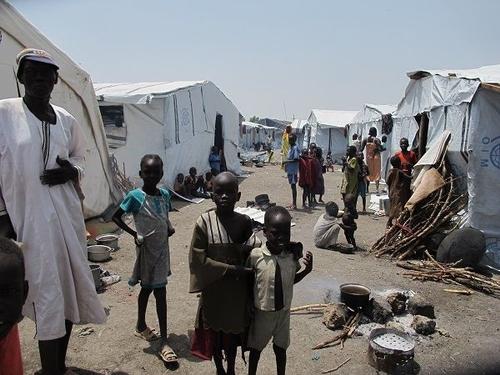
Continuing clashes in Upper Nile state in South Sudan are leading to more deaths and displacements of people. Since the beginning of April, over 6,600 people have fled their homes to seek shelter at the congested UN protection of civilians (PoC) base in Malakal. The new internally displaced people are living in big tents, with dozens of families sharing the same tent and sleeping on the floor.
South Sudan

"The situation has been tense"

An MSF doctor describes his experience while working in a Protection Of Civilians site outside Malakal where about 30,000 people displaced by civil war are living. Voices from the Field - 22 May 2015
 
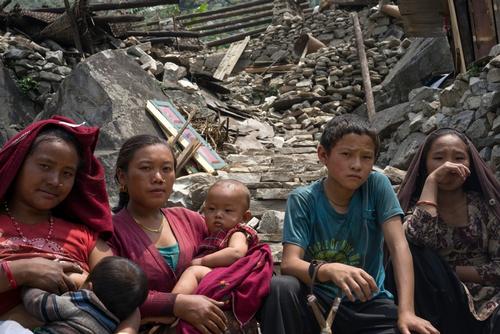
Nepalese sit on stone steps in their destroyed village in the Tsum valley of Gorkha District, Nepal on May 7 2015. 


On 25 April a magnitude 7.8 earthquake killed more than 8,000 people and destroyed massive amounts of property, including numerous temples that were on the list of UNESCO World Heritage Sites.
Nepal

"Everyone is afraid" says head of mission

I did not see any patients entering the hospital buildings. All the patients are outside. These people, who were injured during the quakes and underwent orthopedic surgery, are hospitalized in tents. Voices from the Field - 22 May 2015
Four mothers posing in a corridor of the Hospital in Bili. All four of them are staying in the hospital with their child, that's suffering from a severe case of malaria. Since the beginning of the project in 2016, the pediatric ward already treated more than 4.000 cases of complicated/severe form of malaria.
Médecins Sans Frontières (MSF)

Independent medical humanitarian assistance

We provide medical assistance to people affected by conflict, epidemics, disasters, or exclusion from healthcare. Our teams are made up of tens of thousands of health professionals, logistic and administrative staff - most of them hired locally. Our actions are guided by medical ethics and the principles of independence and impartiality. We are a non-profit, self-governed, member-based organisation.

Learn more