



Ebola disease in DRC: find out how we're responding
Learn more
4636 Results
 
msf-placeholder
Palestine

One year after the war

On December 27, 2008 the Israeli military launched Operation Cast Lead in the Gaza Strip. The operation involved raids, intensive aerial bombing and a land offensive that began on January 3, 2009. The war ended 22 days later, on January 18, 2009, and took a heavy toll. Nearly 1,300 Palestinians were killed (including 900 civilians, 300 of whom were children) and approximately 5,300 were wounded. What are the humanitarian, medical and economic impacts of that war? How are they felt today? Project Update - 5 Jan 2010
 
msf-placeholder
Palestine

Gaza: 'War wounds test a poorly-equipped health system'

After last January's war, heightened medical and health needs prompted MSF to expand its activities to address shortfalls in specific areas, including post-operative care, physical therapy, mental health care and surgery. Project Update - 5 Jan 2010
 
msf-placeholder
Thailand

When MSF criticised the forced repatriation of Hmong to Laos

Thai authorities are expelling the 4,000 Hmong remaining in the Huai Nam Khao camp in Thailand's Petchabun province to Laos. No third-party organization is present at the site. MSF, which left the camps in May 2009 following military pressure, had denounced the forced repatriation policy. Project Update - 31 Dec 2009
 
msf-placeholder
Project Update

MSF urges European governments to respect life, dignity and healthcare of migrants and asylum seekers

When detention is over, the outlook is bleak for many and access to healthcare remains uncertain. Even when healthcare is available, language barriers, lack of information and fear of being reported stop migrants from seeking help. Press Release - 16 Dec 2009
 
msf-placeholder
South Sudan

Inadequate aid as violence escalates southern Sudan emergency

The people of southern Sudan are trapped in a worsening crisis, following the most violent year since the 2005 peace agreement that ended more than two decades of civil war with the North. However, the response to the escalating emergency is inadequate, says MSF. Press Release - 14 Dec 2009
 
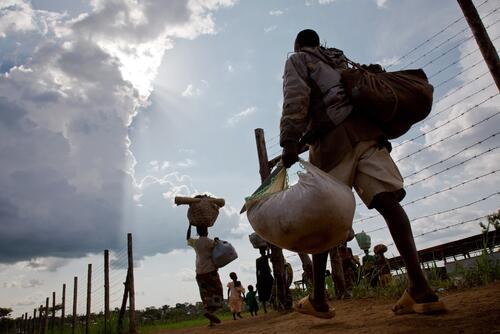
A group of refugees in the moments after they arrived at Nyori refugee camp in South Sudan. they fled after LRA attacked neighboring villages in South Sudan In June 2009.
South Sudan

Facing up to reality: Health crisis deepens as violence escalates in Southern Sudan

MSF calls on government authorities, international donors and relief organisations to recognise the full extent of the crisis and ensure peoples' immediate humanitarian needs are urgently prioritised. Report - 11 Dec 2009
 
msf-placeholder
Afghanistan

Empty hospital beds in the capital of Helmand, Afghanistan

Testimony bv Christopher Stokes, MSF General Director (Belgium)
Voices from the Field - 10 Dec 2009
 
msf-placeholder
Humanitarian principles

NATO Speech - Christophe Fournier

In his speech, Christophe Fournier explains why MSF can never be part of a “military-humanitarian coalition”, the importance to make a clear distinction between impartial humanitarian actors such as MSF and other more partisan aid actors, and finally the harmful consequences on the local population when this distinction is blurred. Speech - 9 Dec 2009
 
msf-placeholder
Somalia

MSF deeply saddened by attack in Mogadishu

Médecins Sans Frontières (MSF) is deeply saddened by the recent attack during the graduation of medical students from Benadir University, in Mogadishu, Somalia, and sends its thoughts and condolences to the families and friends of those who have suffered as a result of this tragic event. Statement - 5 Dec 2009
Four mothers posing in a corridor of the Hospital in Bili. All four of them are staying in the hospital with their child, that's suffering from a severe case of malaria. Since the beginning of the project in 2016, the pediatric ward already treated more than 4.000 cases of complicated/severe form of malaria.
Médecins Sans Frontières (MSF)

Independent medical humanitarian assistance

We provide medical assistance to people affected by conflict, epidemics, disasters, or exclusion from healthcare. Our teams are made up of tens of thousands of health professionals, logistic and administrative staff - most of them hired locally. Our actions are guided by medical ethics and the principles of independence and impartiality. We are a non-profit, self-governed, member-based organisation.

Learn more