



Ebola disease in DRC: find out how we're responding
Learn more
4635 Results
 
msf-placeholder
Afghanistan

Dangerous aid in Afghanistan

While NGOs mostly claim their assistance is based on humanitarian principles, this is often inaccurate in Afghanistan. Many NGOs implement nation-building projects at the behest of Afghan and U.S. government agencies, such as the United States Agency for International Development (USAID). The opposition militant groups challenge the legitimacy of these efforts... Voices from the Field - 12 Jan 2011
 
msf-placeholder
India

Indian Prime Minister must resist European pressure to trade away health

Latest round of negotiations on sensitive intellectual property issues resumes tomorrow Press Release - 12 Jan 2011
 
msf-placeholder
Pakistan

Six months after the floods, too many people are without anything, not even food or a way to earn a living.

Six months after the floods, too many people are without anything, not even food or a way to earn a living. Project Update - 11 Jan 2011
 
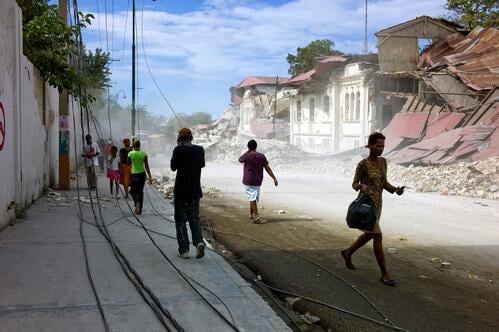
Haiti, Port-au-Prince after the earthquake.
Haiti

Videos: Haiti One Year After

MSF today issued a review of its own emergency response following the earthquake and an assessment of the existing gaps in secondary health care services that it will attempt to address in the year ahead. MSF’s response in Haiti since the earthquake and the cholera epidemic constitutes the largest disaster operation in the organization’s history. Project Update - 10 Jan 2011
 
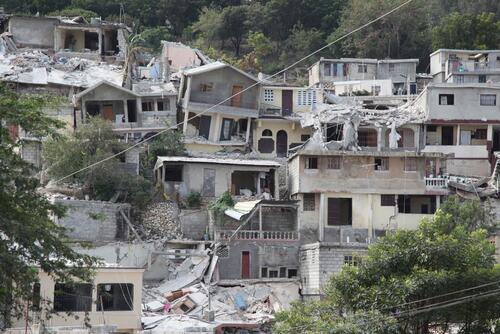
Destruction in Haiti after the earthquake that hit the island on January 12th 2010. On the road from Leogane to Port-au-Prince.
Haiti

Despite massive aid response, significant needs remain one year after earthquake

MSF has issued a review of its own emergency response following the earthquake and an assessment of the existing gaps in secondary health care services that it will attempt to address in the year ahead. MSF’s response in Haiti since the earthquake and the cholera epidemic constitutes the largest disaster operation in the organization’s history. Press Release - 10 Jan 2011
 
Port au Prince, Haiti, January 14 2010.<br/>
Haiti

Haiti one year after

A critical review of MSF humanitarian aid operations. This report intends to share with the general public, the people of Haiti, and our supporters a detailed breakdown of how the funds donated to MSF for the earthquake emergency relief effort have been used to meet the needs of the Haitian people in the year since the earthquake hit. It attempts to outline the choices made by MSF in deploying its operations, the challenges we faced, the lessons we learned, and our plans and perspectives for the future. Report - 10 Jan 2011
 
msf-placeholder
South Sudan

Southern Sudan's forgotten emergencies

It is a cruel irony for the people of Southern Sudan that the whole world is now fully focused on the potential fallout of this weekend’s referendum on secession from the North, while the ongoing emergencies facing the region since the signing of the Comprehensive Peace Agreement (CPA) six years ago were all but ignored. Opinion - 7 Jan 2011
 
msf-placeholder
Haiti

Civil unrest brings spike in cholera cases in Haiti?s capital, Port-au-Prince

Recent demonstrations and sporadic violence coincided with a spike in cholera cases in the capital, Port-au-Prince, as people were unable to access treatment. Project Update - 4 Jan 2011
 
msf-placeholder
Access to medicines

Ten stories that mattered in Access to Medicines in 2010

Through its Campaign for Access to Essential Medicines, Médecins Sans Frontières (MSF) has been closely following the developments in the world of access to medicines, vaccines and diagnostics.
Among the positive stories of the past year: new tools were developed for Meninigitis A and for tuberculosis, promising research was published on severe malaria, an innovative mechanism was created to bring make medicines more affordable, and the quality of food aid is progressively improving. But it wasn’t all good news in 2010: donors are turning their back on AIDS, and pursuing a number of policies that threaten access to generic medicines. At the same time, measles is making a comeback, and neglected tropical diseases continue to take a heavy toll.
Photo Story - 30 Dec 2010
 
msf-placeholder
South Sudan

Preparing for potential emergencies in southern Sudan

Today, the southern region of Sudan is confronted by constant emergencies: malnutrition is chronic, violence continues to destroy lives and displace the population, and preventable diseases are relentless killers. Project Update - 29 Dec 2010
Four mothers posing in a corridor of the Hospital in Bili. All four of them are staying in the hospital with their child, that's suffering from a severe case of malaria. Since the beginning of the project in 2016, the pediatric ward already treated more than 4.000 cases of complicated/severe form of malaria.
Médecins Sans Frontières (MSF)

Independent medical humanitarian assistance

We provide medical assistance to people affected by conflict, epidemics, disasters, or exclusion from healthcare. Our teams are made up of tens of thousands of health professionals, logistic and administrative staff - most of them hired locally. Our actions are guided by medical ethics and the principles of independence and impartiality. We are a non-profit, self-governed, member-based organisation.

Learn more