



Ebola disease in DRC: find out how we're responding
Learn more
8008 Results
 
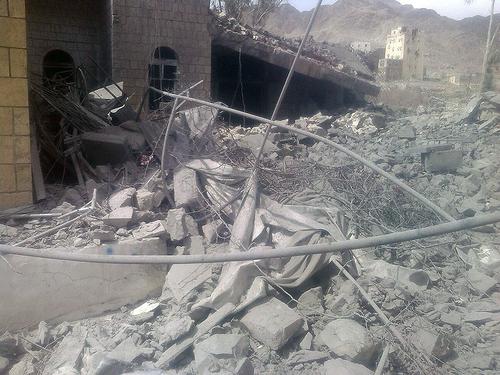
On october 26th, the Haydan hospital we support in northern Yemen has been hit by several air strikes. The first bombing took place at 22:30 local time and last midnight.
Miriam, project coordinator in Saada, went this morning Haydan, but could not enter the building because there were still bombs that had not exploded.
The hospital is completely destroyed: the emergency room, OPD, IPD, the laboratory, motherhood and the block. But the bombing did not cause any casualties. Only one person was slightly injured. Staff and two hospitalized patients could leave the building after the first strike.
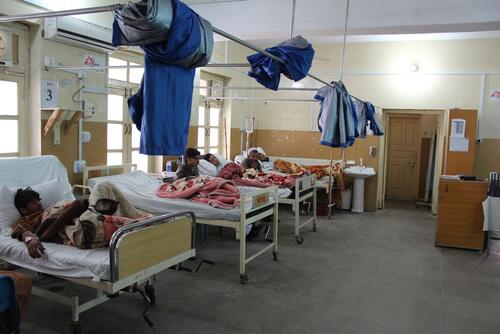
This hospital was still functional only for the whole Haydan region which has a population of about 200,000 inhabitants. On average 150 patients had received emergency a week by personnel from the Department of Health that is supported with incentives.
The Haydan region bordering Saudi Arabia is in Sa'ada governorate, which is controlled by the Houthis. It is bombarded every day by the coalition led by Saudi Arabia.
Yemen

MSF hospital destroyed by airstrikes

Airstrikes carried out late last night by the Saudi-led coalition in northern Yemen destroyed a small MSF supported hospital. Hospital staff and patients managed to escape before subsequent airstrikes occurred over a two hour period. With the hospital destroyed, at least 200,000 people now have no access to lifesaving medical care. Press Release - 27 Oct 2015
 
msf-placeholder
South Africa

South Africa should override patent on key HIV medicine after widespread stock out problem

Stock outs of critical HIV drug LPV/r are causing thousands of South Africans to go without HIV treatment, potentially leading to drug resistance developing or people becoming sick. The stock out is due to pharma company AbbVie - which holds patents on the drug, preventing generics being produced or imported - not providing enough of a supply. The South African government needs to issue a compulsory licence, which allows generic versions to be produced, used or imported in the country, in order to ensure access to lifesaving treatment for people. “People are being turned away from clinics without medicine and are being asked to purchase it on the private market. Many simply cannot afford it and this causes distress,” said Dr. Amir Shroufi, MSF’s Deputy Medical Coordinator in South Africa. “Alarmingly, people without access to treatment over time can become resistant to lopinavir/ritonavir and require more expensive medicines – they also risk falling sick and could even die.” Press Release - 27 Oct 2015
 
msf-placeholder
France

The Jungle in Calais

Approximately 3,500 exiles are living in a former garbage dump on the outskirts of Calais, France. This is their daily reality. Project Update - 27 Oct 2015
 
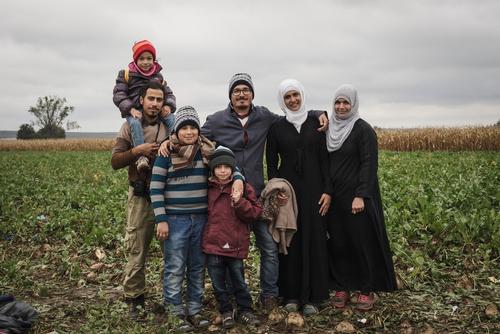
Portrait of an extended family from Idleb, Syria (left to right)
Leen (4) sits on the shoulders of her uncle Obaida (31), Abdullah (14), Wallied (5), Mohammed (29), Bayan (18), Suha (32), while they wait  on the Serbian side of the Sid - Tovarnik border crossing to enter Croatia.
Refugees, IDPs and people on the move

In European Fields

Thousands of refugees and migrants in the Balkans, stranded due to delays at border crossings and registration points, have been exposed to conditions that pose a real threat to their health as assistance fails to meet minimum standards. Photo Story - 27 Oct 2015
 
msf-placeholder
India

At African Union – India meeting, leaders should work together to protect access to affordable medicines

“African leaders really should see this summit as an opportunity to work together with Prime Minister Modi to protect affordable access for people across the developing world”, said Dr Van Cutsem. “They need to remember that millions of people in Africa are alive today because of affordable medicines made in India.” Press Release - 26 Oct 2015
 
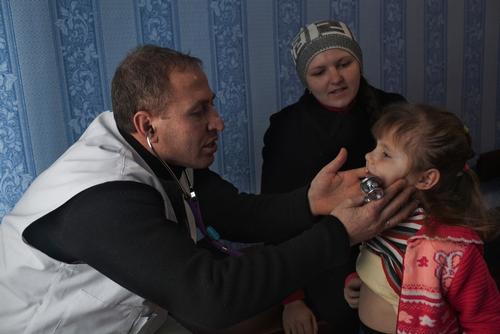
Dr Wael examines a patient in the consultation room of the health centre in the village of Uspenka, Donetsk region, where MSF is running a mobile clinic.
--
The village’s doctor died a few months before the conflict began so the community has been without a doctor. Now an MSF doctor visits twice a week to provide free consultations and medicines.
Ukraine

MSF strongly refutes false allegations levelled in the media by the Humanitarian Committee of the Donetsk People’s Republic

MSF strongly refutes the false allegations made in the media by the Humanitarian Committee of DPR regarding its medical-humanitarian activities. Statement - 26 Oct 2015
 
slovenia
Slovenia

People in transit in urgent need of assistance

Thousands of people are entering Slovenia daily along its border with Croatia, overwhelming the capacity of transit centres, and forcing many to spend the night outdoors in cold fields. Press Release - 26 Oct 2015
 
msf-placeholder
Yemen

Medical aid blocked from entering besieged area in Taiz

Despite weeks of intense negotiations with Houthi officials, stocks of essential medical supplies cannot be delivered to two hospitals in a besieged enclave of the city of Taiz, in southern Yemen. Today MSF’s trucks have been stopped again at Houthi’s checkpoints and denied access to the area. Press Release - 25 Oct 2015
 
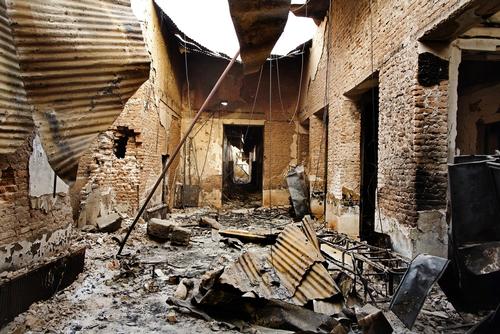
Iron roofing and rubble litter a corridor in the MSF Kunduz Trauma Centre as the facility lies destroyed following the 03 October aerial attack which killed 22 staff and patients in northern Afghanistan.

The bomb blasts were so strong that the corrugated iron roof caved in here in the blood laboratory corridor, and elsewhere in the hospital building.
Afghanistan

Death toll from the MSF hospital attack in Kunduz still rising

As of 23 October the revised figures now stand at 13 MSF staff dead and 1 MSF staff presumed dead, 10 patients dead and 2 patients presumed dead. Efforts are ongoing to determine the identities of seven other unrecognisable bodies found in the wreck of the hospital, all of whom have now been buried. These unfortunately may not be final numbers. Crisis Update - 23 Oct 2015
 
A giant earthquake struck Nepal on the morning of Saturday April 25th. Thousands are confirmed dead with many more injured and homeless.MSF teams and equipment have already arrived in the country, and more are on their way. Kathmandu has experienced relatively little destruction, with the vast majority of buildings still standing. However, many people are sleeping outside in tents and makeshift shelters as they are afraid to be inside due to aftershocks. This is a concern given that storms are expected over the coming days.
Nepal

6 months after the earthquake

Two earthquakes hit Nepal in April and May 2015, killing an estimated 8,500 people and injuring 20,000 more. MSF launched activities aimed at helping affected populations in need immediately the first earthquake struck. Crisis Update - 23 Oct 2015
Four mothers posing in a corridor of the Hospital in Bili. All four of them are staying in the hospital with their child, that's suffering from a severe case of malaria. Since the beginning of the project in 2016, the pediatric ward already treated more than 4.000 cases of complicated/severe form of malaria.
Médecins Sans Frontières (MSF)

Independent medical humanitarian assistance

We provide medical assistance to people affected by conflict, epidemics, disasters, or exclusion from healthcare. Our teams are made up of tens of thousands of health professionals, logistic and administrative staff - most of them hired locally. Our actions are guided by medical ethics and the principles of independence and impartiality. We are a non-profit, self-governed, member-based organisation.

Learn more