




Ebola disease in DRC: find out how we're responding
Learn more
8007 Results
 
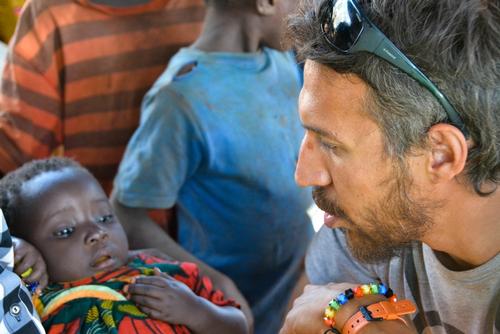
Dr. Alfonso Apolinar is the medical team leader for MSF in Nduta camp in Tanzania. With the nearby Nyarugusu camp stretched to capacity hosting around 90,000 Burundian refugees, Nduta camp was opened in October 2015 to accept new arrivals from Burundi as well as relocated refugees from Nyarugusu. Today, Nduta camp hosts around 27,000 refugees. MSF is the only medical organisation working in the camp. Teams are carrying out mobile clinics, and constructing a hospital with outpatient, emergency and intensive care services.
Tanzania

“People cope with these tough living conditions because often they haven’t known anything else.”

Dr Alfonso Apollinar is part of MSF’s emergency team responding to the refugee crisis in Tanzania, where more than 118,000 Burundians have fled to camps across the border. He describes the conditions in the increasingly overburdened camps Voices from the Field - 9 Dec 2015
 
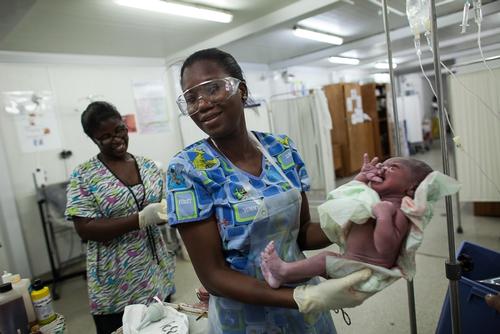
Midwife Judith Coissy holds a newborn of Cherline Pierre, 24, at MSF’s Centre de Référence en Urgence Obstétricale (CRUO) in Port-au-Prince, Haiti, October 16, 2015. She came in the hospital with 8 centimeters dilation and was admitted due to her high blood pressure.
Haiti

An unprecedented birth peak

Unprecedented numbers of pregnant women are seeking medical care at the Centre de Référence en Urgence Obstétricales (CRUO), a hospital in Port-au-Prince run by MSF focusing on complicated obstetrics, following funding cuts by international donors and limited Haitian government spending on healthcare. Photo Story - 8 Dec 2015
 
MSF teams providing support to the Chadian Ministry of Health
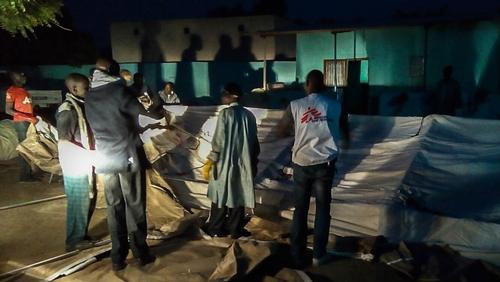
A triple suicide attack that took place on the island of Koulfoua in the Lake Chad area in Chad on Saturday morning has reportedly killed 30 people and wounded up to 200. Médecins Sans Frontières (MSF) teams present in the area have immediately mobilised to provide support to the Chadian Ministry of Health.
Chad

I had never before seen these types of injuries”

Dr Silas Adamou Moussa is Deputy Head of Mission for MSF in Chad. He is part of the team who was deployed to Mani to assist wounded following the suicide attacks that took place on Koulfoua Island on the morning of 5 December. Voices from the Field - 8 Dec 2015
 
msf-placeholder
Syria

Bombing & fighting threaten provision of medical care & humanitarian aid, MSF warns

n upsurge in fighting and bombing over the past week in northern Syria’s Azaz district, near the Turkish border, is jeopardising medical activities in the few hospitals and health posts that are still functioning, says international medical organisation Médecins Sans Frontières (MSF), warning that it may be forced to close its own hospital in the Aleppo province. Press Release - 7 Dec 2015
 
msf-placeholder
Chad

Deadly attack on Koulfa Island

A triple suicide attack that took place on the island of Koulfa in the Lake Chad area in Chad on Saturday morning has reportedly killed 30 people and wounded up to 200. Médecins Sans Frontières (MSF) teams present in the area have immediately mobilised to provide support to the Chadian Ministry of Health. Project Update - 7 Dec 2015
 
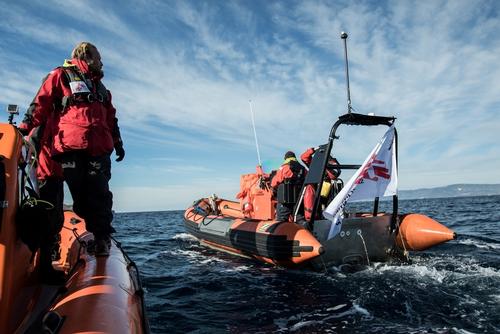
Medecins Sans Frontiers (MSF) and Greenpeace conduct joint sea operations to provide assistance at sea to boats in distress off the coast of Lesbos island in Greece, in coordination with and in support of the Greek Coast Guard. Two Rigid Inflatable Boats (RIBs) are deployed. One leads the operation while the other acts as a support unit.
Mediterranean migration

MSF and Greenpeace launch life-saving operations in the Aegean Sea

A joint operation to rescue people risking their lives on the dangerous sea crossing between Turkey and Greece has been launched by international medical organisation Médecins Sans Frontières (MSF) and environmental organisation Greenpeace. Press Release - 3 Dec 2015
 
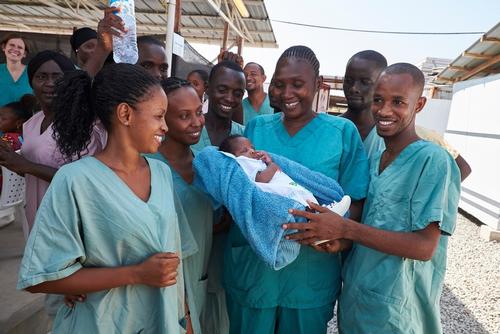
Medical staff hold baby Nubia after her discharge at the Nongo Ebola Treatment Clinic in Conakry, Guinea on November 28, 2015.

Now recovered, Nubia was the last known case of Ebola in Guinea. The month old baby's mother died after giving birth on October 27th.
Ebola and haemorrhagic fevers

Nubia, the first newborn to survive Ebola

Guinea's last Ebola case, Nubia, a baby girl, left the Nongo Ebola Treatment Clinic in Conakry on Saturday 28th November 2015. Nubia is a month old baby , whose mother died after giving birth on October 27th. Guinea will become officially Ebola-free after 42 days if no new cases are reported following the recovery of baby Nubia — thought to be the first baby to survive after being born to an infected mother. Photo Story - 3 Dec 2015
 
msf-placeholder
Yemen

Nine wounded in Saudi-led coalition airstrike on MSF clinic in Taiz

On 2 December, three air strikes targeted a park in Taiz city’s Al Houban district, 2 km from MSF’s clinic. The MSF team immediately evacuated the clinic and informed the Saudi-led coalition that their jet planes were mounting an attack nearby. The clinic itself came under attack. The wounded, two of them with critical injuries, were transferred to Al Qaidah and Al Resalah hospitals. MSF supports both hospitals in treating war-wounded patients. Press Release - 3 Dec 2015
 
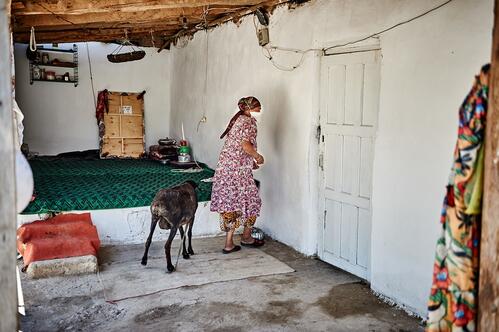
PDR TB patient Aisara Goboeva at home in her house in Kysyl Ordo (village)
Tuberculosis

New survey shows outdated policies and practices risk further spread of drug-resistant TB

Urgent phase-out needed for outdated policies of mandatory hospitalisation, re-treatment regimens that contribute to drug resistance, and sub-optimal diagnosis Report - 2 Dec 2015
 
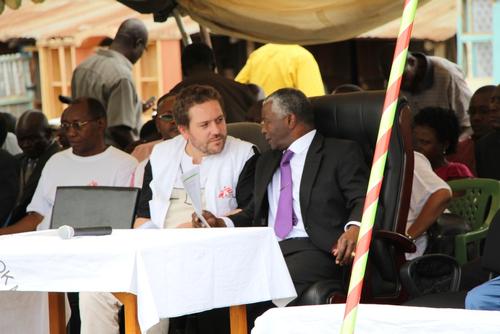
William Hennequin, MSF Head of Mission, with Hon. Hamilton Orata, deputy governor- Homa Bay County *** Local Caption *** On April 11th, 2014 –Médecins Sans Frontières (MSF) and local health authorities officially launched a new HIV program that they will jointly run in Ndhiwa sub-county, Homa Bay County, in Western Kenya. In this region, more than one fourth of the population is leaving with HIV.
During the 4 years of activities, the program will aim at reducing the number of new infections among the population as well as the mortality related to HIV. This will be made possible by implementing universal and regular testing for the whole population of Ndhiwa sub county and setting up early quality treatment for people living with HIV as well as providing quality care for people hospitalized. Furthermore, the increase access to viral load testing will help ascertain that patients are at the lowest risk of transmitting the virus
The MSF / Ministry of Health program will focus on simplifying the way healthcare is provided to patients, through an adaptation of medical protocols and the inclusion of non-medical workers in the provision of care. Such medical protocols will include encouraging the community to get tested and receive ART as early as possible if found infected to reduce transmitting the virus to others, as well as to support adherence to the treatment. Systematic screening and provision of ART for all HIV positive pregnant women will be implemented, in order to reduce mother-to-child transmission (PMTCT) of the virus. HIV testing program will also be integrated in routine immunization programs for young children. Medical male circumcision will also be key in impacting the rate at which men get infected.
Kenya

To curb the HIV epidemic, “clear objectives and patience are the keys”

In June 2014, MSF started a pilot project in Ndhiwa, a sub-county in western Kenya, aiming to curb the HIV epidemic there: one adult in four is HIV-positive and 2 in 100 get infected every year. William Hennequin, MSF representative in Kenya, presents some of the project’s achievements and challenges. Voices from the Field - 2 Dec 2015
Four mothers posing in a corridor of the Hospital in Bili. All four of them are staying in the hospital with their child, that's suffering from a severe case of malaria. Since the beginning of the project in 2016, the pediatric ward already treated more than 4.000 cases of complicated/severe form of malaria.
Médecins Sans Frontières (MSF)

Independent medical humanitarian assistance

We provide medical assistance to people affected by conflict, epidemics, disasters, or exclusion from healthcare. Our teams are made up of tens of thousands of health professionals, logistic and administrative staff - most of them hired locally. Our actions are guided by medical ethics and the principles of independence and impartiality. We are a non-profit, self-governed, member-based organisation.

Learn more