




Ebola disease in DRC: find out how we're responding
Learn more
4635 Results
 
msf-placeholder
South Sudan

Refugee testimonies

"My child is suffering from malaria, and has been in the hospital now for four days. She is one month old. We’ve only been one week in Yida. We came from the Nuba Mountains. My husband and I fled the war with our ten children. There was no food, no medicine, nowhere to take my sick baby to receive care. We had been hiding in the bush since last June. We spent two days walking to get here, and my baby got sick in Yida. I want to go back eventually, but we’ve been waiting for peace, and it hasn’t come. " Voices from the Field - 15 Jun 2012
 
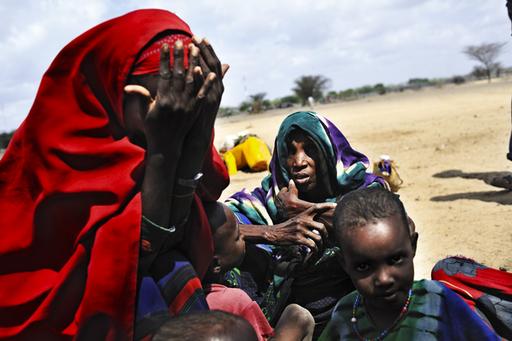
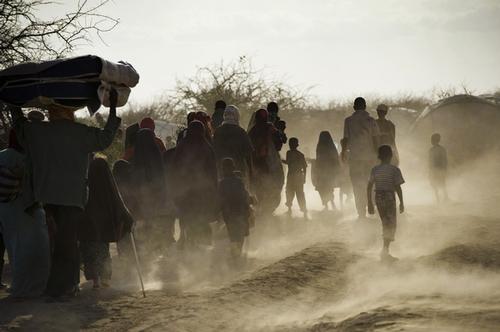
Roughly 350 Somali refugees arrive to the border of Kenyan border town of Liboi, where they are greeted by the International Organization for Migration, about 35 miles from Dadaab camps, August 22, 2011.     Dadaab, with roughly 400,000 refugees, Dadaab is the largest refugee camp in the world. The camp is grossly over capacity, and the refugees experience an ever-shrinking access to essential services such as water, sanitation, food and shelter, also because they have been sharing their rations with the new arrivals. At the current pace of arrival MSF estimates that the camp's population will total 500'000 before the end of 2011, and living conditions are only expected to deteriorate further.
Kenya

Dadaab: Shadows of Lives

It is only a matter of time before the next emergency hits the Dadaab refugee camp, says a briefing paper, Dadaab: Shadows of Lives, released today by Médecins Sans Frontières (MSF) ahead of World Refugee Day. Report - 14 Jun 2012
 
Somali refugees arrive in Ifo 2 camp after being moved by officials from the outskirts of Dagahaley camp.    Dadaab, with roughly 400,000 refugees, Dadaab is the largest refugee camp in the world. The camp is grossly over capacity, and the refugees experience an ever-shrinking access to essential services such as water, sanitation, food and shelter, also because they have been sharing their rations with the new arrivals. At the current pace of arrival MSF estimates that the camp's population will total 500'000 before the end of 2011, and living conditions are only expected to deteriorate further.
Kenya

Dadaab: The camps cannot go on

20 years after their establishment, the Dadaab camps in Kenya’s northeastern province have become a permanent home for the majority of those who have sought shelter there. In a new briefing paper 'Dadaab: Shadows of Lives', released ahead of World Refugee Day, MSF calls for solutions for Dadaab’s half a million Somali refugees. Press Release - 14 Jun 2012
 
msf-placeholder
South Sudan

Dire medical needs in under-prepared refugee camps

Tens of thousands of new refugees crossing from Sudan into South Sudan are finding refugee camps full and unable to provide basic life-sustaining essentials. The situation in Upper Nile and Unity states is rapidly developing into a full-blown crisis as water supplies start to run out and relief is wholly insufficient. For people arriving in an already weakened state, and when shelter, food and water are lacking, medical care is not enough. Press Release - 13 Jun 2012
 
msf-placeholder
South Sudan

First-hand account of the plight of the newly arrived refugees

MSF medical team leader describes the situation and the urgent need for the refugees in South Sudan to be relocated to a better place. Voices from the Field - 12 Jun 2012
 
msf-placeholder
Democratic Republic of Congo

Repercussions of the conflict in Kivu

The population of the Kivu provinces in the east of the Democratic Republic of Congo is fighting an incessant war of survival, not only against the bullets flying in the latest peak of this long-running conflict but also against the vacuum of infrastructure and health resources. Since April 2012, MSF has treated over 200 people wounded due to clashes between armed groups. Project Update - 6 Jun 2012
 
msf-placeholder
South Sudan

Nowhere to settle for 30,000 new refugees

MSF calls on the United Nations refugee agency (UNHCR) to identify a suitable place of refuge immediately for the 30,000 new refugees who have crossed the border from Sudan’s Blue Nile State into South Sudan’s Upper Nile State over the past two weeks. Around 2,000 people are crossing the border daily, in desperate need of humanitarian aid. Press Release - 4 Jun 2012
 
msf-placeholder
Somalia

Project for Somali refugees in Ethiopia handed over

MSF has handed over one of its largest projects for Somali refugees in Ethiopia. The number of refugees crossing the border has significantly gone down since the large humanitarian crisis of 2011. MSF initiated the project in the Hiloweyn camp, one of the five refugee camps near to the border between Ethiopia and Somalia, in August 2011, at the height of the crisis. Project Update - 24 May 2012
 
msf-placeholder
Yemen

MSF treats victims of violence and fighting

The increase of violence and fighting in southern Yemen has led to a high number of victims and wounded among civilians. MSF teams already received and treated 8 severely injured patients at Aden hospital, transferred from Jaar Health Post, and 43 were received at Lawdar Hospital, both supported by MSF. Press Release - 18 May 2012
 
msf-placeholder
Vaccination

New global vaccine strategy glosses over basic immunisation gaps

A new, ten-year, multi-billion dollar action plan for global vaccination may fail to deliver if it does not directly address the weaknesses in routine immunisation programmes. Nineteen million children are being missed each year and this challenge must be explicitly addressed, the medical humanitarian organisation Médecins Sans Frontières (MSF) said today. Press Release - 15 May 2012
Four mothers posing in a corridor of the Hospital in Bili. All four of them are staying in the hospital with their child, that's suffering from a severe case of malaria. Since the beginning of the project in 2016, the pediatric ward already treated more than 4.000 cases of complicated/severe form of malaria.
Médecins Sans Frontières (MSF)

Independent medical humanitarian assistance

We provide medical assistance to people affected by conflict, epidemics, disasters, or exclusion from healthcare. Our teams are made up of tens of thousands of health professionals, logistic and administrative staff - most of them hired locally. Our actions are guided by medical ethics and the principles of independence and impartiality. We are a non-profit, self-governed, member-based organisation.

Learn more