



Ebola disease in DRC: find out how we're responding
Learn more
4635 Results
 
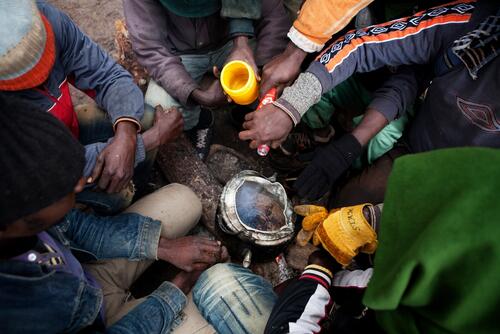
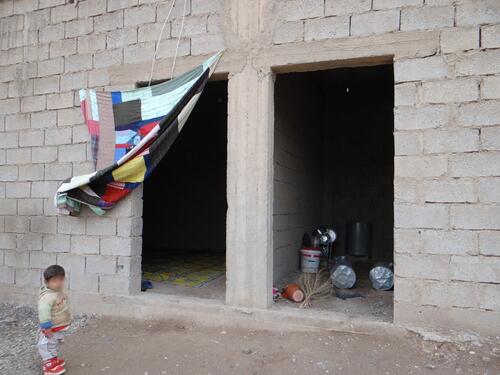
Los migrantes que habitan en el monte Gurugú se agrupan en torno a pequeñas
fogatas que utilizan para cocinar, hervir agua para el té y, sobre todo en invierno,
conseguir algo de calor.

Migrants living in Gourougou Mountain gather together around small bonfires used
for cooking, boiling water for tea and, above all in winter, warming up a little.

5.- Les migrants qui vivent sur le mont Gourougou se réunissent autour de petits feux
de camp qu’ils allument pour cuisiner, faire bouillir de l’eau pour le thé et, surtout en
hiver, pour obtenir un peu de chaleur.
Morocco

Voices from Gourougou

They arrive breathless and drenched in sweat, defeated. They have run up Gourougou Mountain in the pouring rain, some limping. Project Update - 18 Dec 2012
 
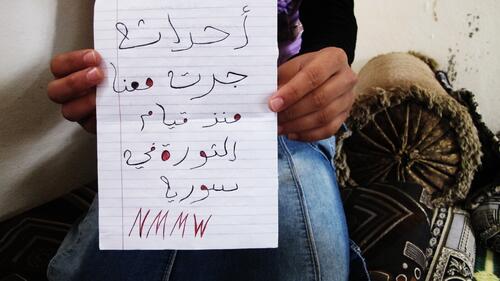
"What happened to us since the beginning of the revolution," says the cover. Nermin, a 16-year-old Syrian girl, tells the story of her family running away from the conflict.
Syria

Diary of a family's flight

A large family is staying in a ramshackle house in northern Syria. For half a year, Nermin, her parents, and seven brothers and sisters have been on the run from the conflict, moving from place to place through one of the poorest regions of Syria to escape the fighting. Nermin kept a diary of her family’s flight. This is their story. Voices from the Field - 17 Dec 2012
 
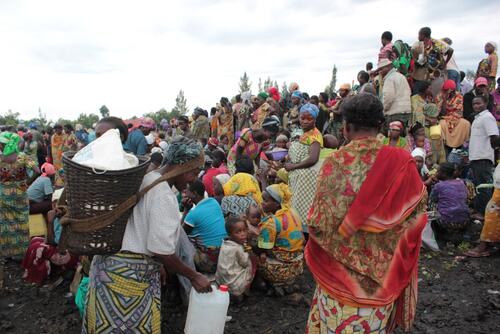
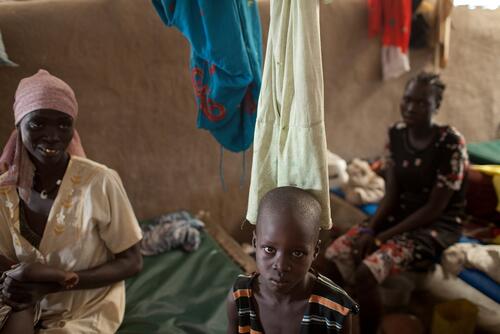
daily life in Mugunga III. *** Local Caption *** La situation humanitaire déjà précaire dans l'est de la République démocratique du Congo s'est encore détériorée en novembre 2012 après que la ville frontalière de Goma soit tombée aux mains des rebelles du M23 la semaine dernière, faisant des centaines de blessés et des milliers de personnes déplacées. Les équipes de Médecins Sans Frontières (MSF) ont rapidement mis en place des activités d'urgence pour intervenir auprès des victimes de la violence et des personnes nouvellement déplacées dans et autour de Goma.<br>

An already fragile humanitarian situation in eastern Democratic Republic of Congo has deteriorated further in november 2012 after the border city of Goma fell to M23 rebels last week with hundreds of people injured and thousands displaced from their homes. Teams from Médecins Sans Frontières/Doctors Without Borders (MSF) have rapidly set up additional emergency response activities, treating victims of violence and providing assistance to newly displaced people in and around Goma.
Democratic Republic of Congo

Displaced people in North Kivu are facing renewed turmoil

More than 100,000 people are living in extremely poor conditions in the area around Goma. Since mid-November, clashes between the Democratic Republic of Congo’s (DRC’s) armed forces (FARDC) and M23 rebels have resulted in a massive new wave of displacement. The people of North Kivu are very familiar with having to take to the road, as violence has been commonplace in the region for nearly 20 years. Project Update - 17 Dec 2012
 
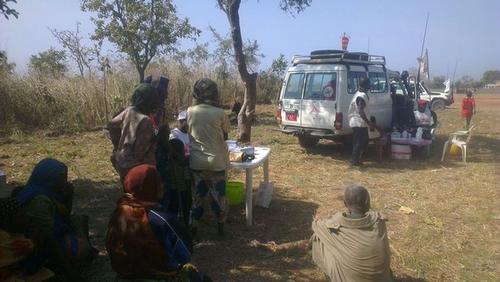
MSF organizes mobile clinic for the displaced populations in the town of Ndélé, following the attack of the towns on December the 10th. As of today 4 of these mobile clinics were organized, and MSF received more than 300 patients in consultation.
Central African Republic

Attack forces people to flee Ndélé town

On Monday 10 December, the town of Ndélé, in the northeastern Central African Republic (CAR), was the target of an attack by the Union of Democratic Forces for Unity (UFDR). There were exchanges of gunfire between the UFDR and Central African Armed Forces (FACA) based in Ndélé. Some casualties were reported among the ranks of the FACA and one wounded civilian was transferred to Ndélé hospital, where he was tended to by a team from MSF. Project Update - 14 Dec 2012
 
Dok, a 12 year old boy with kala azar, is in the MSF hospital for kala azar treatment. He is also co-infected with TB. He is bright and eager to help others in the hospital who do not have care givers according to nurse Josie Gilday.
Neglected diseases

Millions of patients still waiting for medical 'breakthroughs' against neglected diseases

Despite important progress in R&D for global health over the past decade, only a small fraction of new medicines developed between 2000 and 2011 were for the treatment of neglected diseases, highlighting the ‘fatal imbalance’ between global disease burden and drug development for some of the world's most devastating illnesses. Press Release - 13 Dec 2012
 
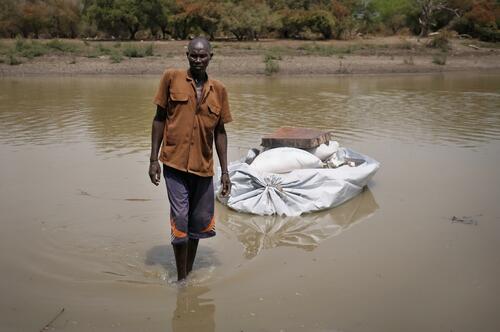
Some people displaced along the Pibor river collect the UN food distribution on behalf of several families and convert the plastic sheeting into a simple corracle to float down the river.

In the midst of the destroyed villege of Lekwongole, people come back during the day to receive food distributions from the UN and medical care from MSF, but return 

Jonglei State in South Sudan is in the grip of a cycle of extremely violent inter-communal fighting. Since 2008 MSF has witnessed in increase in intensity of the generations-old cattle-rustling between communities of different ethnicity. Over Christmas and New Year of 2011 a particularly violent attack in the area around Pibor and the outreach location of Lekwongole village displaced tens of thousands and left Lekwongole and some surrounding villages razed to the ground. MSF's hospital in Pibor was looted and the clinic in Lekwongole was largely destroyed. MSF treated 108 trauma victims in the following weeks, many women and children with gunshot wounds. But the consequences of fear and displacement in the bush continued long after, with malaria and malnutrition at very high levels in MSF's hospital.
South Sudan

Saving lives at the clinic under the tree

David Bude is an Médecins Sans Frontières (MSF) clinician who was working in MSF’s health clinic in the remote village of Lekwongole, near Pibor town, in South Sudan’s violence-afflicted Jonglei State. When fighting erupted in Lekwongole in August 2012, he fled along with the rest of the population. While in hiding, deep in the bush, David used his medical skills to save lives in exceptionally difficult circumstances. Voices from the Field - 13 Dec 2012
 
People have fled the shelling in the city of Deir Elzawr to other places in the Deir Elzawr governorate where they are living in very precarious conditions.
The area located in Eastern Syria is remote and pratically inacessible to external assistance.
Syria

Sick and wounded trapped in Deir Azzour

Tens of thousands of people, many of them wounded, are trapped in the city of Deir Azzour, eastern Syria, due to intense fighting and aerial bombardments. MSF calls for the sick and wounded to be evacuated to safer locations and for international medical teams to be given official authorisation to provide impartial assistance to all those who need it. Press Release - 12 Dec 2012
 
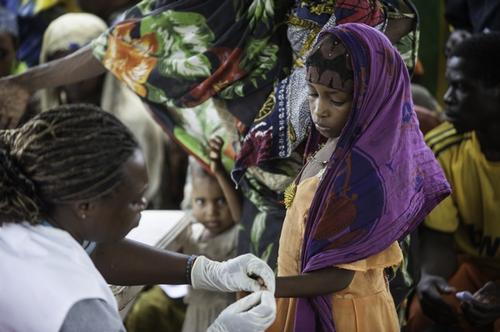
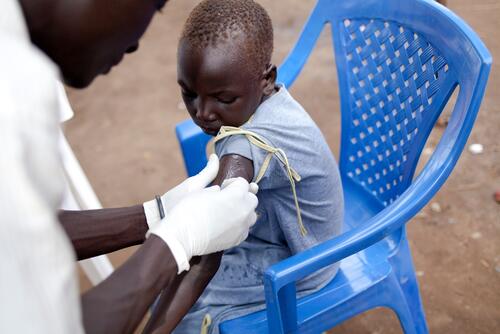
A local health worker takes a blood sample from a young girl in Mboki, in the south-east region of the Central African Republic.  A MSF team spent 13 days in the village and screened 4,548 people for sleeping sickness. Four people received treatment.
Sleeping sickness

National control activities crippled by lack of funding

Advances in the development of new diagnostic tests and treatment bode well for the fight against sleeping sickness. Two new rapid screening tests are expected next year, and one new oral treatment is in clinical trial. However, national control activities on the ground are crippled by a lack of sustainable funding, warns MSF. Press Release - 6 Dec 2012
 
In Doro, South Sudan MSF vaccinating one of the last 10 children against Measles of a campaign reaching 22.014 children in 3 days. Measles vaccinations are a key part of MSF refugee response - measles is a real threat to anyone not vaccinated.
Vaccination

GAVI needs to offer lower vaccine prices to humanitarian actors

The GAVI Alliance should systematically extend the prices it obtains for vaccines to humanitarian actors that are often well placed to reach unvaccinated children, MSF said today at the GAVI Partners Forum meeting in Tanzania. Currently, humanitarian actors such as MSF are not able to access these prices, and are left to negotiate access to vaccines on a cumbersome case-by-case basis. Press Release - 5 Dec 2012
 
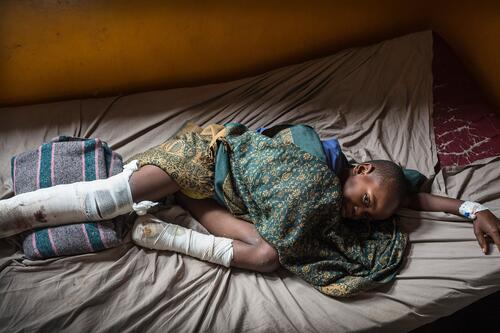
Eden, a nine-year-old boy, was seriously injured in the recent fighting between the Armed Forces of the Democratic Republic of Congo (FARDC) and the M23 rebel group in Goma, eastern Congo. He is one of 60 wounded patients currently being treated by MSF teams and local health staff in Virunga hospital. Goma, North Kivu.
Democratic Republic of Congo

Nine-year-old Eden wounded in Goma violence

Eden, a nine-year-old boy, was seriously injured in the recent fighting between the Armed Forces of the Democratic Republic of the Congo and the M23 rebel group in Goma, eastern Congo. He is one of 60 wounded patients currently being treated by MSF teams and local health staff in Virunga hospital. Voices from the Field - 30 Nov 2012
Four mothers posing in a corridor of the Hospital in Bili. All four of them are staying in the hospital with their child, that's suffering from a severe case of malaria. Since the beginning of the project in 2016, the pediatric ward already treated more than 4.000 cases of complicated/severe form of malaria.
Médecins Sans Frontières (MSF)

Independent medical humanitarian assistance

We provide medical assistance to people affected by conflict, epidemics, disasters, or exclusion from healthcare. Our teams are made up of tens of thousands of health professionals, logistic and administrative staff - most of them hired locally. Our actions are guided by medical ethics and the principles of independence and impartiality. We are a non-profit, self-governed, member-based organisation.

Learn more