



Ebola disease in DRC: find out how we're responding
Learn more
8007 Results
 
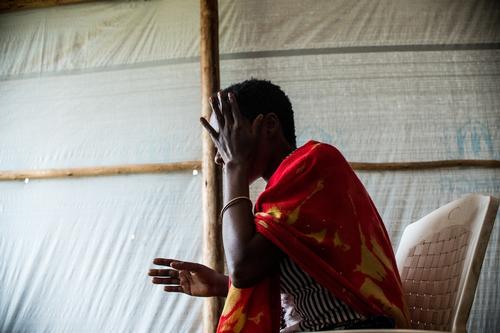
Constance, a 22-year old woman from Kaniosha, Burundi lost her husband and child, who have been killed, while she has been beaten, strangled and left for dead. She just arrived in Manyovu. "I cannot walk anymore. My legs hurt, and I have pain in my head. Militias came to my house. They killed my husband and my son in front of me. I have been beaten up everywhere. They strangulated me and left me on the floor thinking I was dead also. But I wasn’t dead, I was unconscious. The next day I managed to find enough strength to stand up and escape. I will never go back to Burundi. "
Tanzania

One year of turmoil for Burundian refugees

Project Update - 1 Jun 2016
 
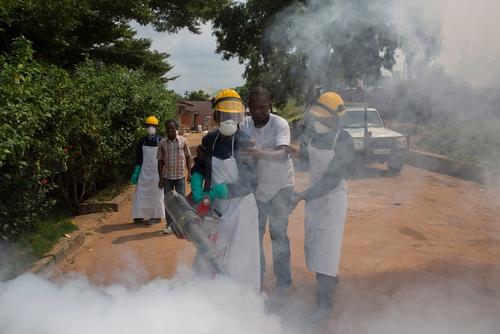
Medecins Sans Frontieres (MSF) staff members fumigate a neighbourhood in Matadi, during an operation to kill adult mosquitoes.
Democratic Republic of Congo

Hunting down mosquitoes to combat yellow fever

Following the outbreak of yellow fever in the DRC, linked to the one that hit neighbouring Angola in December, MSF conducted activities in the southwest of the country to stop the spread of the disease.

Entomologist Andre Yebakima was among MSF's team who carried out an initial assessment.
Voices from the Field - 31 May 2016
 
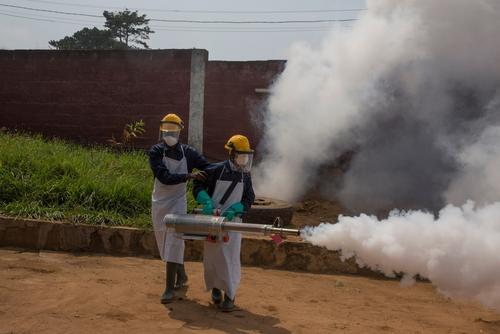
Medecins Sans Frontieres (MSF) staff members fumigate a neighbourhood in Matadi, during an operation to kill adult mosquitoes.
Democratic Republic of Congo

Yellow fever: Everyone needs to remain vigilant and responsive to avoid an explosion

An outbreak of yellow fever has been ravaging Angola since December 2015, raising fears that the disease will spread to other African countries or Asia. The limited stocks of vaccines constitute a particular challenge.

Michel Van Herp, an epidemiologist with MSF, gave us an update on the situation.
Crisis Update - 31 May 2016
 
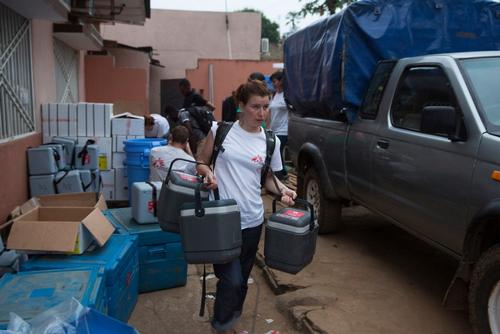
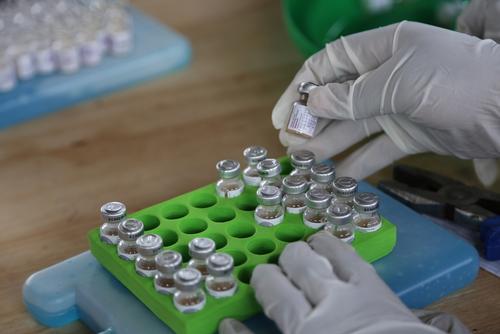
A Medecins Sans Frontieres (MSF) staff member carries cold boxes containing yellow fever vaccines on the first day of the vaccination programme in Matadi, DRC.
Angola

MSF teams help curb yellow fever

Project Update - 31 May 2016
 
Zambia, cholera vaccination in Lusaka
Global

G7 fail to address the biggest threats to global health

MSF is disappointed that the solutions proposed by the G7 will not address these failures head-on, and the barriers to access to affordable medicines which they create. "The laudable aim of universal health coverage is going to be severely hamstrung without investing in approaches to research and development that encourage patients’ needs-based innovation and are not dictated by the perspective of high market profit," said Jeremie Bodin, General Director of MSF Japan. Press Release - 27 May 2016
 
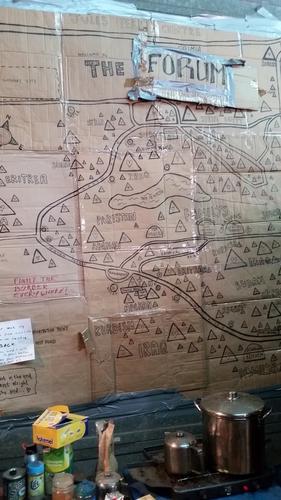
Carte du camp de Calais dessinée sur un carton affichée dans le hangar de MSF.
France

Update on Calais 'Jungle' refugee camp

Crisis Update - 27 May 2016
 
msf-placeholder

Chikungunya

Learn more about MSF's work treating chikungunya Project Update - 27 May 2016
 
View across the rooftops in the city of Zwara, Libya.
The health situation has deteriorated sharply in Libya since 2011. Before, the health care system was efficient. Yet today, hospitals are closed or at reduced because they are damaged and have few resources. MSF is now one of the very few international organizations present. But it was not easy to set up such operations. Libyans discovered humanitarian aid in 2011 and there is a great mistrust of NGOs. The coexistence of three governments also complicates matters for transport medicines, medical supplies and sending teams on the ground. We try to meet the needs of health facilities in the east and the west. 

MSF works in the Jedi Ibrahim clinic in Zwara as well as in the center of Abu Kammah. MSF also conducts drug donations to the marine hospital Zwara.
Libya

Zuwara is peaceful, but health is a major concern

Because of the conflict, Libya’s health care system is in disarray. MSF has set up operations in the east and west of the country to provide people access to medical services. Issiaka Abdou, project coordinator in Zuwara, describes the situation in this town in west Libya. Voices from the Field - 27 May 2016
 
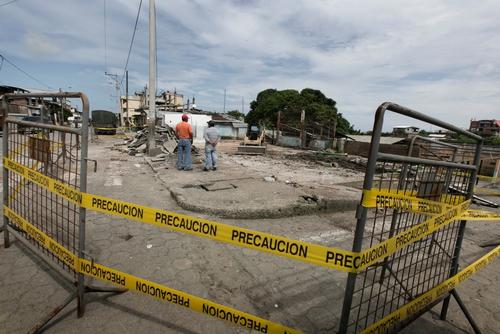
Affected areas in Pedernales
Ecuador

One month after earthquake, MSF finishes its activities

Four teams from MSF travelled to the country after the first major earthquake and spent a month working in the Manabi and Esmeralda provinces, two of the worst affected areas. After an initial assessment, they focused their efforts on providing mental health support and distributing shelter kits, cooking and hygiene items. Project Update - 27 May 2016
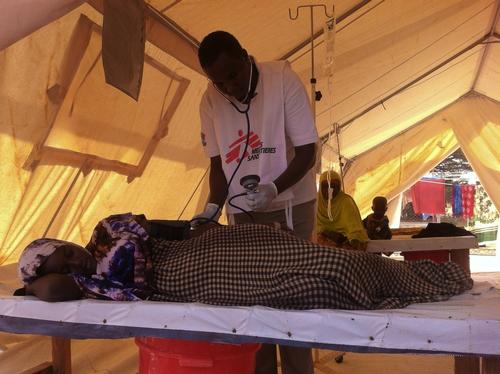
Four mothers posing in a corridor of the Hospital in Bili. All four of them are staying in the hospital with their child, that's suffering from a severe case of malaria. Since the beginning of the project in 2016, the pediatric ward already treated more than 4.000 cases of complicated/severe form of malaria.
Médecins Sans Frontières (MSF)

Independent medical humanitarian assistance

We provide medical assistance to people affected by conflict, epidemics, disasters, or exclusion from healthcare. Our teams are made up of tens of thousands of health professionals, logistic and administrative staff - most of them hired locally. Our actions are guided by medical ethics and the principles of independence and impartiality. We are a non-profit, self-governed, member-based organisation.

Learn more