



Ebola disease in DRC: find out how we're responding
Learn more
8007 Results
 
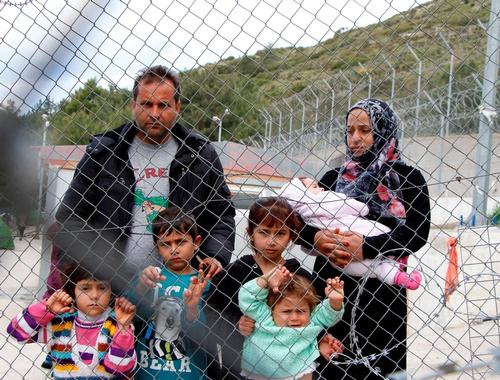
Abu Jaber, 36, came to the Greek island of Samos with his 31-year-old wife Madiha and their young children. They were fleeing Syria's Aleppo after their house was destroyed.
"We were lucky because we weren't home when a Russian air raid flattened our home three months ago," Abu Jaber told MSF. "I thought we would find mercy in Europe, but it's even harder for us than it was in Syria. That's because when your expectations are high and you then face disillusionment, it's harder than when you had nothing at all to hope for."
For more details see: https://lc.cx/4BCK
Refugees, IDPs and people on the move

EU States’ dangerous approach to migration places asylum in jeopardy worldwide

“Deterrence policies sold to the public as humanitarian solutions have only exacerbated the suffering of people in need. There is nothing remotely humanitarian about these policies.” Press Release - 17 Jun 2016
 
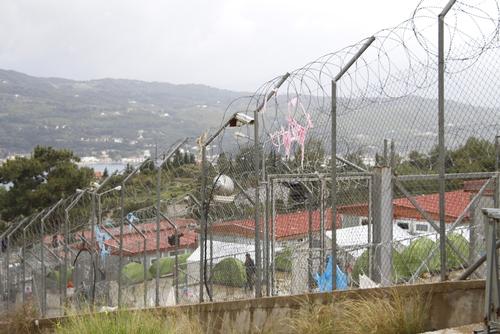
Samos hotspot which became a detention center since 20 of March 2016  where more than 700 asylum seekers and migrant are detained there.
Greece

Refugees arrive often cold, scared, unsure, confused and in distress

Interview with Elspeth Kendal-Carpenter, nurse, superving MSF's Mobile Landing Rescue Team Voices from the Field - 15 Jun 2016
 
msf-placeholder
Yemen

Treating gunshot, grenade and mine injuries in Aden

“This was the first time I was confronted with injuries caused by gunshots, grenades and mines – and they were often horrific injures,” reflects Helmut Shoengen, an anaesthetist/doctor who recently returned from working in Aden, Yemen with Médecins Sans Frontières (MSF). Voices from the Field - 15 Jun 2016
 
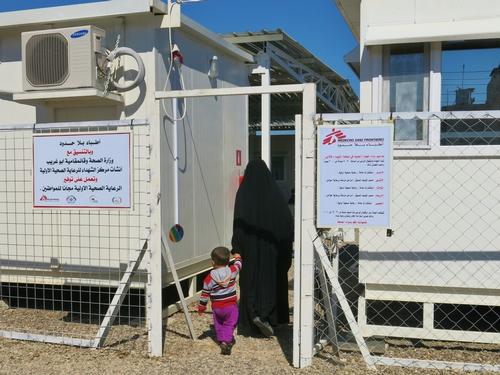
In January 2016 MSF opened a PHCC in Al Shuada, a very poor neighbourhood in the district of Abu Graib, west of Baghdad. 
In the first month 4.000 consultations were carried out by our medical team.
The organisation offers medical services in 3 other locations in the district. Another mobile team is active in camps close to Bzibiz bridge on the border with Anbar.
In Baghdad OCG employs 72 national staff 13 expatriate staff
Iraq

There is a lack of humanitarian actors in Baghdad area

By Robert Onus, field coordinator for the MSF project in Abou Ghraib, Baghdad Voices from the Field - 10 Jun 2016
 
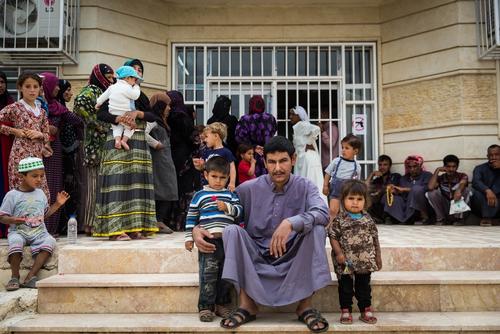
Makhmood is a taxi driver. He had brought his wife to the clinic in Hutheima who is complaining of strong headaches. "We went to
Dohuk to see a specialist, he says. She had a scan and was given medication but it didn't work. It's not easy to
go to Dohuk, you need a referral and permission from the police unless it's an emergency.
We asked the only local doctor for a referral and were granted one. Then we went to the police and
we got permission in a few hours. The journey to dohuk was smooth and we had no problems at the
checkpoints".
Iraq

I left all my memories in Mosul

"People started to flee. I didn’t know what to do: I was torn between the need to get my family to a safe place and my commitment to the hospital. It was a time of great uncertainty," says Baroj, assistant coordinator of MSF’s project in Ninewa, Iraq. Voices from the Field - 10 Jun 2016
 
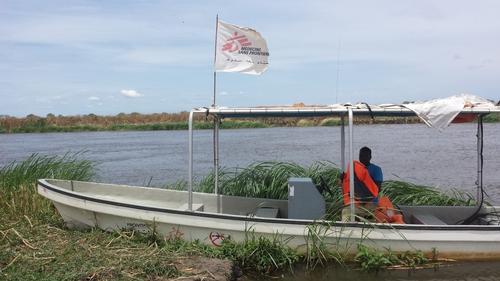
The mobile team and I took an hour speedboat ride, a long hot and sweaty hike through forest and farmland and a short canoe paddle through swamp to get here.
South Sudan

Protecting children from preventable diseases

Skye Giannino is a nurse from Victoria State in Australia. In April 2016 she supervised a Médecins Sans Frontières (MSF) vaccination campaign in Old Fangak, North-West of South Sudan. She shares a day in the life of this challenging assignment. Voices from the Field - 9 Jun 2016
 
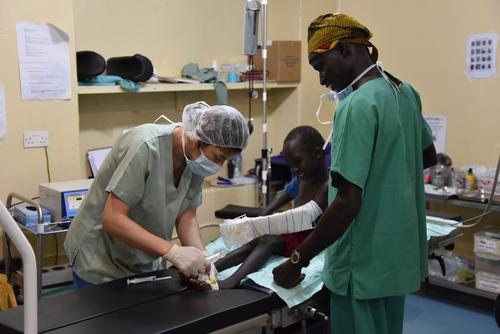
The operating theatre is an essential part of emergency health services for women and children in Aweil. Young Wol Wol is deceptively tall at only 5 years old. He was climbing mango trees with his friend when he fell. And because it is the end of the season mangos only remain higher up in the trees, so he had to climb higher to reach the very last fruit and then fell.
The boy sustained a head injury, open elbow fracture and displaced wrist fracture (in a displaced wrist fracture the bones are misaligned and won’t heal correctly unless they are realigned). Armelle will put the child to sleep under general anaesthetic, and the MSF medical team will do the debridement (removing damaged tissue) and washing of the wound, then the Ministry of Health surgeon will do the reduction of the wrist fracture. After surgery, Wol Wol’s arm had to be put in a plaster cast. 
The operating theatre team undertakes surgery for an average of more than 200 children like Wol Wol per month. The team manages many dressings for burns, orthopaedic cases like fractures, and drainage of abscesses. “For maternity patients we also do emergency obstetrics surgery. We complete around 20 to 15 caesarean sections every month”, explains Armelle Vanderhaghen, anaesthetist nurse.
South Sudan

Paediatric care and treating malnutrition in Aweil

Project Update - 9 Jun 2016
Four mothers posing in a corridor of the Hospital in Bili. All four of them are staying in the hospital with their child, that's suffering from a severe case of malaria. Since the beginning of the project in 2016, the pediatric ward already treated more than 4.000 cases of complicated/severe form of malaria.
Médecins Sans Frontières (MSF)

Independent medical humanitarian assistance

We provide medical assistance to people affected by conflict, epidemics, disasters, or exclusion from healthcare. Our teams are made up of tens of thousands of health professionals, logistic and administrative staff - most of them hired locally. Our actions are guided by medical ethics and the principles of independence and impartiality. We are a non-profit, self-governed, member-based organisation.

Learn more