


Ebola disease in DRC: find out how we're responding
Learn more
4635 Results
 
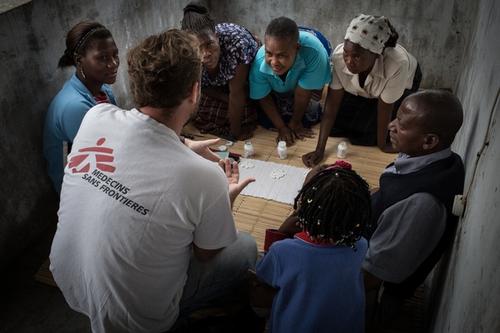
CAG (Community ART Group) meeting.
Maputo, Mozambique.
Malaysia

MSF applauds new WHO recommendations for accelerating HIV treatment in developing countries

MSF welcomed new WHO guidelines for HIV treatment and called for the improvements to be rapidly implemented, enabling people and programme outcomes in developing countries to benefit. Press Release - 30 Jun 2013
 
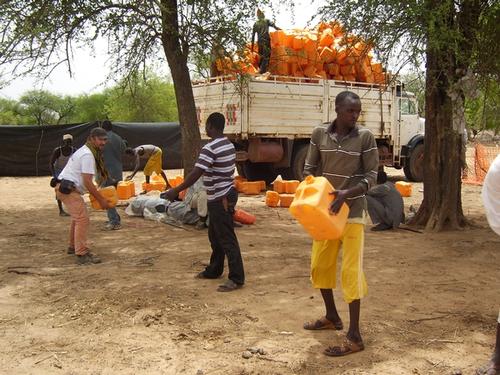
Relief goods, including water cans, arrive at the MSF base in Tissi, Chad.
MSF teams provide medical and humanitarian care to the refugee, returnee and local population in Tissi.
Since early 2013, multiple inter-ethnic conflicts have been occurring across the border in Darfur. Some of those conflicts are responsible for the current influx of 50 thousand displaced people into the area, who are living in makeshift camps along the border. MSF is providing primary and secondary care to patients with a focus in violent injuries, pregnant women and children under the age of five.
Chad

Conditions remain unacceptable for refugees in Tissi

Tens of thousands of refugees and returnees in Chad, who have fled violent clashes in neighbouring Darfur since early January, are still desperately in need of clean water, proper shelter and access to healthcare. Project Update - 24 Jun 2013
 
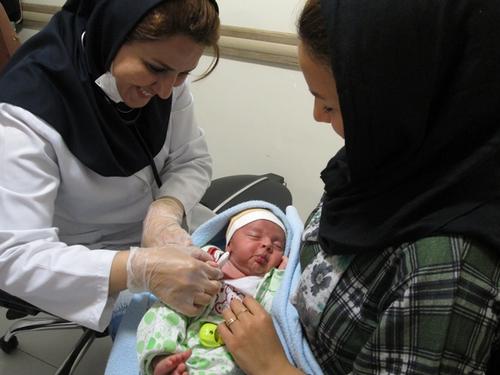
*** Local Caption ***Triage.<br/> Darvazeh Ghar district, south of the Grand Bazaar of Tehran, is one of the poorest in the Iranian capital. There coexist daily workers, traders, street children, sex workers and drug users. Marginalized, destitute and sometimes without identity papers, these people have very limited access to basic health care. In April 2012, Doctors without borders/Médecins  Sans Frontières (MSF) opened in this area a health facility dedicated to women and children under five years old with a specific attention to those most at risk of infectious diseases such as HIV/aids , tuberculosis or hepatitis. MSF teams receive on average sixty patients per day: antenatal and postnatal care, family planning counseling, and pediatric consultations. In one year, more than 12,000 consultations were carried out, including nearly 1,700 gynecology cases. A quarter of the patients are children under five years old.
Iran

Surviving in Tehran’s southern neighborhoods

Project Update - 21 Jun 2013
 
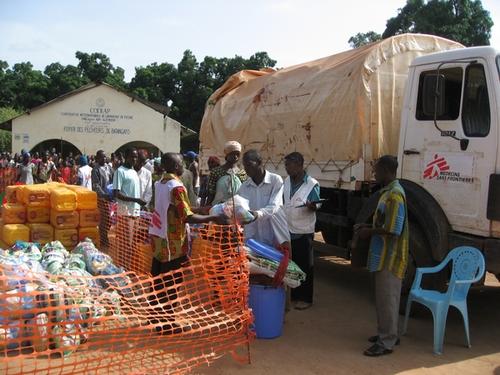
NFI distribution in villages close to Batangafo to displaced people affected by the clashes between farmers and nomadic cattle herders.
Central African Republic

MSF distributes essential items to 5000 displaced in Batangafo

MSF teams in Batangafo, Central African Republic, have just completed a distribution of essential items, including plastic sheeting, mosquito nets and blankets to more than five thousand people who were forced to flee their villages after they were burned down during heavy fighting with nomadic herdsmen coming from Chad. Project Update - 21 Jun 2013
 
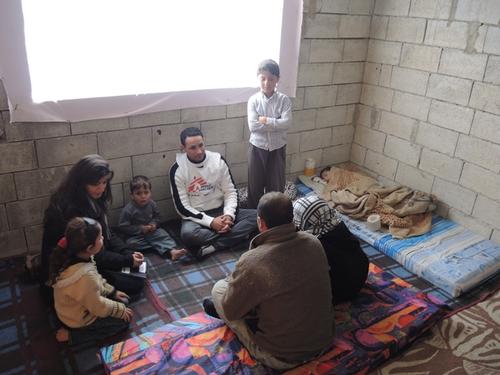
Syrian families have taken refuge in a building under construction in Al Marj. MSF social workers talk with the families, assessing their needs and referring them to MSF clinics if needed.
Lebanon

“We are not tourists – we are people fleeing a war”

For many refugees from Syria, getting a roof over their heads and keeping their families fed is a massive struggle. On World Refugee Day, MSF warns that dire living conditions are affecting people’s health. Project Update - 20 Jun 2013
 
msf-placeholder
South Sudan

Refugees in Maban county, South Sudan

Two videos from the Maban refugee camps in South Sudan, highlighting the plight of the refugees where life remains a daily struggle. Voices from the Field - 20 Jun 2013
 
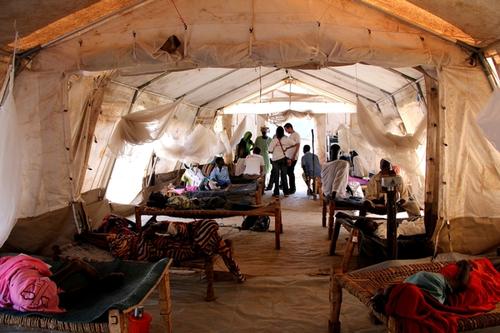
The Hepatitis E ward at MSF's hospital in Batil refugee camp, 
Maban County, South Sudan. All four camps in Maban County are now 
affected by the Hepatitis E outbreak, which began in June 2012. 
Hepatitis-E is a virus that is spread via fecal-oral transmission and 
that causes liver disease and can lead to acute liver failure and death. 
There is no cure, and medics can only try to alleviate the symptoms to 
assist the patient to recover. It is known to be particularly dangerous 
for pregnant women.
South Sudan

Medical care in South Sudan's Batil camp

Dr Deirdre Lynch is an Irish General Practitioner currently working with Médecins Sans Frontières (MSF) in Batil camp, South Sudan where 38,000 people have sought refuge from fighting and violence in neigbouring Sudan. Voices from the Field - 20 Jun 2013
 
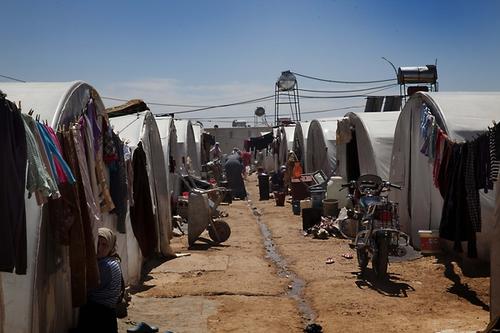
A transit camp in Aleppo province, next to the Turkish border. Around November 2012, 4,000 displaced people were staying in this temporary settlement – in April 2013, there were around 10,000.
Syria

Measles epidemic signals growing humanitarian needs

A measles epidemic is sweeping through districts of northern Syria, with up to 7,000 known cases, an indication that humanitarian needs are increasing and the country’s healthcare system is in a state of collapse after more than two years of civil war. Press Release - 18 Jun 2013
 
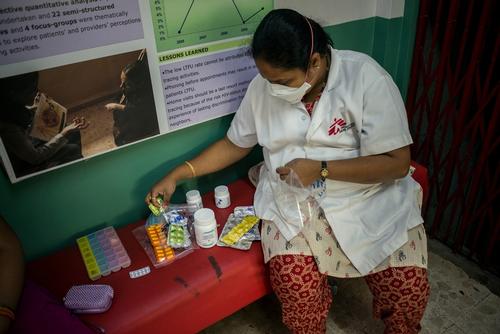
A MSF staff nurse seen sorting pills to be distributed to the MDRTB patients at the MSF Clinic in Mumbai.
India

Must address worrying stock out of tuberculosis drugs

Indian government drug tender process leads to deadly delay in drug supply Press Release - 17 Jun 2013
 
MSF hospital in Pibor, South Sudan, purposefully damaged to render it inoperable

The damage was purposefully conducted to render the hospital inoperable. This leaves around 100,000 people, who had fled into the bush seeking safety from the conflict deprived of healthcare. The MSF hospital is the only hospital facility for Pibor county, the nearest alternative being more than 150km away. 3,000 patients have been treated over the first three months of the year in this hospital. More than 100 patients, including SPLA soldiers, received surgery for war wounds.
South Sudan

120,000 people in Pibor county cut off from aid

Thousands at-risk of death as rainy and malaria season approaches Press Release - 14 Jun 2013
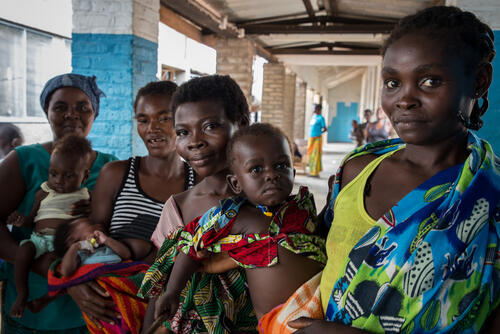
Four mothers posing in a corridor of the Hospital in Bili. All four of them are staying in the hospital with their child, that's suffering from a severe case of malaria. Since the beginning of the project in 2016, the pediatric ward already treated more than 4.000 cases of complicated/severe form of malaria.
Médecins Sans Frontières (MSF)

Independent medical humanitarian assistance

We provide medical assistance to people affected by conflict, epidemics, disasters, or exclusion from healthcare. Our teams are made up of tens of thousands of health professionals, logistic and administrative staff - most of them hired locally. Our actions are guided by medical ethics and the principles of independence and impartiality. We are a non-profit, self-governed, member-based organisation.

Learn more