



Ebola disease in DRC: find out how we're responding
Learn more
8007 Results
 
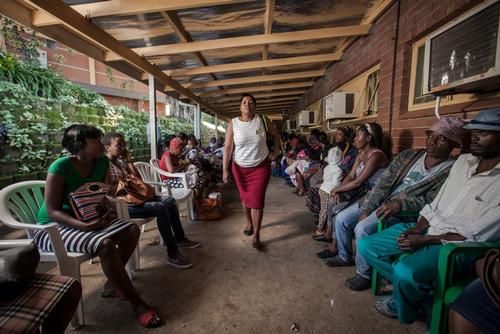
Community Care Giver Nonhlanhla Ngema passes a long queue of patients at Eshowe Gateway Clinic to pick up ARVs for members of her Community ART Group (CAG). Medecins Sans Frontieres (MSF) has been piloting CAGs as a model of care for stable HIV+ patients in rural districts of southern Africa, where HIV prevalence is at its highest. CAG members meet once every two months to review their health and arrange for collection of their ARVs without having to sit in long queues at clinics.
HIV/AIDS

MSF calls for quality HIV care in neglected communities

While significant progress has been made in South Africa since the first Durban conference in 2000, deadly and unnecessary HIV treatment gaps persist in other countries Press Release - 18 Jul 2016
 
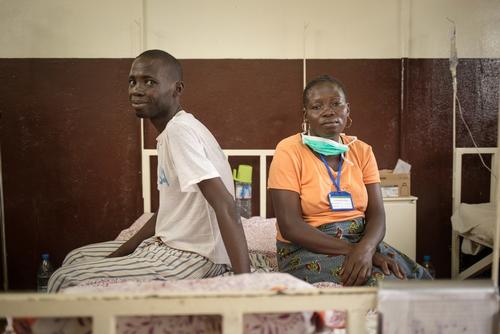
"I had felt pain for a while and as his brother worked in the hospital, he asked me if I was scared to get tested for HIV. I said no and Faustin and I, we went to together and both received a positive test result." Olga says. Faustin*, 34 years old, tells his story with his wife Olga* next to him. They have three children together. He was transferred from the MSF clinic in Mpoko to Hôpital communautaire as he lives nearby Mpoko in Vara district in Bangui. He is HIV positive and suffers from extra-pulmonaire Tuberculosis. //*NOTE: they don't want their name to be published// 11 July 2016 - Hôpital communautaire, Bangui, Central African Republic.
Central African Republic

Patients stories from Hôpital Communautaire

Project Update - 18 Jul 2016
 
Dr. Christine BIMANSHA MBOMBO, MSF Medical Activity Manager of the HIV/AIDS program in the Hôpital communautaire of Bangui. 09 July 2016 - Hôpital communautaire, Bangui, Central African Republic.
Central African Republic

If you provide care, they will come

Voices from the Field - 18 Jul 2016
 
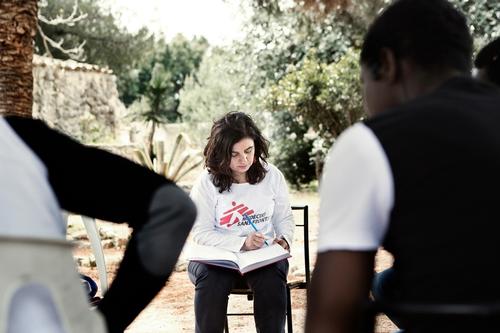
Pina, a psychologist with MSF, during a group therapy session at the Gerico CAS (Centro di seconda accoglienza – secondary reception centre). MSF provides psychological support in Sicily to help monitor migrants, refugees and asylum seekers, as often the difficulties of the journey to Europe can lead to various psychological issues.
Refugees, IDPs and people on the move

Mental health disorders in asylum seekers and migrants overlooked by inadequate reception system

A high number of migrants and asylum seekers are suffering from mental health disorders following experiences in their home countries, the trauma of the journey to Europe and due to the inadequate reception conditions in Italy, warned Médecins sans Frontieres (MSF) in a report published today. Report - 15 Jul 2016
 
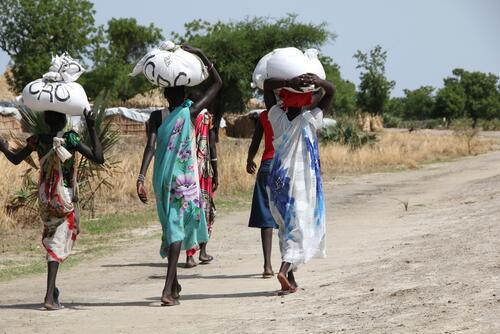
Women carry food received at food distribution in Thonyor, South Sudan.
South Sudan

South Sudan: Activity Update, May 2016

Report - 15 Jul 2016
 
msf-placeholder
South Sudan

Activity Update, May 2016

Project Update - 15 Jul 2016
 
Teams are  providing mobile clinics in Gudele 1 and Gudele 2 today, where approximately 3000 people are sheltering after having been displaced by intense fighting.
South Sudan

Our patients are telling us terrible stories

"In escaping from the violence, many people lost family members. Today I met an eight-year-old boy whose mother and father were both shot and who now has no one to take care of him. I saw a girl of 12, her three-year-old sister in her arms, come for a consultation, saying she had lost both parents. " Voices from the Field - 15 Jul 2016
 
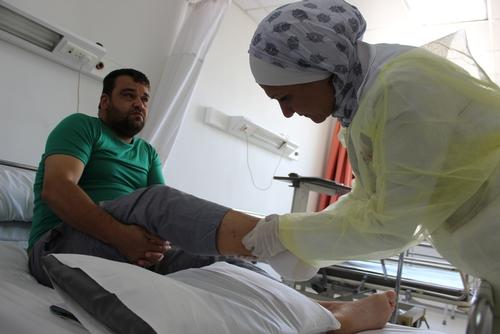
Erfan Amari, 35 Year- old had a severe leg injury by a shell that was dropped on his village (Namer) in Daraa. ‘’The war in Syria did not leave us much hope; all I hope for is for my leg to be saved, so I can reunite with my Family at Al Zaatari camp. The living circumstances there are extremely difficult, and they need me by their side.”  Said Erfan
Jordan

Patients testimonies from the reconstructive surgery hospital in Amman

"The Gaza war taught us that the price of preparing a breakfast meal can prove to be very costly; we are surrounded by danger every single second," says Nora Abdullah, 28 year-old from Gaza. Voices from the Field - 14 Jul 2016
 
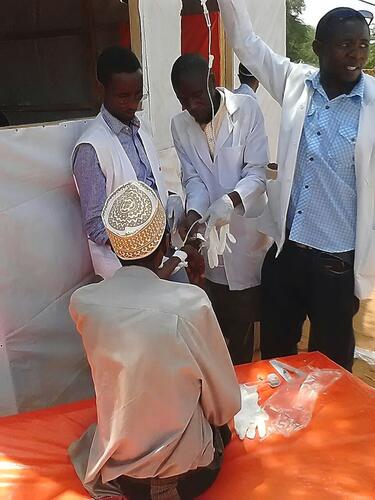
Mandera County in Kenya’s North Eastern Region is the latest county to be affected by a cholera outbreak that has been ongoing in the country for approximately 17 months. Since April, almost 800 cases have been reported in Mandera including 11 deaths. 
The outbreak is mainly concentrated in Mandera Township, home to around 90,000 people. 
At the same time, an outbreak of the mosquito-borne disease chikungunya is placing further pressure on already stretched health services. There are an estimated 260 suspected cases according to the Ministry of Health, seven of which have been confirmed by laboratory tests. Several health staff are among those affected. 
Mandera Referral Hospital has been quickly overwhelmed with cholera patients, and teams from Médecins Sans Frontières (MSF) are now urgently supporting the Ministry of Health to respond. MSF has constructed an 80-bed cholera treatment centre in the grounds of the hospital which started receiving patients on 26 May.
Kenya

Double cholera and chikungunya epidemic in Mandera town is under control

“The number of cholera patients has been reduced thanks to the combined efforts of the County health authorities and other organisations involved in the response,” says Liesbeth Aelbrecht, Head of Mission for MSF in Kenya. “The smooth collaboration with the local authorities and the other actors was a key element in tackling this outbreak, and we are grateful to all partners for their support. However, we have not yet reached zero cases. Only with sustained efforts to improve hygiene and living conditions, future outbreaks can be avoid Project Update - 14 Jul 2016
Four mothers posing in a corridor of the Hospital in Bili. All four of them are staying in the hospital with their child, that's suffering from a severe case of malaria. Since the beginning of the project in 2016, the pediatric ward already treated more than 4.000 cases of complicated/severe form of malaria.
Médecins Sans Frontières (MSF)

Independent medical humanitarian assistance

We provide medical assistance to people affected by conflict, epidemics, disasters, or exclusion from healthcare. Our teams are made up of tens of thousands of health professionals, logistic and administrative staff - most of them hired locally. Our actions are guided by medical ethics and the principles of independence and impartiality. We are a non-profit, self-governed, member-based organisation.

Learn more