



Ebola disease in DRC: find out how we're responding
Learn more
8000 Results
 
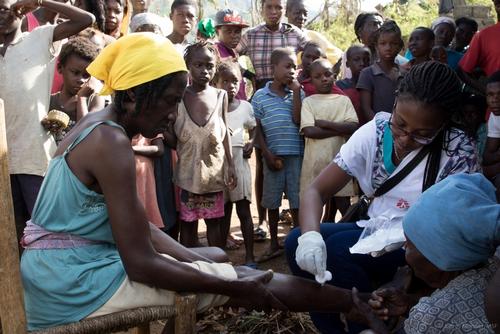
Medecins Sans Frontieres (MSF) Doctor Danielle Perriault from Canada, treats a women with a fracture, in Jérémie, Haiti.

She said 'This morning, our mobile clinic headed to Lopino, a village in the mountains that can only be reached by helicopter. Like most villages in Grand Anse, hurricane Matthew left a trail of destruction here. The streets are bordered by fallen trees and debris, and the valley is covered in trees torn in half. Only a red and white front remains of the church. Luckily the health centre, which served as refuge for the residents, survived the hurricane.

Most of the gear we bring along is equipment to treat open infected wounds, to put casts on fractures or to vaccinate against Tetanus.

Our time in the village is always limited, because the frequent storms during the rainy seasons restrict the helicopter flights. Even when we reach a village by car, the drive on damaged roads can last more than two hours one way, reducing as well the time available with patients. So we have to work as quickly as possible. Today, we treated fifty-eight patients, but there were days in which we treated up to ninety patients until the afternoon. Our priority is to treat open wounds, fractures and pediatric emergencies.

It’s been two weeks that these people have painful injuries or broken bones without treatment. Fractures, whether simple, complicated or open, are sometimes stabilized by traditional healers. You can all too well imagine the suffering of people left without care for two weeks. And there are still so many people we haven’t reached yet.

As we arrived in another village a couple of days ago, the priest was the only person to welcome us at the health centre, because all the nurses had left the village. There were many people waiting for treatment this day. Each one of us was so concentrated on seeing all the patients that finally, I resolved to ask the priest to help put a cast on a broken leg!

The lack of food adds to the patient’s trauma. Several days ago, I treated an elderly woman with severe burns on her hand. As she refused an injection against the pain, I tried to distract her by talking about her family. She had lost her two children and was now the only caretaker for her two grandchildren. Her only worry during the treatment was the reality that when she was leaving the clinic, she would go home with no food to feed her grandchildren'.
Haiti

Our priority is to treat open wounds, fractures and paediatric emergencies

Testimony by Dr Danielle Perriault Voices from the Field - 21 Oct 2016
 
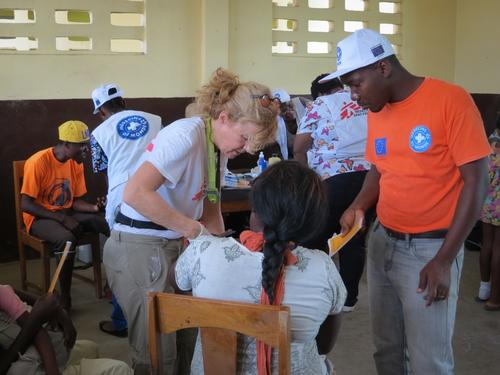
Cassandre Saint-Hubert MSF nurse (from Haiti) treats a patient at a Medecins Sans Frontieres (MSF) mobile clinic in the village of Nan Sevre, in the mountains north of Port-à-Piment.

The village is accessible only by helicopter since Hurricane Matthew devastated the country.
Haiti

Crisis Info 1 - Hurricane Matthew, October 2016

Crisis Update - 21 Oct 2016
 
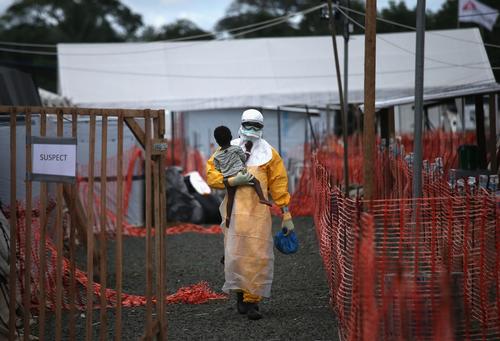
A Doctors Without Borders (MSF), health worker in protective clothing carries a child suspected of having Ebola in the MSF treatment center on October 5, 2014 in Paynesville, Liberia. The girl and her mother, showing symptoms of the deadly disease, were awaiting test results for the virus. The Ebola epidemic has killed more than 3,400 people in West Africa, according to the World Health Organization.  (Photo by John Moore/Getty Images)
Liberia

The psychological scars of Ebola

Interview with MSF psychiatrist Frédéric Gelly Project Update - 20 Oct 2016
 
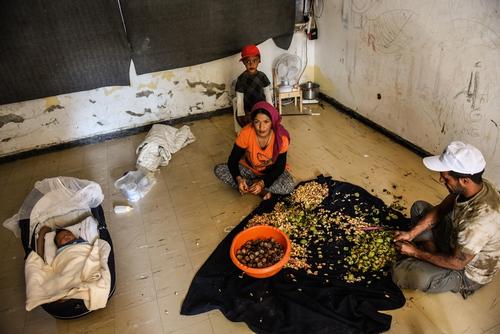
Ritsona camp.
Greece

Vulnerable People Left Behind

Report - 20 Oct 2016
 
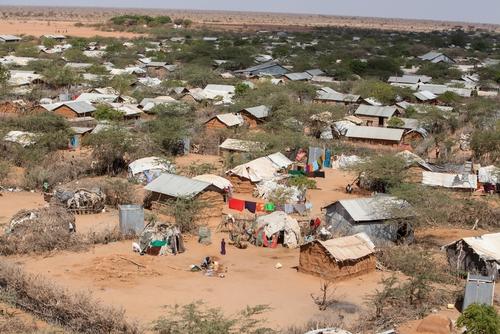
An aerial view of Dagahaley refugee camp, Dadaab, Kenya.
Kenya

Dadaab 25 years

On 6 May 2016, the Government of Kenya announced that the Dadaab camps will close, citing economic, security and environment concerns. Photo Story - 17 Oct 2016
 
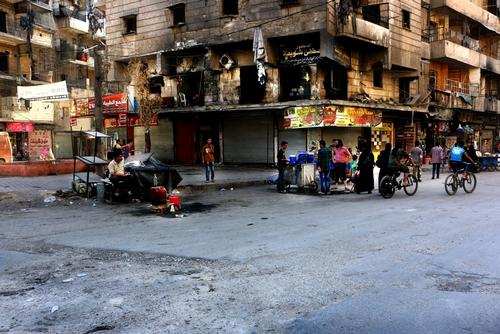
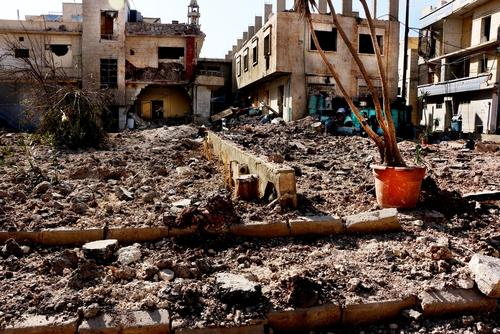
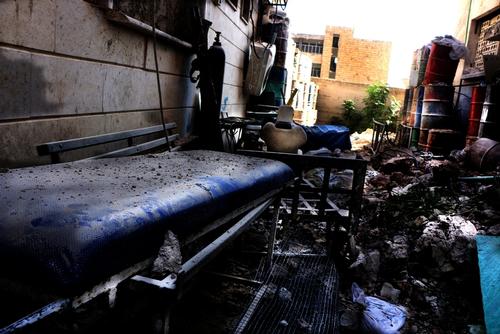
The photos were taken on October 5 in east Aleppo. They show the exteriors of the M10 hospital, the main trauma centre, which is supported by Médecins Sans Frontières (MSF). The facility was heavily damaged by shelling and forced to suspend activities on Wednesday September 28. On October 1 it was damaged again and went out of service and two days later, while under rehabilitation, it was hit yet another time by bombs and a number of maintenance workers were killed.
Syria

We try to sleep for half an hour to gain the strength to perform another surgery

"We’ve got used to the daily scenes following a mass bombing, when hospitals are so crowded with wounded that we have to step over people to reach other patients in need," says Dr Abu Huthaifa. Voices from the Field - 16 Oct 2016
Four mothers posing in a corridor of the Hospital in Bili. All four of them are staying in the hospital with their child, that's suffering from a severe case of malaria. Since the beginning of the project in 2016, the pediatric ward already treated more than 4.000 cases of complicated/severe form of malaria.
Médecins Sans Frontières (MSF)

Independent medical humanitarian assistance

We provide medical assistance to people affected by conflict, epidemics, disasters, or exclusion from healthcare. Our teams are made up of tens of thousands of health professionals, logistic and administrative staff - most of them hired locally. Our actions are guided by medical ethics and the principles of independence and impartiality. We are a non-profit, self-governed, member-based organisation.

Learn more