



Ebola disease in DRC: find out how we're responding
Learn more
8007 Results
 
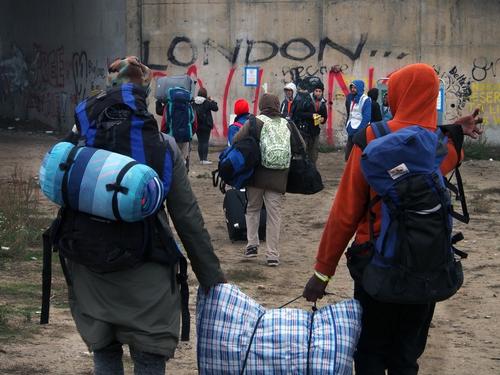
Refugees and migrants in the Jungle camp in Calais walk with their possessions 25 October 2016 as other around them prepare to leave the Jungle after French authorities began the closure of the make-shift camp that has been a jumping off point for many people seeking onward travel to the UK.
France

Dismantlement of the Calais ‘Jungle'

Project Update - 25 Oct 2016
 
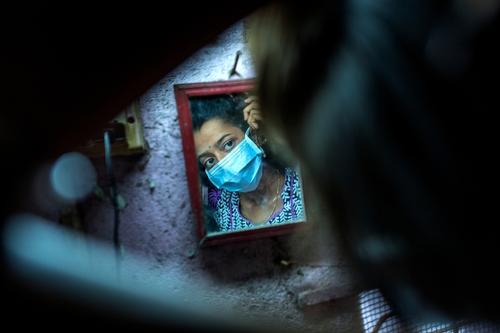
XDR-TB patient Nischaya, at home in the Ambedkar Nagar area of Mumbai.

Nischaya (not real name) is 18 years old, lives in Mumbai, and is one of only a handful of extensively drug-resistant TB (XDR-TB) patients in India lucky enough to be able to have acesss to the new drugs. After having been on treatment unsuccessfully for several years, Nischaya was referred to the clinic of Medecins Sans Frontieres (MSF) / Doctors Without Borders, an international medical humanitarian organisation who since 2006 provides free diagnosis, treatment and support to patients with drug-resistant TB in Mumbai.
India

Renewed hope with new drugs

Project Update - 25 Oct 2016
 
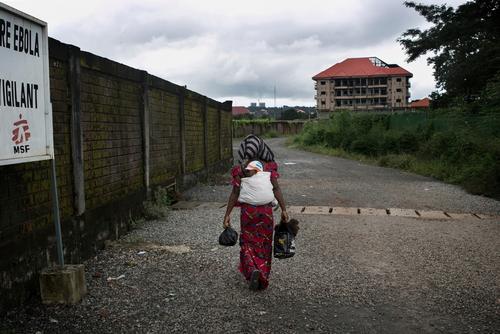
Nubia leaves the Medecins Sans Frontieres Ebola survivors clinic together with her foster mother (and aunt) Mabinty Soumah following a medical check.
Ebola and haemorrhagic fevers

Dealing with Ebola's double blow

The Ebola outbreak that swept across West Africa infected more than 28,700 people and killed more than 11,300 men, women and children. Photo Story - 21 Oct 2016
 
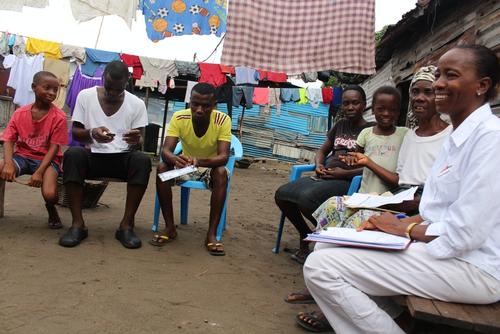
An MSF Ebola survivor clinic staff meeting with some survivors in New Kru Town community in the suburb of Monrovia during outreach on Tuesday May 19, 2015.
Access to Healthcare

Healing through sharing

Project Update - 21 Oct 2016
 
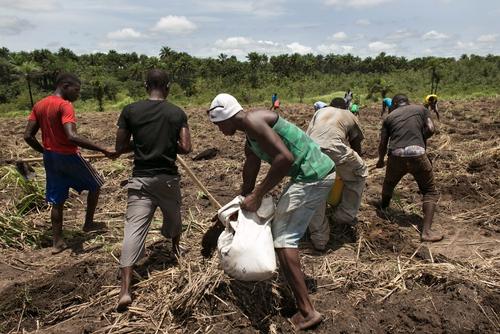
Members of the APGEF - Association des Personnes Guerís d'Ebola de Forecariah (Ebola survivors association of Forecariah) working in a watermelon field. 
These Ebola survivors associations are very important to fight against the stigmatisation of survivors and to conduct anti stigma activities with the population. Forecariah area is a mainly rural area were most of the population living from agriculture.
Ebola and haemorrhagic fevers

MSF closes final Ebola projects for survivors

Project Update - 21 Oct 2016
 
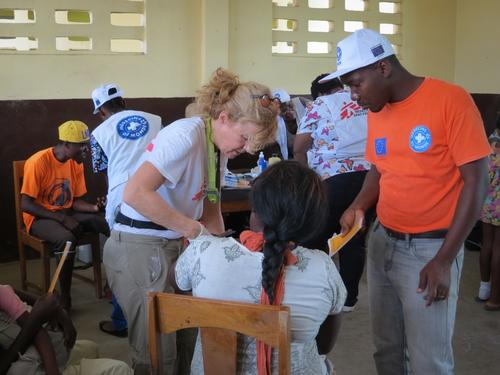
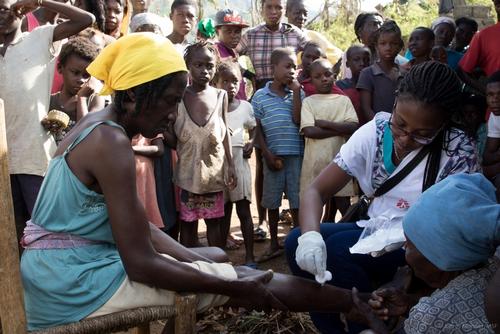
Medecins Sans Frontieres (MSF) Doctor Danielle Perriault from Canada, treats a women with a fracture, in Jérémie, Haiti.

She said 'This morning, our mobile clinic headed to Lopino, a village in the mountains that can only be reached by helicopter. Like most villages in Grand Anse, hurricane Matthew left a trail of destruction here. The streets are bordered by fallen trees and debris, and the valley is covered in trees torn in half. Only a red and white front remains of the church. Luckily the health centre, which served as refuge for the residents, survived the hurricane.

Most of the gear we bring along is equipment to treat open infected wounds, to put casts on fractures or to vaccinate against Tetanus.

Our time in the village is always limited, because the frequent storms during the rainy seasons restrict the helicopter flights. Even when we reach a village by car, the drive on damaged roads can last more than two hours one way, reducing as well the time available with patients. So we have to work as quickly as possible. Today, we treated fifty-eight patients, but there were days in which we treated up to ninety patients until the afternoon. Our priority is to treat open wounds, fractures and pediatric emergencies.

It’s been two weeks that these people have painful injuries or broken bones without treatment. Fractures, whether simple, complicated or open, are sometimes stabilized by traditional healers. You can all too well imagine the suffering of people left without care for two weeks. And there are still so many people we haven’t reached yet.

As we arrived in another village a couple of days ago, the priest was the only person to welcome us at the health centre, because all the nurses had left the village. There were many people waiting for treatment this day. Each one of us was so concentrated on seeing all the patients that finally, I resolved to ask the priest to help put a cast on a broken leg!

The lack of food adds to the patient’s trauma. Several days ago, I treated an elderly woman with severe burns on her hand. As she refused an injection against the pain, I tried to distract her by talking about her family. She had lost her two children and was now the only caretaker for her two grandchildren. Her only worry during the treatment was the reality that when she was leaving the clinic, she would go home with no food to feed her grandchildren'.
Haiti

Our priority is to treat open wounds, fractures and paediatric emergencies

Testimony by Dr Danielle Perriault Voices from the Field - 21 Oct 2016
 
Cassandre Saint-Hubert MSF nurse (from Haiti) treats a patient at a Medecins Sans Frontieres (MSF) mobile clinic in the village of Nan Sevre, in the mountains north of Port-à-Piment.

The village is accessible only by helicopter since Hurricane Matthew devastated the country.
Haiti

Crisis Info 1 - Hurricane Matthew, October 2016

Crisis Update - 21 Oct 2016
 
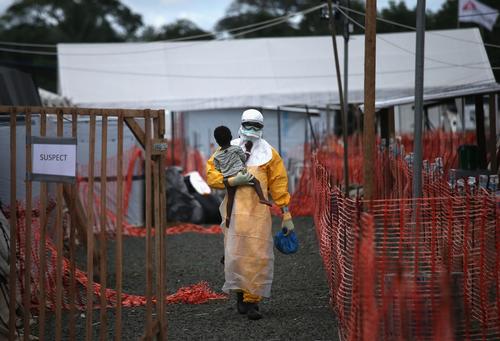
A Doctors Without Borders (MSF), health worker in protective clothing carries a child suspected of having Ebola in the MSF treatment center on October 5, 2014 in Paynesville, Liberia. The girl and her mother, showing symptoms of the deadly disease, were awaiting test results for the virus. The Ebola epidemic has killed more than 3,400 people in West Africa, according to the World Health Organization.  (Photo by John Moore/Getty Images)
Liberia

The psychological scars of Ebola

Interview with MSF psychiatrist Frédéric Gelly Project Update - 20 Oct 2016
 
Ritsona camp.
Greece

Vulnerable People Left Behind

Report - 20 Oct 2016
Four mothers posing in a corridor of the Hospital in Bili. All four of them are staying in the hospital with their child, that's suffering from a severe case of malaria. Since the beginning of the project in 2016, the pediatric ward already treated more than 4.000 cases of complicated/severe form of malaria.
Médecins Sans Frontières (MSF)

Independent medical humanitarian assistance

We provide medical assistance to people affected by conflict, epidemics, disasters, or exclusion from healthcare. Our teams are made up of tens of thousands of health professionals, logistic and administrative staff - most of them hired locally. Our actions are guided by medical ethics and the principles of independence and impartiality. We are a non-profit, self-governed, member-based organisation.

Learn more